


Gestures that hold the world together
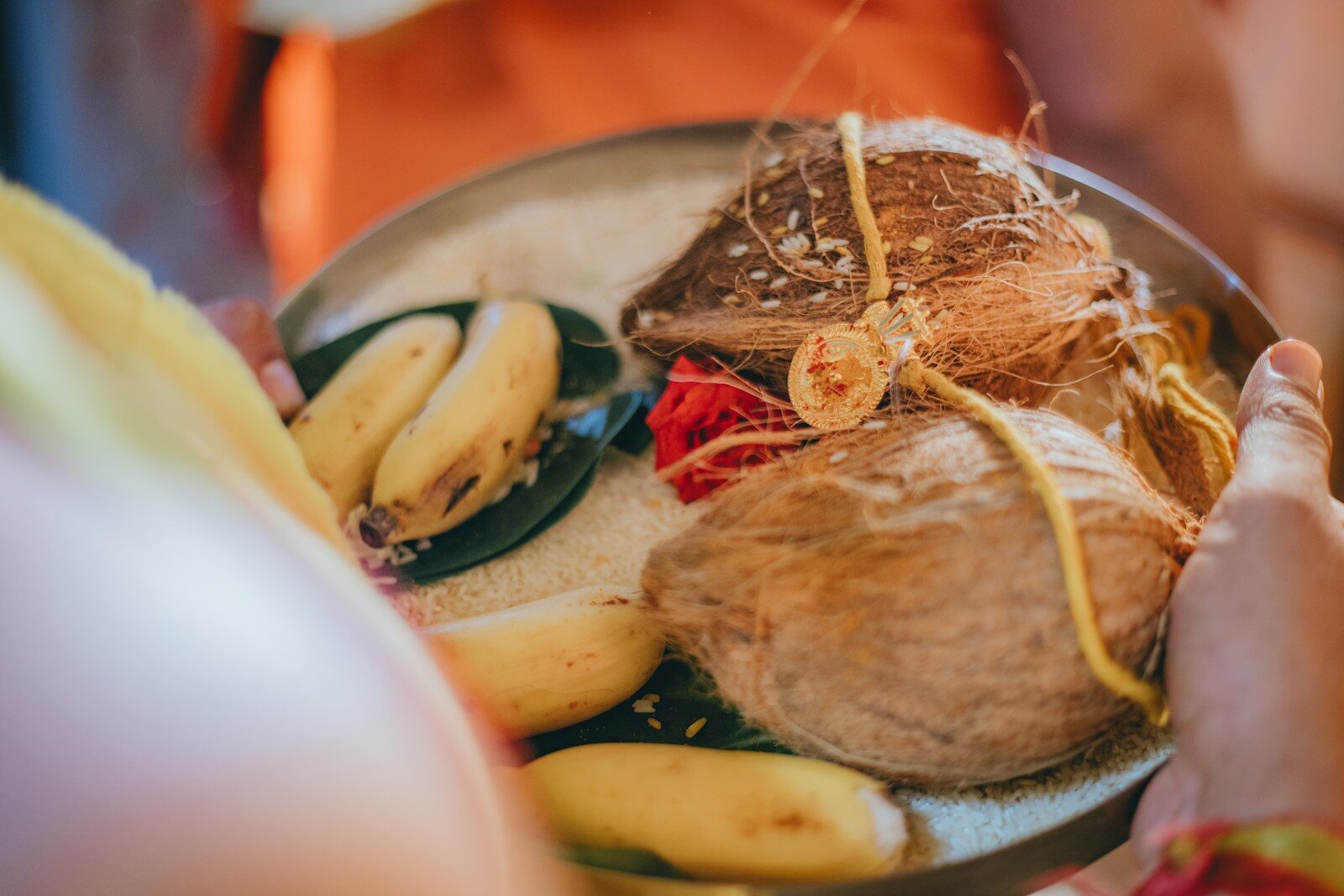
If these reflections resonated with you, you are welcome to share it further.
Gestures — how, across cultures worldwide, rites of passage emerged to help us carry ourselves through life's great transitions
The night before a great change, people almost always do something small with their hands.
A mother waiting to give birth folds, for the third time, the tiny clothes of a child who has no name yet. A man leaving in the morning for a new country slips, without quite knowing why, a handful of soil from the yard he grew up in into his pocket. A woman preparing to speak, after years, to the brother she fell out with, carefully chooses the cup she'll drink her coffee from. They don't do these things because they'd actually help. They do them because, faced with a passage too large for words, the body asks for something to do besides wait.
Almost no culture has let these moments pass in silence. Birth, death, exile, reconciliation, harvest, war, healing, loss, uncertainty — every time life demanded an irreversible change of a person, that person answered with a gesture. Not by accident, not in isolation, not once in a single place, but everywhere, in different forms, with the same structure underneath.
As if our species had discovered, independently, in every corner of the world, the same thing: that some passages can't be made with the mind alone. The body has to make them too.
What anthropology noticed about ritual
At the turn of the last century, the ethnographer Arnold van Gennep studied hundreds of ceremonies from very different cultures — weddings, funerals, coming-of-age rites, journeys — and gave them all one name: rites of passage. Underneath them, he found the same architecture, in three movements. First, a separation from the old state. Then a threshold — a period in which a person is no longer who they were and not yet who they'll become. And finally, a reintegration: a return to the world, but never an empty one. Always accompanied by a gesture through which the community recognizes that someone has changed.
Anthropologist Victor Turner took the idea further and named that interval liminality — the space between states, where the ordinary rules no longer fully apply. He noticed something simple, but hard to carry: this threshold doesn't close on its own. Someone has to do something for it to close.
It's an idea that changes how we read every gesture in this piece. They aren't decorations added on top of an event that's already over. They're actually how the event ends.
A birth with no gesture of welcome stays, somehow, unfinished. So does a parting with no farewell journey, or a grief with no place to hold it. Rites of passage, in every culture in the world, seem to exist for exactly that: not to explain the passage, but to close it.
When a child comes into the world
Let me start with the Yoruba, because there the gesture is clearest.
At the naming ceremony, the baby's lips are touched, one after another, with honey, with water, with palm oil, with a little salt. Each taste comes with a word spoken aloud — the sweetness the family wishes for, the clarity, the abundance, the flavor of a whole life. The community reaches the child first, practically, before the uncertain world outside gets the chance to tell it anything else about life.
Thousands of miles away, in Romanian villages, a newborn's first bath was made with basil, mint, and dill — not for the scent, but for what those plants carry in the collective memory: healing, protection, a clean beginning. No one in those villages had ever heard of a Yoruba naming ceremony. And yet the gesture is, at its core, the same one: someone reaches the child before it becomes just a body with no story yet.
And yet modern Finland does almost the same thing, with no deity, no priest at all. For nearly a century, every family has received a box of clothes and essentials, which for many becomes the baby's first crib. A fully secular ritual, translated into the language of the state, saying exactly what the old rites used to say: you are not alone in this.
The languages are different. The gesture is the same.
When someone leaves
Of all the thresholds, death is the only one no one can cross alongside the person who's leaving. You can sit beside someone who is dying. You cannot die with them.
In the Toraja communities of Indonesia, the dead sometimes stay in the family home for months. They're spoken to. They're brought food. They're still considered part of the household — not because anyone is denying death, but because parting needs more time than the rest of the world usually allows it.
Far from there, in Japan, the parting doesn't stretch out over time — it's set, literally, on water: during the Obon festival, families release lit lanterns onto the river for the souls of those who've passed. A small light, carried by the current, until it disappears from sight. It doesn't stop the leaving. It escorts it.
And in Romania, the candle and the funeral wheat — colivă — do, with equally simple materials — wax, wheat, honey — exactly what the Japanese lanterns do, and what months spent beside the dead do in Indonesian homes: they say, each in its own language, the one thing the mind can't find words for.
You don't go alone.
When you leave for good
Exile has a cruel particularity: the place stays behind, but its memory wants to stay with you. And memory, it seems, needs an object to lean on — because it can't lean on remembering alone, which wears thin over the years.
Many Irish emigrants left carrying a handful of soil from their home garden, kept for a lifetime afterward, sometimes buried with them in a foreign land.
Thousands of miles away, without knowing of one another, many Romanians left with the exact same gesture — a bit of earth, in a handkerchief or a small pouch. Not because it would change any fate. But because there had to be proof that the place had been real.
Two peoples, with no connection between them, arrived at the same answer. Not because they copied each other. Because the need was the same.
And in Japan, where leaving is carried out differently, the same need shows up in reverse: nothing is taken away, something is left behind instead — salt scattered at the threshold before a long journey, a way of saying: I set out clean.
A handful of earth taken. A handful of salt left. Both say the same thing: you cannot leave empty-handed.
When two people choose to meet again
Reconciliation has a problem that words, more often than not, complicate rather than solve: the first sentences almost inevitably reignite the very conflict you're trying to leave behind.
The Maori learned, long ago, to begin somewhere else. The gesture is called hongi — foreheads and noses touch, breath is shared for a moment. Nothing is discussed. The gesture says, before any argument: I recognize you as mine again.
In Romania, reconciliation passes through bread and salt, shared between two people who've quarreled. The simple, shared taste takes the place of words that might reignite the wound. Only afterward, if needed, come the explanations — but they no longer carry the same weight, because the bodies have already arrived, a step ahead, at reconciliation.
And in South Africa, Ubuntu circles carry the same old instinct into a deliberate, modern form: people are invited to say not just what happened, but what they felt and what they need in order to move forward.
Shared breath, shared bread, a circle in which you speak — underneath, they're the same gesture: the body reaches reconciliation a step ahead of the mind.
When the earth gives
By strict logic, a harvest should be nothing but the result of labor. And yet almost no farming culture has treated it that way — because whoever has worked the land knows how much of what they gather isn't owed to them alone: the right rain, the right sun, a year without hail.
In the Andes, farmers offer the first grains harvested to Pachamamei — Mother Earth — before the family tastes any of the new crop. Not as a price paid for fertility, but as an acknowledgment: you didn't do this alone.
In Romania, the gesture happens at the door, not at an altar: the wheat wreath, woven from the last ears cut, was hung at the entrance to the household — right where everyone passes, as visible proof of a year that ended well, and a quiet promise for the year to come.
One offers its gratitude to a mountain. The other places it at its own threshold. Both, in their own way, refuse to receive the gift without acknowledging it.
When people come home from war
Surviving a war, it turns out, again and again, is not the same as being able to live again. A body that has defended itself, that has seen what can't be unseen, doesn't simply reset because the danger has passed. It needs, it seems, a specific kind of permission to stop.
The Navajo have an old ceremony, used for generations by those returning from battle — a cleansing ritual meant to help the warrior's spirit separate from what it saw and did, so it can truly come back among its own. It isn't a simple "welcome home." It's a way of telling the body: you can lower your guard now.
In Hiroshima, paper cranes and the Peace Bell have become, over the decades, the same kind of gesture, taken to a collective scale: not just the memory of a tragedy, but a promise renewed, year after year, that it will never happen again.
And in Romania, the gesture was, most of the time, far simpler than any ceremony: the family would touch the flag with which the soldier returned, as if the home wanted to confirm, in a single motion, that the one who had left was, at last, under its protection again.
A whole ceremony. A bell rung once a year. A hand on a piece of cloth. All of them tell the body the same thing: you can lower your guard now.
When the body starts coming back to itself
Healing has a strange particularity: the body doesn't automatically believe the danger has passed just because the mind has told it so. It needs repeated proof — a constant attention, a gesture returned to day after day — to gradually allow itself to relax again.
In Ayurveda, the warm oils used in daily massage aren't treated as mere cosmetics, but as a way of re-teaching the body to be inhabited — a gentle, repeated attention through which the organism learns, again, that it's safe to be felt.
At Lourdes, in France, millions of people have made, over more than a century, the same journey to the springs believed to heal. For many of them, the healing itself doesn't necessarily come from the water. It comes from the way that journey — long, tiring, deliberately chosen — changes how a person carries their suffering afterward.
In Romanian villages, incantations and plants — basil, St. John's wort, wormwood — served, generation after generation, the same quiet function: they didn't always cure the illness. But they gave it a place, a rhythm, a visible form of care.
A warm oil. A long road. A plant held in the hand. None of it speeds up healing. But all of it gives the body something to do while healing happens.
When an emptiness remains
There's a kind of pain with no clear edges — it leaks into the rest of the day, into sleep, into the way you talk to the people around you. In the face of this pain, ritual doesn't claim to heal it. It mostly gives it an outline.
In Japan, the art of kintsugi repairs broken objects with gold, leaving the fracture visible instead of hiding it. The craftspeople who practice this art say exactly that: a repaired object doesn't pretend it was never broken. With its fracture in plain sight, it becomes a version of itself with more story in it than before.
Thousands of miles away, in Ireland, ritual keening — caoineadh — turned the pain of loss into a song, sung aloud, together, at the wake. Not as performance, but because pain held in silence, it's been observed for centuries, weighs heavier than pain let out, even for just one evening.
And in Romania, a candle lit for someone dear carries, perhaps, the simplest form of this gesture: a small flame standing in for a presence, for as long as it's needed, so the emptiness doesn't remain completely empty.
Gold on a broken cup. A song at a wake. A small flame. Three ways of saying the same thing: pain needs a shape, not a rushed cure.
When we don't know which way to go
The biggest decisions — a long journey, a surgery, a change with no way back — have one truly hard part: not the question itself, but the loneliness of carrying it on your own shoulders, with no witnesses.
The ancient Greeks traveled to Delphi before major decisions — not, historians believe, because the oracle always offered clarity, but because the journey there, the ceremony, the waiting, turned a heavy decision into a process shared with something larger than a single mind.
Thousands of miles away, in Japan, difficult wishes and questions are written on small wooden plaques, ema, and left at the temple. Not to be read by any particular deity, but because writing a question on wood, by hand, and leaving it there, among hundreds of others written by strangers, makes it, somehow, a little less heavy to carry.
In Romania, many people still light a candle today before a long journey or an important decision. Not because the candle tells them what to do. But because, in its small light, the decision no longer has to be made completely alone.
A journey to an oracle. A wooden plaque. A lit candle. None of them answer the question. All of them do something simpler, and harder to find: they take you out of the loneliness of asking it.
What all these gestures actually do
If we look at all these stories together, something appears that none of them, taken separately, could have shown on its own.
Rites of passage from different cultures don't resemble each other because peoples copied one another. They resemble each other because they answer the same question, one that a person asks without words, every time life changes them: how do I really know I'm not who I was yesterday?
The mind, alone, can't answer that question. It can understand a change. It can give it a name, an explanation, a coherent story. But understanding, however clear, remains an abstract fact — and the body, it seems, isn't convinced by abstract facts.
It's interesting that people who look at what it means to be human from very different angles have arrived, over the last century, at the same observation: a change doesn't fully register until it has passed through the body too. Not just through thought.
The body doesn't need to understand. It needs to do something.
To touch. To light. To bury. To wash. To offer. To write. To burn. To plant. To walk. To embrace.
That's why rituals exist — the traditional ones, passed down through generations, and the entirely new ones, like Finland's baby box. Not because the universe needs them. But because our bodies need them, in order to understand that something has changed.
Maybe that's why none of these gestures truly require a particular belief. You can not believe in souls that "need" a candle, in earth goddesses, in thresholds guarded by spirits — and still plant a tree for someone you've lost, bring food to a sick neighbor, light a small flame on an evening when you can't find any other words. Your body doesn't ask for religion. It just asks for something to do.
Maybe this is the true purpose of ritual. Not to change the world outside. But to let a person step, body and all, into the world that has just changed.
The mother folding the tiny clothes, the night before the birth, knew nothing of all this. She wasn't thinking about van Gennep, about thresholds, about reintegration, about a body that needs to take part in change.
She was simply doing what humanity has always done whenever a change too large to name came knocking: something small, with her hands, so she wouldn't have to wait through the passage with empty ones.
If this piece touched you, my book, Nine Stops and a Journey Within, carries the idea further. It's the journal of my own journey through nine thresholds, nine stops, written the way they were lived — not to impress, but to accompany. It's available as an ebook, in EPUB format, on Lulu, in both English and Romanian.
Citește-l în română – Nouă opriri și un drum interior
Read it in English: Nine Stops and a Journey Within
Support the article library
If this article has been meaningful to you and you’d like to support this project, you’re welcome to make a voluntary contribution.
This contribution helps me continue writing freely and developing the resource library about body, soul, rituals, emotions, and inner transformation.


1 comment
I’m in love with the way you express .
It felt amazing walking through this article
Thank you