Flow
If these reflections resonated with you, you are welcome to share it further.
Flow — or the state where an activity absorbs you so completely that time simply disappears
From the "Our Everyday Mind" series
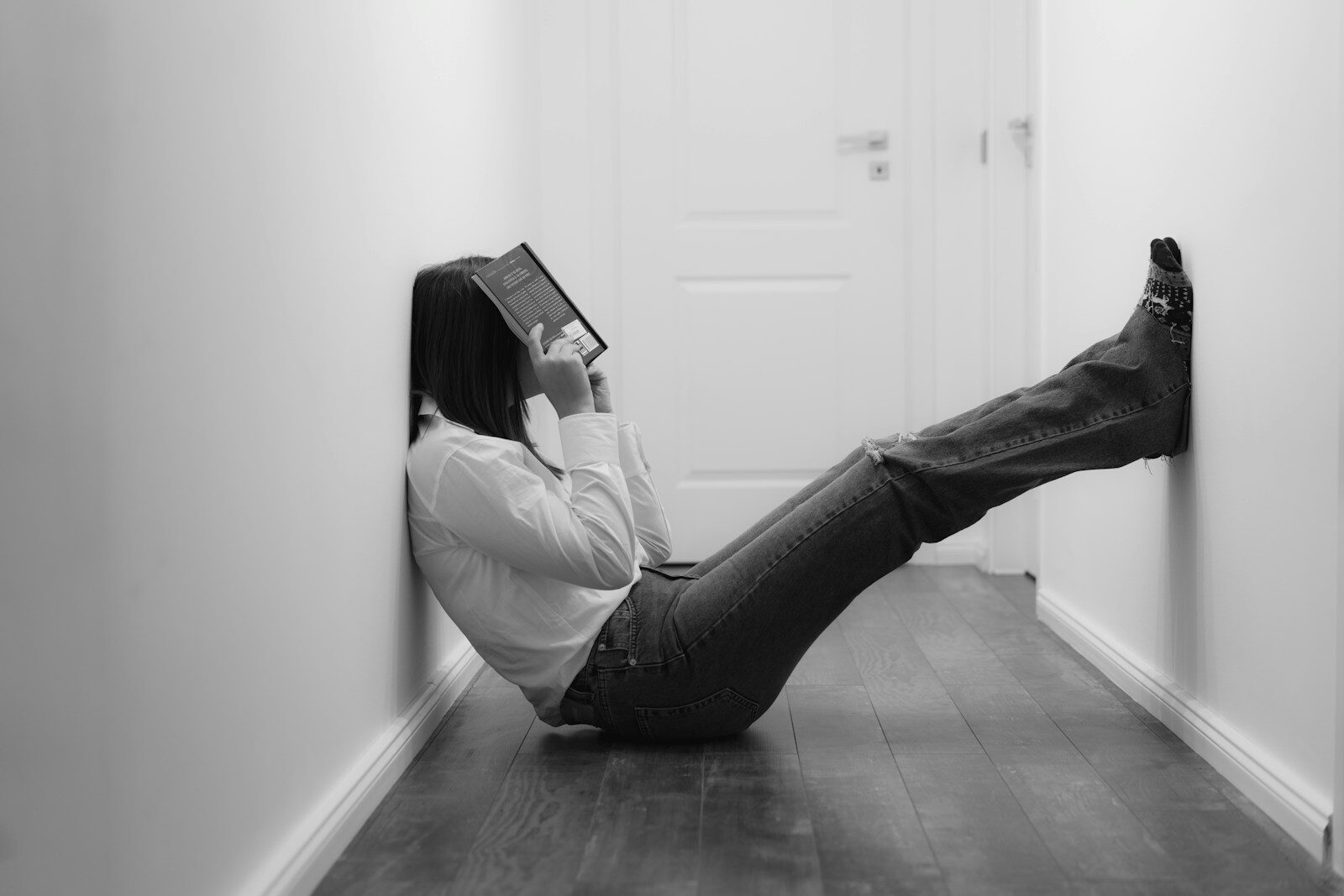
You sit down to do something — cook, write, run, play an instrument, work through a problem you actually care about. You look up and three hours have passed, though you'd have sworn it was thirty minutes. You didn't feel hungry. You didn't hear your phone. You weren't, really, anywhere except exactly inside the motion you were making.
Then the activity ends, and only then do you realize how much time has gone by.
The painters who forgot to eat
Psychologist Mihaly Csikszentmihalyi began studying this phenomenon after noticing something that puzzled him: artists, painters especially, could sink so deeply into their work that they ignored hunger, thirst, even the need for sleep. What intrigued him most wasn't the effort itself, but something else: once the painting was finished, many of them seemed to lose interest in it almost instantly. The motivation hadn't come from wanting a finished piece. It had come from the act of painting itself.
This is where one of his most important observations was hiding. In those moments, the activity was no longer a means to something else. It became its own purpose. Csikszentmihalyi would come to call such experiences autotelic — moments where the reward doesn't come at the end, but from the very act of doing the thing.
He published the first theory of this phenomenon in 1975, in the book Beyond Boredom and Anxiety, and later, in the volume that would carry the name further into popular culture, he explained where the concept's very name came from: many of the people he'd interviewed, asked how they'd felt during their moments of peak performance, involuntarily used the same image — they'd felt carried by a current, as if they were floating.
That's where the name stayed: flow.
A pager that rings at random, ten times a day
To study this state rigorously, Csikszentmihalyi and his team needed a method that could catch flow while it was actually happening, not just reconstructed from memory afterward. That's how the experience sampling method: came about: participants carried a pager that rang at random moments, several times a day, and each time, they had to immediately write down what they were doing and how they felt in that exact moment.
The method revealed something unexpected: flow didn't belong only to artists or high-performance athletes. It showed up in assembly-line workers, in chess players, in surgeons mid-operation, in people washing dishes with their full attention on the gesture itself. It didn't matter so much ce what people were doing. What mattered was how that activity related to what they were capable of doing.
From a pager, to an afternoon spent cooking
You don't need a study to recognize the feeling.
Maybe you've felt it running a well-known route, where your steps come on their own, without you thinking about them. Maybe you've felt it coding, eyes fixed on the screen, working through a single technical problem for hours, without noticing the light outside changing. Maybe you've simply felt it cooking, chopping vegetables in the kitchen, with the radio on somewhere in the background, no longer really hearing it.
It happens to me most often when I'm writing something I actually care about. I don't notice time passing. I don't notice the thoughts that usually occupy my mind — worry about tomorrow, an unfinished to-do list. There's only the sentence right before me and the next one that needs to come. It's one of the few states where lost time leaves behind no trace of regret.
Why the mind disappears from its own awareness
The explanation has partly to do with just how limited human attention actually is. By Csikszentmihalyi's estimate, the mind can consciously process only about 110 bits of information per second — and a simple conversation already uses up 40 to 60 of those, just to decode speech. Attention is a strictly limited resource, not an endless one.
Flow appears when an activity demands nearly all the attention we're able to offer — demanding enough to require us, but not so demanding that it overwhelms us. If the challenge exceeds our abilities, anxiety appears. If it's too small, boredom appears. Between the two lies the zone where action flows almost without conscious effort — and precisely because all available attention is taken up that way, there's no resource left over either to watch yourself doing it, or to keep track of time passing.
The paradox of measuring a state that breaks when observed
Here a real difficulty appears, one acknowledged even by researchers in the field.
How do you measure a state in which, precisely because you're completely absorbed, you're no longer watching yourself? Most research relies on what people report after the experience has ended. That means we never capture flow in real time, only the way we remember it afterward — one reason the theory has been criticized for lacking a sufficiently clear, measurable definition.
There's another nuance worth keeping, too: not every intense absorption is healthy just because it resembles flow. The same sensation of losing track of time can show up in activities that do you no good at all in the long run — gambling, an endless scroll on your phone. The difference isn't in how well an activity absorbs you. It's in what's left of you once you get up from it. ce rămâne din tine după ce te ridici din ea.
What would change, knowing this
Maybe the next time you lose track of time, you won't need to ask yourself whether you were being careless. Sometimes those very moments show that your attention was so well placed that nothing was left over for the noise around you.
That self-awareness doesn't disappear because you forgot about yourself, but because your mind, for a while, no longer has any spare resources with which to watch you.
That not every state that makes you lose track of time is, automatically, flow — what matters is what you feel and what you gain, not just how fast the clock moved.
That rumination and flow are, in many ways, mirror images of each other. In rumination, attention stays trapped in a single thought, time drags, and what's left afterward is exhaustion. In flow, attention stays absorbed in a single activity, time disappears, and what's left afterward is energy.
Maybe we never truly lose ourselves in what we do. Maybe we simply find, for a while, the place where we no longer have to split our attention between the action and the observer inside.
If you feel you want to explore more of what is happening in your emotional life, there is a space for that.
The Zeigarnik effect — or why the mind remembers what you didn't finish better
Support the article library
If this article has been meaningful to you and you’d like to support this project, you’re welcome to make a voluntary contribution.
This contribution helps me continue writing freely and developing the resource library about body, soul, rituals, emotions, and inner transformation.