

Hanami – when beauty becomes ritual
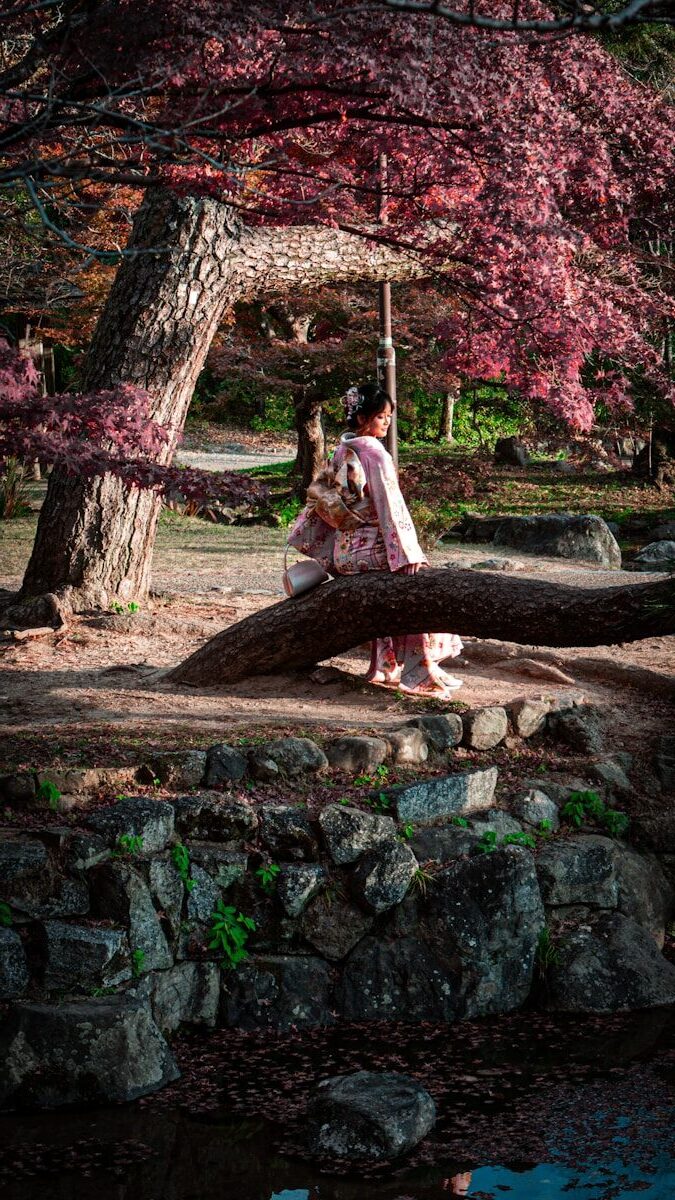
Hanami – the Japanese ritual of contemplation, of spring, and of things that do not last forever
Every spring, Japan begins to look toward the trees.
The news announces the first blossoms. Special maps track the blooming as it moves from south to north. Parks fill with people. Families, friends, and coworkers gather under the soft pink canopies of cherry trees.
This is Hanami, one of Japan’s most beloved and well‑known rituals. The word Hanami literally means “looking at flowers.”
At first glance it seems simple: people stop and admire the cherry blossoms. But for more than a thousand years, this gesture has been repeated every spring.
Its origins go back to the Heian period (794–1185), one of the formative eras of Japanese culture. In the beginning, aristocrats gathered to contemplate the blossoms, write poetry, and reflect on the passing of time. Later, the custom spread throughout society and became one of Japan’s most important seasonal traditions.
Hanami takes place in spring, usually between late March and early May, depending on the region and the moment the cherry trees bloom.
People organize picnics, meet with family and friends, take photos, eat together — but above all… they look. They look at something they know will disappear very soon. Cherry blossoms bloom spectacularly, but they last only a few days.
Maybe this is where the deeper meaning of the ritual lies.
Cultural historian Donald Keene noted that Japanese sensibility has often been shaped by an appreciation of ephemeral beauty and of things that exist precisely because they do not last.
Anthropologist Joy Hendry also wrote about how Japanese rituals transform seemingly ordinary activities into experiences of attention and presence.
Perhaps Hanami is one of the most beautiful examples: there is no task to complete, no goal, nothing to obtain. There is only the meeting with a moment that will never return in the same form.
In Japanese culture there is a concept called mono no awareIt is difficult to translate into a single word. It refers to the emotion we feel when we become aware of the beauty and fragility of things that pass. Blossoms fall, seasons change, children grow, people come and go, nothing stays exactly the same.
Hanami does not try to stop this passing. It contemplates it. Accepts it. Celebrates it.
Maybe this is why millions of people continue to gather under the cherry trees every spring. Not only for the beauty of the flowers, but for what the flowers remind them.
That some of the most beautiful things in life are also the most fleeting. And that this is exactly why they deserve to be seen with attention.
👉 Is there something beautiful in your life that you see so often you’ve forgotten to really notice it?
👉 How do you relate to the things that are precious precisely because they don’t last?
👉 If you stopped today for just a few minutes simply to look, what would you see differently?
Share this article
 Support the article library
If this article has been meaningful to you and you’d like to support this project, you’re welcome to make a voluntary contribution.
This contribution helps me continue writing freely and developing the resource library about body, soul, rituals, emotions, and inner transformation.
