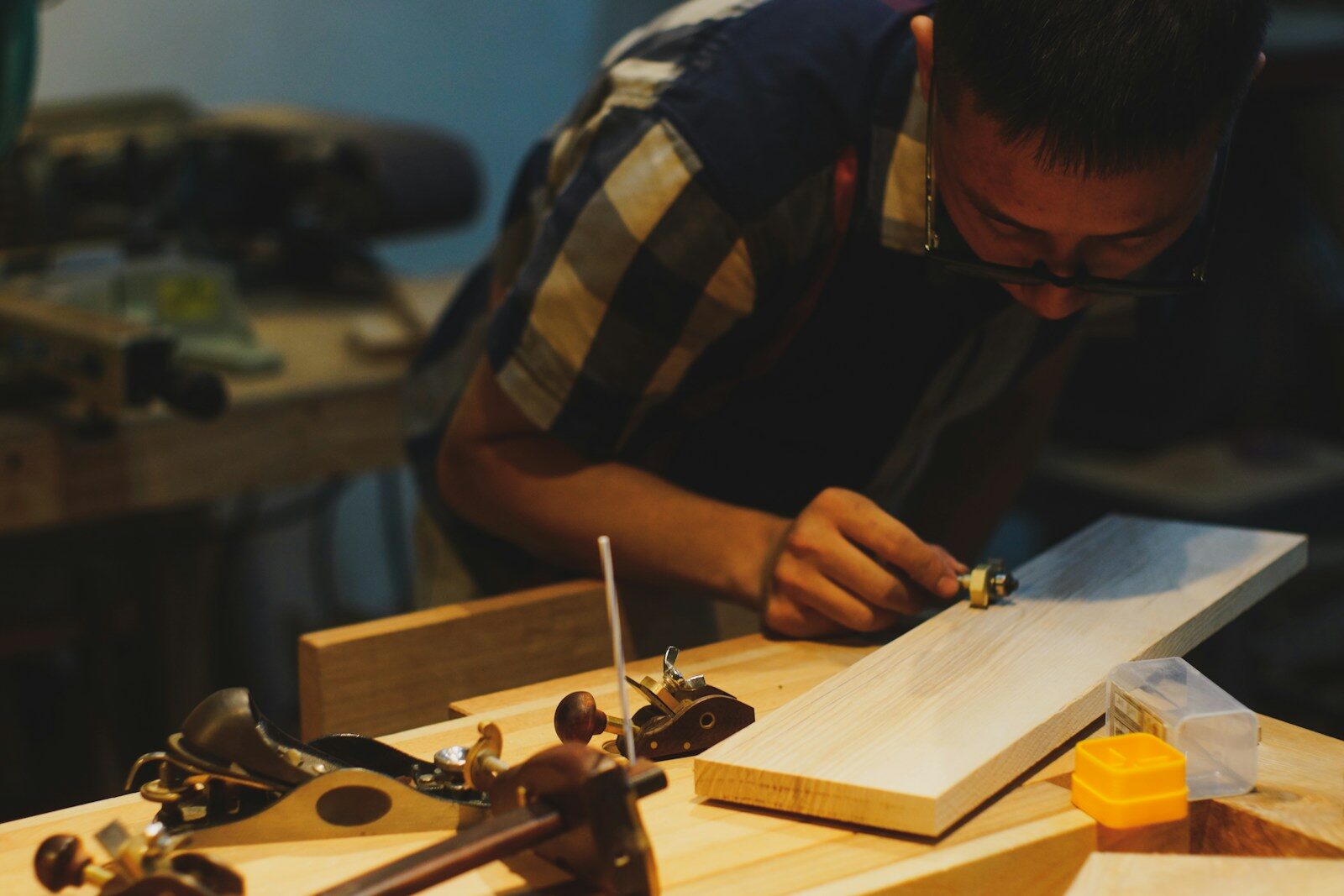
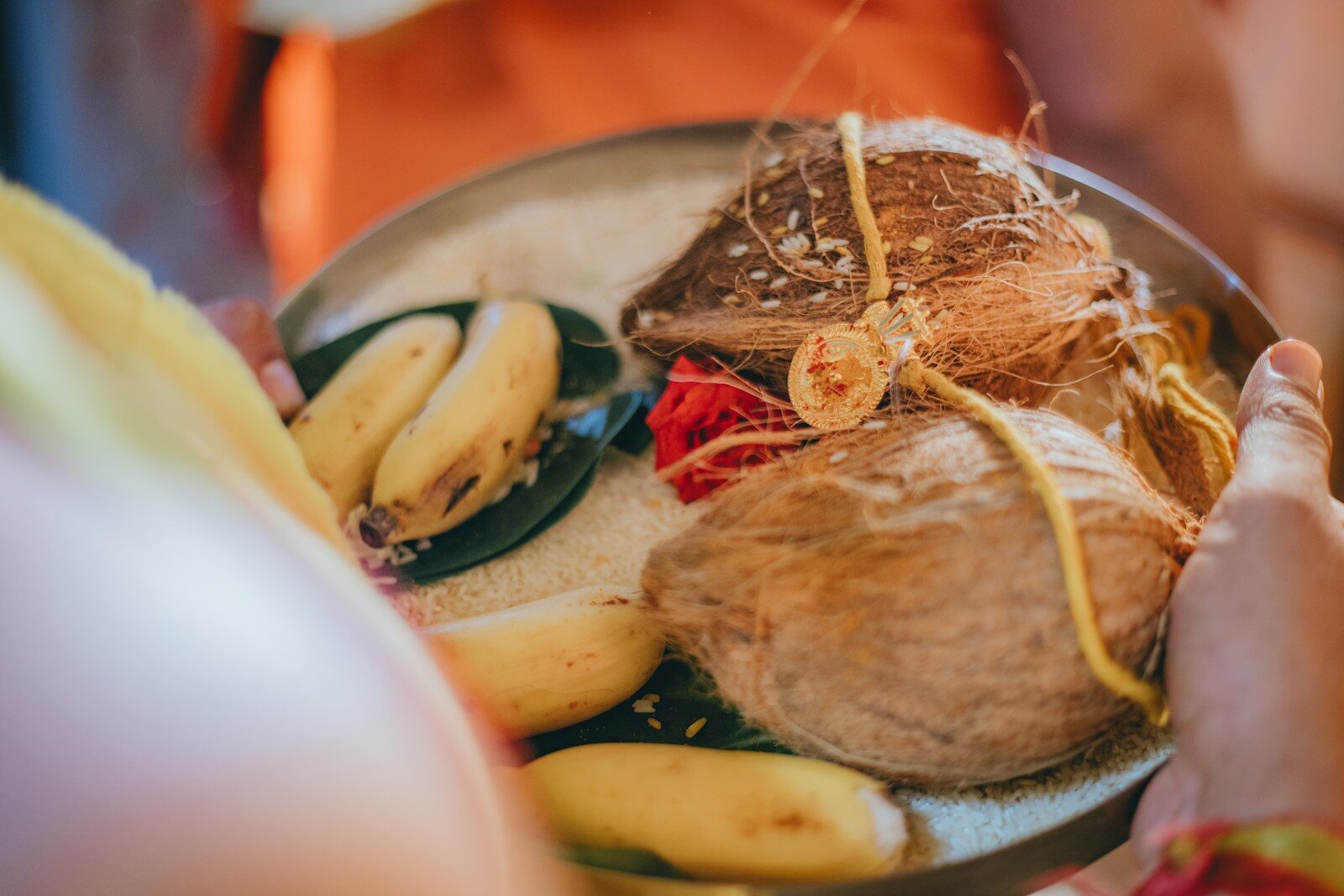
Personal ritual: how to begin without pressure and without trying to “Do It Perfectly”
If these reflections resonated with you, you are welcome to share it further.
How to begin a simple personal ritual (a gentle guide without pressure or perfection)
Rituals and pilgrimages in everyday life
There are moments in life when you feel that your usual rhythm can no longer carry you forward.
Not because something is wrong with you, but because your inner life begins to ask for something else: a space, a slowing down, a way of settling into yourself without justifying, without proving, without rushing.
In such moments, people discover rituals. Not as a spiritual concept, not as a sophisticated practice, but as a way back home. A small, repeated path that reminds you who you are when the world becomes too loud.
Rituals are not modern inventions. They are older than writing, older than religions, older than cities.
Anthropologists see them as ''structures of meaning'', psychologists view them as anchors for the nervous system, and the world’s traditions treat them as bridges between the visible and the invisible.
But before all theories, a ritual is an encounter: between you and yourself, between you and the world, between you and something larger than you.
And yet, despite this simplicity, many people give up before they truly begin.
Why people give up
We don’t give up because the ritual is difficult. We give up because the expectations are heavy.
In contemporary culture, ritual has been aestheticized, idealized, turned into a perfect scene: clean candles, aligned crystals, immaculate journals, beautifully crafted intentions.
But in ancient traditions, rituals were simple gestures, repeated in community or in solitude, without the pressure to feel something special.
People give up because:
They expect intensity. — They believe a ritual must produce emotion, revelation, instant transformation. But the body doesn’t work that way. The nervous system doesn’t seek intensity — it seeks predictability.
They feel unprepared. — “I don’t know how to do it.” “I don’t have the right objects.” “I’m not spiritual enough.” In reality, ritual doesn’t require preparation — it requires presence.
They turn it into an obligation. — When a personal ritual becomes a “must,” the body closes. A ritual is not a task — it is a space.
They use it as an escape. — Sometimes people approach ritual to avoid something: an emotion, a decision, a relationship. But ritual is not a shield — it is a mirror.
They confuse it with performance. — “If I don’t feel anything, I’m doing it wrong.” “If it’s not deep, it’s meaningless.” In reality, ritual is not about performance — it is about continuity.
In family constellations, there is the idea of a “held space”: a place where something can appear without being forced. Ritual works the same way. If you push it, it closes. If you allow it, it opens.
The trap of “It Has to Be Special”
This is the biggest obstacle in creating a personal ritual.
In the collective imagination, ritual is associated with sacredness, solemn moments, emotional intensity. But in reality, traditional rituals were deeply ordinary.
In Japan, the tea ceremony is not about tea — it is about presence.
In West Africa, ritual dances are not about performance — they are about community.
In Christian tradition, lighting a candle is not about the object — it is about intention.
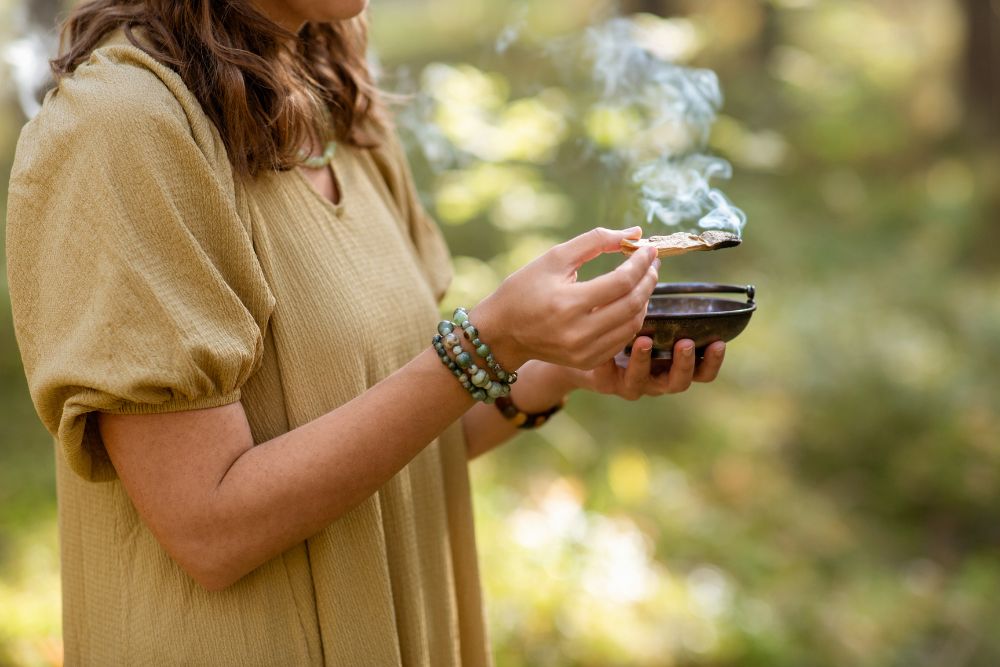
In Indigenous traditions, smoke, water, and earth are used not for spectacle, but for repetition.
Anthropologically, sacredness comes not from objects, but from rhythm
Psychologically, ritual works because it offers the body a stable pattern.
Somatically, the repeated gesture becomes an anchor.
A ritual does not become sacred because it is special. It becomes special because it is repeated.
How to choose the time, the place, and the gesture
Here begins the practical part — but it remains poetic, because ritual is not done with the mind, but with the body.
Time — Not “when you have time,” but when your body can settle.
It may be in the morning, before the world touches you. It may be in the evening, when everything returns to silence. It may be a transition moment: after closing your laptop, before entering the house, after a shower, before an important conversation.
In many traditions, ritual time is not chronological — it is qualitative. It is the time in which you return to yourself.
Place — You don’t need an altar. You need a corner that receives you.
A window. A cushion. A candle. A corner of a table. A piece of earth. A place where your body knows it can breathe differently.
A place becomes ritualistic through the attention you place there,not through objects.
Gesture — Choose a small, repeatable gesture that requires no effort.
- light a candle.
- place a hand on your heart.
- take three breaths.
- say a recognition phrase (“I am here”).
- write one line in your journal.
- touch the ground with your palm.
- drink tea in silence.
- wash your face as an act of renewal.
For example, a ritual can be as simple as this: Every morning, before you open your phone, sit for a few moments with your hand on your heart and breathe. Not to feel something specific — simply to be there.
In many cultures, the gesture is the doorway.
In psychology, the repeated gesture becomes a somatic anchor..
In constellations, the symbolic gesture reorganizes the inner landscape.
Personal ritual as inner pilgrimage
Here the bridge opens toward the larger theme: rituals and pilgrimages.
A pilgrimage is a ritual extended in space. A ritual is a pilgrimage compressed into a gesture.
Both are forms of movement:
– one through the world,
– the other through yourself.
Pilgrimage in traditions
On the Camino de Santiago, people walk for days not for the destination, but for the rhythm of walking.
In Hindu pilgrimages, the journey is seen as purification.
In Romanian traditions, pilgrimages to monasteries are ways of “leaving something behind” and “taking something with you.”
Anthropologically, pilgrimage is a transition: from one state to another, from one identity to another, from one stage of life to the next.
Psychologically, repetitive walking regulates the nervous system.
Somatically, the body enters a rhythm that allows emotional processing.
Inner pilgrimage
You don’t need to walk hundreds of kilometers to make a pilgrimage. Sometimes, the pilgrimage is:
- the path from bed to the window
- the path from thought to breath
- the path from tension to release
- the path from “I can’t” to “let me try”
A ritual is the inner pilgrimage. A pilgrimage is the outer ritual. Both are forms of alignment.
How you actually begin
Not with a plan. Not with a perfectly formulated intention. Not with a special object.
But with one small gesture, repeated for a few days. That’s all.
The ritual builds itself if you give it space.
The body recognizes it before the mind does.
And one day, without noticing, the gesture becomes a place.
The place becomes a rhythm.
The rhythm becomes a ritual.
For some people, rituals don’t make sense or don’t create resonance. And that is perfectly fine. Not all forms of inner work fit everyone.
Some processes begin simply, with a small gesture and a breath.
Others require guidance, witnesses, a space held with care.
Both are valid. Both are paths.
Sometimes a path begins alone. Other times, it begins when someone holds it for you until you can carry it yourself.
Frequently asked questions
What is a personal ritual, really?
A personal ritual is a simple gesture, repeated with intention, that creates a space of connection with yourself. It is not about objects or rules, but about presence and continuity. It can be something very small — a breath, a pause, a moment of conscious attention.
How do I start a ritual if I have no experience?
You don’t need experience. Begin with a simple gesture and repeat it for a few days. What matters is not “doing it right,” but staying with it. The ritual builds over time, not through intensity.
How long should a personal ritual last?
There is no correct duration. A ritual can last a few seconds or a few minutes. What matters is not the time, but the consistency and the quality of presence.
If I don’t feel anything, does that mean the ritual isn’t working?
No. A ritual is not about feeling something immediately. Sometimes the effects appear over time, through repetition. Other times, the ritual works precisely because it doesn’t force anything.
Is ritual a spiritual practice?
It can be, but it doesn’t have to be. A ritual can be spiritual, psychological, or simply a way to slow down and return to yourself. Each person experiences it differently.
Sometimes a personal ritual begins with a small gesture, repeated in silence.
Other times, you feel the need for a wider frame, a rhythm that supports you along the way.
If you feel called to explore this direction further, there is a space dedicated to rituals — a place where small steps become a path.
👉 You can discover more here: Rituals and Pilgrimages – A Space of Returning to Yourself
Not every journey shows up on a map. Some of them go inward.
Nine Stops and a Journey Within is the journal of my own journey — not toward a place, but toward myself. Nine thresholds, nine stops, shaped as ritual rather than itinerary, written to accompany you wherever you are right now. It's available as an ebook, in EPUB format, on Lulu — in both Romanian and English.
Read it in Romanian – Nouă opriri și un drum interior Read it in English: Nine Stops and a Journey Within
Share this article
Support the article library
If this article has been meaningful to you and you’d like to support this project, you’re welcome to make a voluntary contribution.
This contribution helps me continue writing freely and developing the resource library about body, soul, rituals, emotions, and inner transformation.