The relationship between two people – How family of origin shapes a couple’s relationship

If these reflections resonated with you, you are welcome to share it further.
What happens when two family systems meet in a relationship and how invisible loyalties are born in children
The relationship between two people — at first, everything seems simple, almost linear: two people meet, like each other, choose each other, sit side by side, and begin building a shared world.
But as time passes, reactions begin to appear in the relationship that do not seem to belong to the present moment, but to a memory older than your story together.
A tension that has nothing to do with what happened today. A fear that cannot be explained by anything concrete. A difficulty setting boundaries, as if boundaries might betray someone. An invisible yet powerful loyalty toward something that no longer even exists.
And slowly, almost with surprise, you begin to understand: in a relationship, it is not only the two of you. Your family systems are there too.
And sometimes, before love meets, the survival instincts of your families meet first.
One family may come from scarcity and hold everything tightly. Another may come from intrusion and need space. One may have learned that love means sacrifice. Another that love means autonomy. One may express everything loudly, intensely, directly. Another may remain silent and consider silence a form of respect.
And without realizing it, the two people begin dancing old family histories inside the same relationship.
There comes a moment in every couple when it becomes clear that we are not just two people in love, but two people each carrying an entire field behind them — stories, absences, wounds, rituals, rhythms, ways of loving, and ways of surviving.
When two people meet, it is not only them who meet. Two family systems meet. And only then does the real story begin.
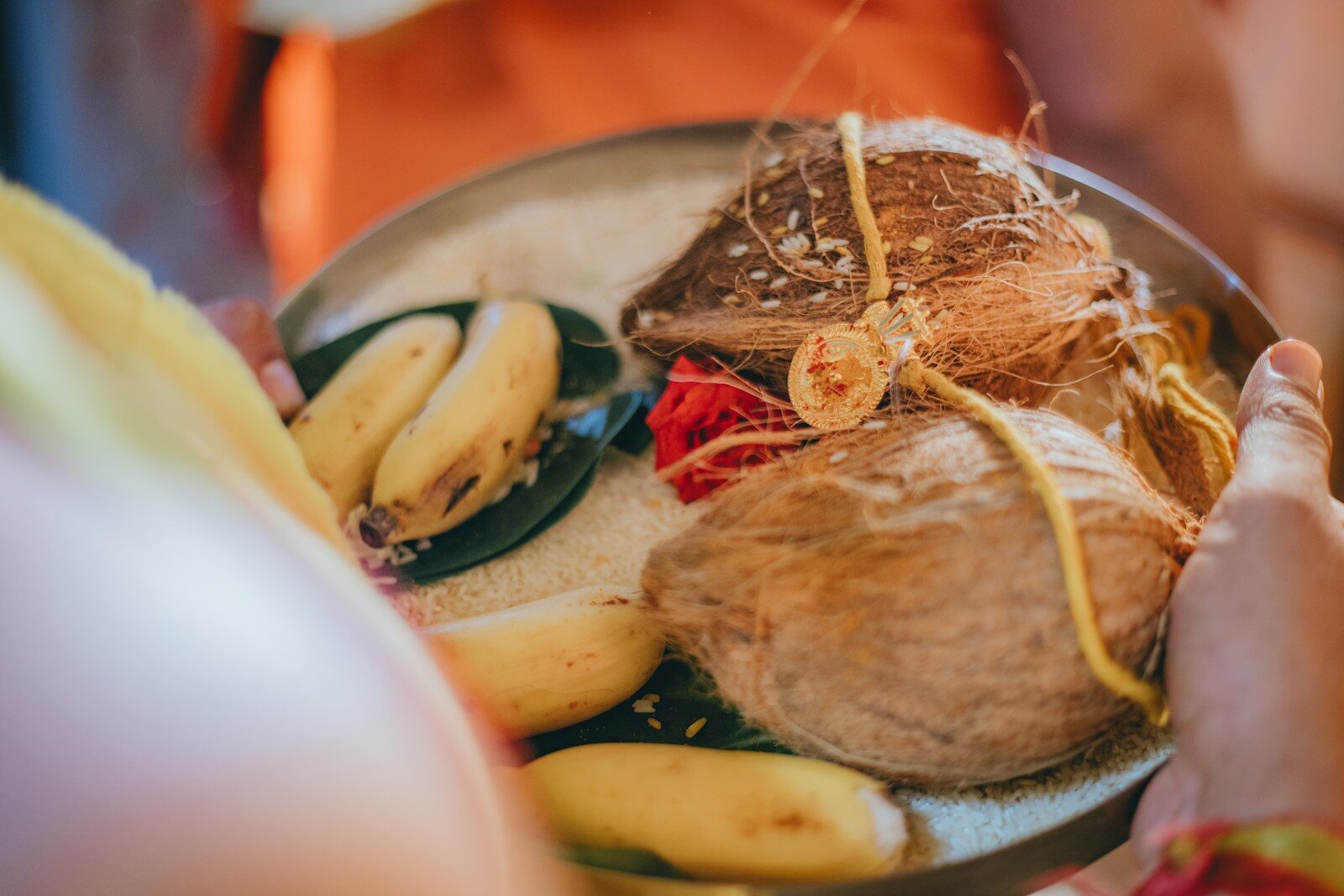
In many ancient cultures, marriage was not seen as an act between two individuals, but as an alliance between two bloodlines. Wedding rituals, shared meals, exchanges between families, the blessings of elders — all tried to make visible something humanity has intuitively known for thousands of years: when two people choose each other, their systems begin learning one another.
Why two family systems meet
In constellations work, it becomes very clear: people do not choose each other randomly. Their systems choose as well.
Sometimes two families meet because there is an unresolved emotional equation between them. Sometimes because one carries what the other lost. Sometimes because one expresses what the other learned to hide.
It may be unconscious recognition. It may be complementary wounds. It may be an attempt at repair. It may be a shared loyalty. It may be an emotion one system never allowed itself to feel, while the other carries it in excess.
Sometimes what we call “chemistry” is a very old form of recognition. Not only between two people. But between two emotional memories.
Perhaps one system contained too much control, while the other brings freedom. Perhaps one system repressed emotion, while the other arrives with intensity and life. Perhaps one learned to survive through silence, while the other survived through closeness.
And for a while, each feels that the other offers exactly the missing piece of their own inner world.
Sometimes we fall in love with someone who carries the very emotion our family never allowed itself to feel.
Carl Jung once said: “The meeting of two personalities is like the contact of two chemical substances: if there is any reaction, both are transformed.”
At a systemic level, the reaction is not only between two individuals, but between two bloodlines.
But transformation is not always gentle.
Sometimes love brings to the surface exactly what each system tried to keep hidden.
And then the relationship becomes more than a space of comfort. It becomes a space of confrontation with one’s roots.
How family of origin influences romantic relationships
Two family systems do not love in the same way Every family has its own alphabet of love.
Some families love through excessive care, almost suffocatingly. Others love through distance, freedom, through “everyone takes care of themselves.” Others love through sacrifice, through self-denial, through “I will carry it, you just live.” Others love through control, rules, and perfection.
What feels normal to one person may feel cold to another. What feels like care to one may feel intrusive to another. What feels like freedom to one may feel like abandonment to another.
Love is not transmitted only through gestures. It is transmitted through the emotional history of a family. Through the way people protected each other. Through the way they survived. Through what they were allowed — or not allowed — to feel.
And often, in relationships, we are not only colliding with each other’s differences. We are colliding with the differences between the worlds we come from.
Attachment research by John Bowlby and Mary Ainsworth showed that the way we love in adulthood is deeply influenced by how we learned emotional safety in childhood.
That is why, in a relationship, it is not only two personalities meeting. It is also two attachment systems meeting.
How the body reacts to the partner’s family system
The body in relationship: the first to recognize the other system Before the mind understands, the body knows.
The body feels:
– contraction when entering a system with too much control
– expansion when entering a system with more freedom
– hypervigilance when the other family’s emotional intensity is overwhelming
– exhaustion when trying to “keep peace” between two worlds
– agitation when loyalties collide
– calmness when order is restored
The body is the first to tell the truth. And the last to lie.
Inherited roles that appear in relationships
Every family subtly transmits roles:
– the rescuer
– the good child
– the invisible child
– the responsible one
– the peacemaker
– the truth teller
– the one who carries shame
– the one who carries anger
In relationships, these roles reactivate like old reflexes. Not because we want them to. But because the system recognizes us and calls us back into the familiar position.
Very often, romantic relationships do not only activate adult love. They also activate the inner child within each of us.
The part that longed to be chosen. The part that felt invisible. The part that had to adapt in order to receive love.
And sometimes, the conflict within a couple is not only between two adults. But between two inner children, each trying in their own way not to lose love again.
The woman and the man’s family system
For a woman, her partner’s family system is often a territory with different rules, rhythms, and silences.
Sometimes she feels she must be “accepted,” as if she is entering an already occupied space. Other times she feels his system does not allow emotional separation — that he remains, without realizing it, “his family’s son” rather than a man building his own life. Sometimes she feels she must repair something that does not belong to her. Sometimes she feels she is being seen through the lens of the women in his family, rather than through his own eyes.
And sometimes, the difficulty is not his family itself. But the fact that emotionally, he has not yet left the role of child.
Then the woman does not feel she is standing beside a man choosing her, but beside a son still trying not to disappoint the system he comes from.
She arrives for the first time at Christmas dinner. Everyone speaks loudly, argues, touches each other, fights and reconciles within the same minute. For him, it feels natural. For her, it feels overwhelming. Not because she is “too sensitive.” But because her system had a different rhythm, a different breath, a different emotional order.
The man and the woman’s family system
For a man, her family system may feel like a world with different expectations, roles, and ways of expressing emotion.
Sometimes he feels he must prove himself. Sometimes he feels he must repair something he did not break. Sometimes he feels he must defend himself from something that is not truly about him. Sometimes he cannot find his place between her mother, her father, her traditions, her rhythms.
Perhaps he grew up in a space where silence meant safety. And now he finds himself in a family where everything is spoken, discussed, and felt.
And without wanting to, his body goes into defense before the mind understands why.
She says: “In our family, men help more.” He feels a sting in his chest. Not because he does not want to help, but because in his family, “men didn’t interfere.” He still does not know how to be different. But he is trying.
Emotional ghosts passed through generations
Psychoanalyst Nicolas Abraham called “ghosts” those unexpressed emotions of previous generations that continue to be transmitted forward, like echoes searching for a voice.
Within couples, these ghosts may appear as:
– disproportionate reactions
– fears without clear cause
– ancient anger
– shame that does not belong to us
– the need to save or repair
They are not ours. But they live within us until someone finally sees them.
Invisible loyalties within relationships
What happens when two systems meet in a couple? A subtle tension appears — almost invisible, yet deeply felt: who remains loyal to whom?
- If I move closer to you, do I betray my system?
- If I choose you, do I distance myself from my family?
- If I love my husband, do I disappoint my mother?
- If I protect my wife, do I disappoint my father?
- If I change, do I still belong to my family?
These questions are not always spoken aloud. But the body knows them. The relationship feels them. Silence carries them.
Bert Hellinger said: “Love needs order to flow.”
Order does not mean rigidity. It means each person can see their system without remaining completely trapped inside it.
Why it hurts so much to separate from the family of origin
Sometimes people believe a couple’s difficulty comes from a lack of love. But at a deeper level, the difficulty often comes from the fact that becoming an adult also means enduring the pain of emotional separation from the system you came from.
Not separation through rejection. But through differentiation.
For many family systems, the change of one member is unconsciously experienced as danger.
If you change, do you still belong? If you set boundaries, are you still “one of us”? If you choose a different life, can you still be loved?
And sometimes, without realizing it, we choose conflict within the relationship simply to avoid feeling the guilt of separation.
Children and the conflict between two family systems
A child belongs to both systems. They cannot choose. And they should not have to choose. Children do not understand the concept of loyalty. But they experience it in their bodies.
They feel:
- unspoken tensions
- comparisons between families
- exclusions
- the adults’ need for validation
- conflicts of belonging
- the pain of standing between worlds
They feel when they are expected to belong “more” to one family. They feel when part of their identity is criticized or excluded. They feel when the love between adults becomes tense around issues of belonging.
And sometimes, without knowing it, they begin fragmenting their own inner world in order to belong to both.
A child may become a bridge. Or an emotional battlefield. Sometimes, a child unconsciously tries to keep the family together.
They become “the good child.” The mediator. The child who causes no trouble. Or, on the contrary, they become the symptom the entire family focuses on, so no one has to face the tension between the adults.
Children often make invisible sacrifices for belonging.
The maternal grandmother says: “This is how we do things in our family.” The paternal grandmother says: “No, this is how we do things.” The child stays silent. But their body is trying to hold two universes together.
How a couple creates its own family system The couple’s new rituals: how the third family Is born
A couple truly becomes a new system only when they create their own rituals:
– how decisions are made
– how apologies are offered
– how they reconnect after conflict
– how they celebrate
– how they preserve personal space
– how they protect the intimacy of the couple from the families of origin
Without new rituals, the couple remains trapped between two worlds. With new rituals, the couple becomes the third family.
Perhaps every mature couple needs, consciously or unconsciously, their own rites of passage: the moment when “we” begins to exist separately from the families of origin.
Not against them. But as a new continuation of life.
What systemic maturity means in a relationship
Maturity appears when you can say: “I come from my system. You come from yours. We do not deny our origins. But neither do we live only from inside them.”
Building a relationship does not mean abandoning your family. It means no longer living only through its loyalties.
Perhaps maturity does not mean choosing between families. But being able to look at both systems with respect, without dissolving completely into either one.
To be able to say: “I carry you within me. But life moves forward through me — it does not only repeat itself.”
Perhaps mature love begins in the moment when you stop trying to choose between “my family” and “my relationship,” and instead learn how to stand between worlds without losing yourself in either.
Two systems, one shared path
When two systems meet, it is not only two stories meeting. It is two ways of surviving. Two ways of loving. Two ways of understanding the world.
And perhaps the true meeting between two people begins only when each brings their system into the light, places it beside the other, and says: “This is who I am, with everything that came before me — and still, I choose to move forward.”
Perhaps this is true systemic maturity: to receive what came before you without being forced to repeat it forever.
And when you say this, something begins to settle within you. In the body. In the heart. In your bloodline.
Not because you broke the thread. But because you held it with respect and walked forward. Your journey begins with a choice - family constellations
Frequently asked questions
How does the family of origin influence romantic relationships?
The family of origin influences the way we love, communicate, handle conflict, closeness, boundaries, and emotional safety. Many reactions in relationships are connected not only to the present moment, but also to emotional patterns learned in childhood.
What are invisible loyalties in relationships?
Invisible loyalties are unconscious emotional ties to the family of origin that can influence decisions, conflicts, and the difficulty of setting boundaries or building an independent couple identity.
Why do conflicts appear between the families of partners?
Because every family has its own emotional rules, values, and ways of expressing love. When two different systems meet, tensions related to belonging, roles, and loyalty naturally emerge.
How are children affected by conflicts between family systems?
Children feel emotional tensions between families even when they are not directly expressed. Sometimes they become mediators, “good children,” or carriers of the family tension in order to preserve belonging and emotional balance.
What does systemic maturity mean in a relationship?
It means being able to respect your family of origin without remaining completely trapped in its loyalties, while creating together with your partner a new relational space with its own rules and rituals.
Constellations and systems - psychogenealogy and transformation
If you feel there's room for more, I invite you to discover the systemic way I work — through circles, conversations, and spaces of reflection dedicated to the inner process. Explore the approach through circles or the take a first step to see what opens up for you.
Share this article
Support the article library
If this article has been meaningful to you and you’d like to support this project, you’re welcome to make a voluntary contribution.
This contribution helps me continue writing freely and developing the resource library about body, soul, rituals, emotions, and inner transformation.