Qi Gong – when movement becomes meditation
If these reflections resonated with you, you are welcome to share it further.
Qi Gong – the ritual of breath, slow movement, and presence in the body
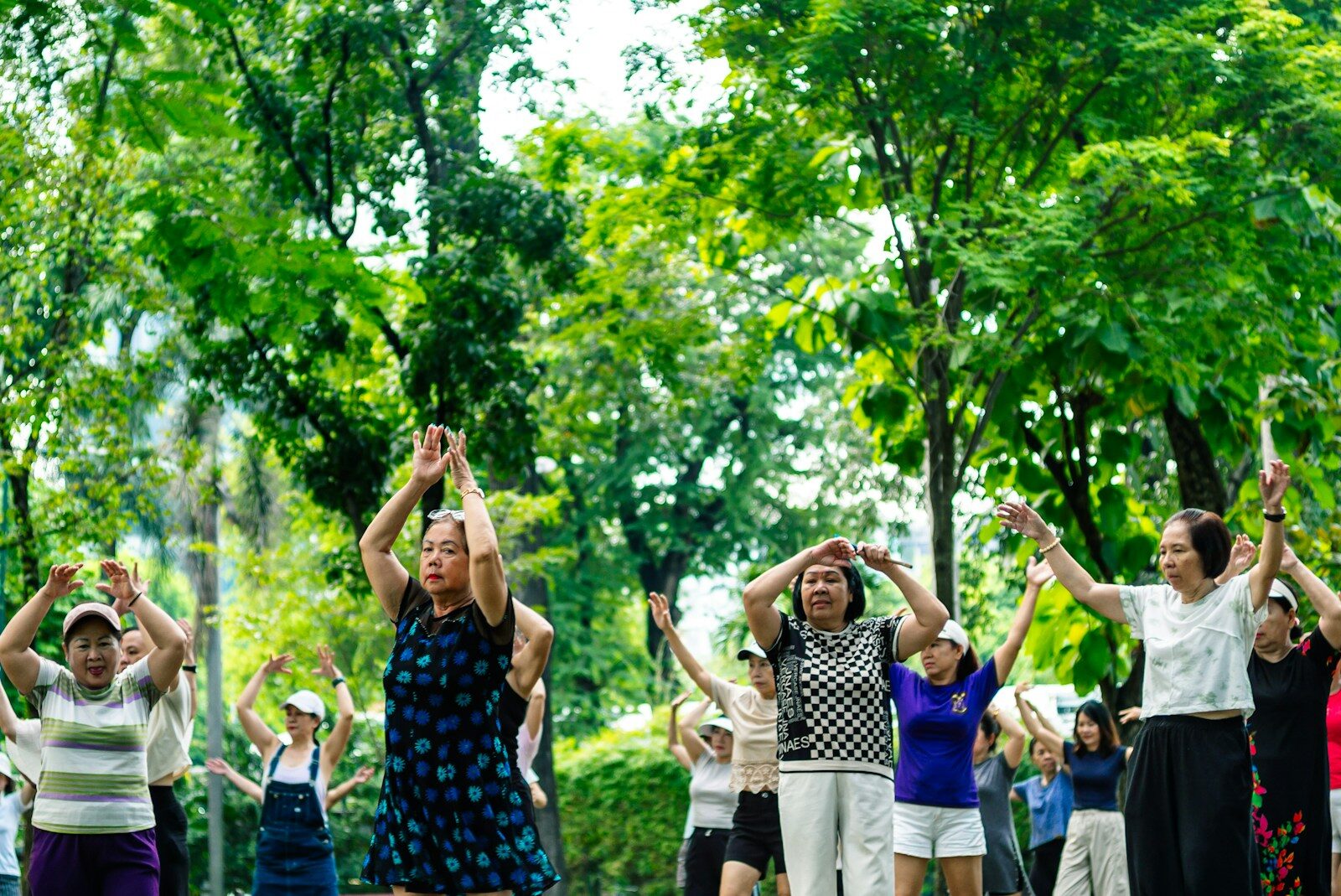
In many parks across China, the day begins before the city is fully awake.
People gather quietly, lift their arms slowly, breathe, move in a calm and continuous rhythm, and do not seem to be rushing anywhere. This is Qi Gong, one of the oldest living body practices in the world.
At first glance, the movements may seem simple. But for those who practice it, Qi Gong is more than physical exercise. It is a way of cultivating attention, a ritual of presence, a daily meeting between body, breath, and mind.
Its name is made of two Chinese words. Qi is often translated as vital energy, breath, or life force. Gong means practice, cultivation, or development through steady effort. Together, they describe the idea of conscious cultivation through movement and breath.
Its origins are very old. Historians find early forms of similar exercises as far back as the Warring States period and the first centuries of the Chinese Empire. Some of the oldest representations appear on silk fragments discovered in the Mawangdui tombs, more than two thousand years old.
Over time, the practice was shaped by Taoist and Buddhist traditions, as well as by traditional Chinese medicine.
Today there are hundreds of forms and schools. Some are practiced alone, others in groups. Some focus on health and mobility, others on meditation and cultivating attention.
Seen from the outside, Qi Gong may look like nothing more than a series of slow movements. But from an anthropological perspective, it speaks to an idea found in many traditional cultures: the way we move influences the way we live.
Historian and sinologist Nathan Sivin showed that in Chinese tradition, the body was not seen as something separate from the mind or the surrounding world, but as part of a system of relationships in continuous balance.
Medical anthropologist Judith Farquhar observed that practices like Qi Gong give people a concrete way to participate actively in their own experience of life through attention, breath, and movement.
Maybe this is one of the reasons Qi Gong continues to be practiced after so many centuries. It does not require performance, it does not seek competition, it is not about going faster. It is about slowing down enough to notice: the breath, the body, the space around you.
In a world where much of our attention is pulled outward, Qi Gong offers a different kind of movement. A turning not toward a goal, but toward the present experience. Perhaps this is why so many people describe it as a ritual.
Not because it repeats the same movements, but because it repeats the same meeting. Day after day, with your own body, your own breath, your own rhythm.
Sometimes, ritual does not mean adding something new to your life. Sometimes, ritual means being present enough to notice what was already there.
👉 Is there a moment in your day when you feel truly present in your body?
👉 How does your state shift when you intentionally slow your pace?
👉 If you dedicated ten minutes a day to a simple practice of presence, what might you notice differently?
Support the article library
If this article has been meaningful to you and you’d like to support this project, you’re welcome to make a voluntary contribution.
This contribution helps me continue writing freely and developing the resource library about body, soul, rituals, emotions, and inner transformation.