The hunger to crown a champion
If these reflections resonated with you, you are welcome to share it further.
On heroes, status, and the urge to turn admiration into hierarchy
A continuation of the article Football and the modern hunger for belonging — this time about the other impulse every competition brings to the surface: the need to name a single champion.
I once wrote about tribunes, chants, and flags carried across oceans. About the need to belong to a we. But watching that same World Cup, I caught myself waiting for another conversation — one that has nothing to do with belonging, and everything to do with something else.
It shows up after almost every decisive match, like a ritual of its own.
Who is the best?
Best player. Best goalkeeper. Best coach. And, inevitably, the question that crosses generations like an endless echo: Messi or Ronaldo? Maradona or Pelé?
I started wondering why we need this question so badly. Because it doesn't only show up in football. It's almost everywhere, a cultural reflex we no longer even notice: best actor, best poet, best restaurant, most beautiful beach, best university. And, in a way that should probably give us pause, even where competition shouldn't exist at all — best parent, best mother, best version of yourself.
Why isn't it enough to admire? Why do we have to rank?
The mind that hates ambiguity
There's a simple answer, almost banal in its simplicity: our brain doesn't love complexity.
If there are a thousand extraordinary footballers, each with his own particular genius, the mind grows tired. Too many variables, too many shades, too much uncertainty. But if there is only one — the best — everything suddenly becomes simple. You have a fixed point. A landmark. You no longer have to hold complexity in mind; a single name will do.
Psychologist Daniel Kahneman called this kind of processing fast thinking — a cognitive system that always prefers the simple answer, available immediately, over the correct but costly one. Our brain looks for ease — cognitive ease. And hierarchy, from this angle, is one of the most efficient mental shortcuts we've ever invented: it collapses a universe of variation onto a single axis, from top to bottom.
Ranking doesn't describe the world. It simply makes it easier to carry.
Tribes need heroes
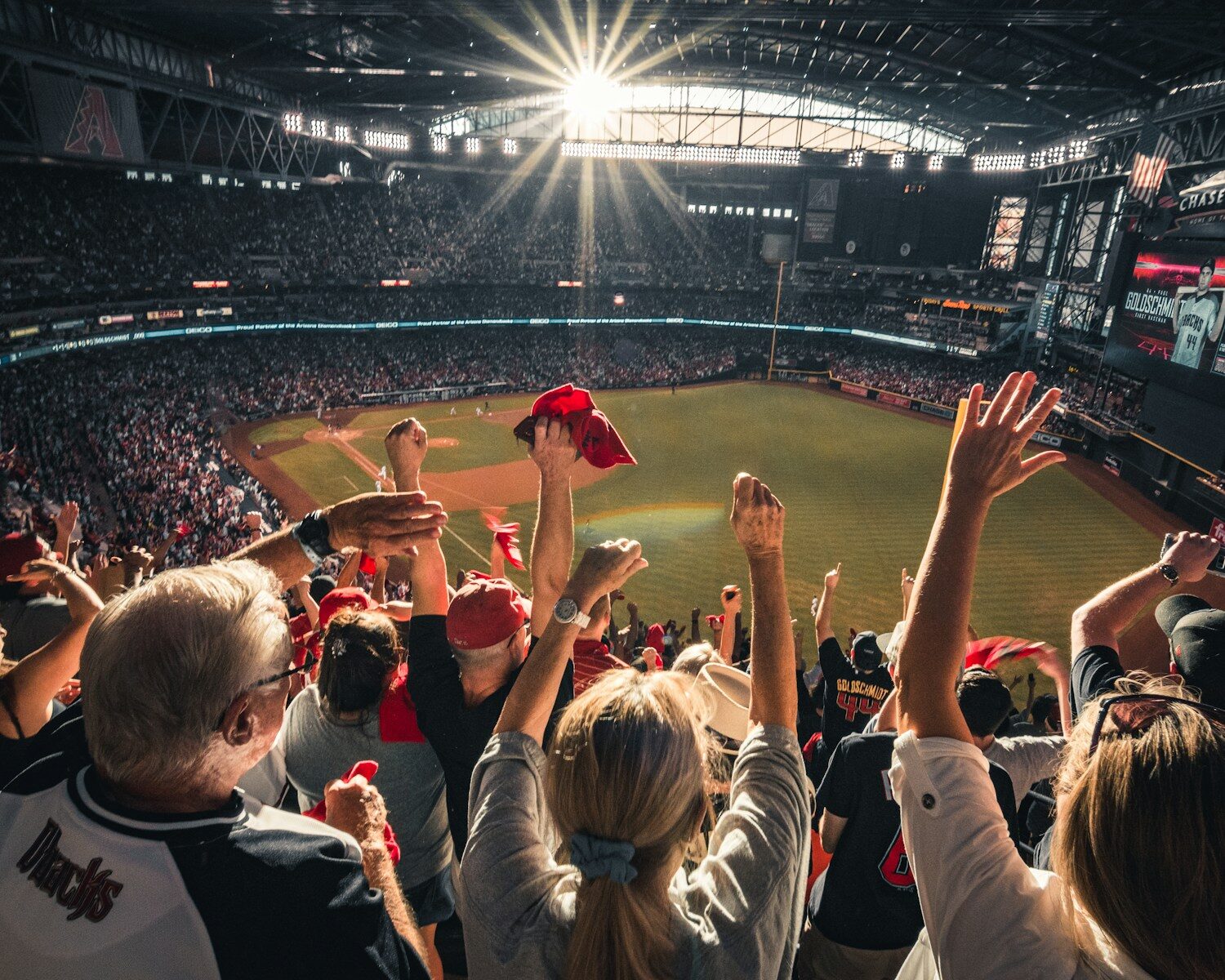
I've already written about this — about the stadium as sanctuary, about the collective effervescence we feel in the stands. But tribes don't organize only around shared chants and flags. They also need figures. Champions who carry, on their shoulders, the whole story of the group.
In the past, this figure wore armor or a crown — the warrior, the shaman, the king. Today he wears a football shirt, a tennis racket, or a stage costume. Sometimes he receives a Nobel. Other times, an Oscar. We only change the costumes. The need stays the same.
Joseph Campbell identified, across countless mythologies, a recurring pattern: the hero who departs, passes through trials, and returns transformed. We don't invent new heroes every time. We pour real people into the mold of an old story, one we recognize instantly, almost without thinking. Tribes don't just need a shared song. They need someone who, for a while, becomes the face of that song.
We compare ourselves to find our place
There is also an older, less comfortable layer beneath all this.
Humans aren't the only species that lives in hierarchies — many social animals have sophisticated status structures of their own. But humans seem to be the only species that turns those hierarchies into elaborate symbolic systems: rankings, titles, prizes, and stories about personal worth. We're not content to simply feel where we stand. We have to name it, measure it, display it.
We don't just ask who am I? We ask, almost instinctively, where am I? On a scale. In a rank.
The ranking of "the best" is never only about the champion. It's always, too, a silent map by which we place ourselves somewhere — lower, or closer to the top.
What we actually love: the story, not the ranking
This, I think, is where the most interesting part of everything I've written so far lives.
Because if I'm honest, it isn't the ranking that keeps me glued to the screen. The numbers don't move me. Messi doesn't touch me because he has one more goal than someone else. What touches me is the story behind him — the child diagnosed with a growth hormone deficiency, sent far from home to keep going, who became, after years of trials and defeats, a world champion. The same with Nadal, a body pushed to its limits year after year, coming back match after match. The same with Simone Biles, who one day had the rare courage to say I can't right now — and that became her story.
The semiotician Roland Barthes wrote, in a famous essay on wrestling, that sporting spectacle works exactly like ancient mythology: we don't care who wins, but what each figure embodies — suffering, betrayal, redemption, justice. Sport, he said, is not a game of results. It's a theatre of great moral forces, played out on a small field.
The ranking chooses the hero. But the story is what keeps our heart close.
When comparison starts to lie
And yet — what does "the best" actually mean?
Best compared to whom? In which era? By which criteria, measured how, by whom? It's almost absurd to compare Van Gogh with Picasso, Mozart with Bach, Eminescu with Shakespeare, Messi with Pelé. These are people who lived in different worlds, with different tools, asking different questions about what excellence even means. And yet we do it, night after night, with an almost religious conviction.
Hannah Arendt said that the human condition itself is plurality — the fact that every person born brings into the world something that has never existed in exactly that form before. We are not variations on a single perfect model, which some reach more fully than others. Each of us is a beginning.
But I don't want to overstate this. We can compare performances. We can count goals, trophies, records, awards, years of a career. One footballer can, demonstrably, be more effective than another in a given season, by certain criteria. Comparison isn't always a lie.
It becomes a lie the moment we turn the measurement of a performance into a total verdict on the worth of a person or a work. It's one thing to say: this season, so-and-so scored more. It's something else entirely to say: so-and-so is worth more, as a person, as an artist, as a life.
The mind prefers hierarchy. Life, it seems, prefers diversity.
Hierarchy in the Age of Algorithms
We also live, on top of all this, in a world built to measure absolutely everything. Charts, ratings, likes, followers, Google stars. Nothing is allowed to simply stay good. Everything has to be ranked, quantified, positioned on a list.
The philosopher Byung-Chul Han called our society an achievement society — one in which every person has become, simultaneously, his own entrepreneur and his own judge, forever in competition, even with his past self.
Even the language of personal development has taken on the logic of the podium. We're no longer just asked to live, to learn, to grow, but to permanently become the "best version" of ourselves — as if inside each of us there were an endless leaderboard, updated daily, with a single first place always just out of reach.
Perhaps algorithms have simply learned to love hierarchies more efficiently than we do. And by teaching us to read them every day — on our phones, on our feeds, in every notification — they've trained us to look for a winner even where none existed before.
What's left if we give up the summit
And yet, I think there's a truer question underneath all of this.
Maybe we don't need someone to be number one. Maybe we just need to believe that excellence is possible. That a person, starting from somewhere low, with a fragile body or a hard story, can reach a place we once believed only gods could reach.
Messi, in the end, isn't what matters. What matters is that a person can get there. The champion isn't a title. He's proof. A window open onto what a human being can become, when talent meets the work, the right circumstances, and the stubbornness to keep going.
So maybe the question worth asking isn't who is the best?, but something more personal, less comfortable: who inspires me the most? Or, closer still: whose story awakens in me the desire to carry my own possibilities further?
Because the moment we stop looking for a single summit, we start seeing something else — perhaps more valuable than any podium. Different people, embodying different forms of the same excellence. Not a mountain with one lit peak.
A whole constellation.
Support the article library
If this article has been meaningful to you and you’d like to support this project, you’re welcome to make a voluntary contribution.
This contribution helps me continue writing freely and developing the resource library about body, soul, rituals, emotions, and inner transformation.