If these reflections resonated with you, you are welcome to share it further.
Exclusion in psychogenealogy and family constellations – how it is transmitted, how it feels, and how it is integrated
Exclusion in the family system: What It means and why it matters
In every family there is an invisible fabric, a kind of memory of the heart that holds everything: joys, losses, loves, ruptures, sacrifices, silences.
In the language of family constellations, this memory is governed by a simple and profound law: everyone who belongs to the system has the right to a place.
In Bert Hellinger’s work, this law is part of what he called the orders of love: belonging.
Anyone who has been part of the system—regardless of their destiny, their choices, or how they were perceived—cannot be excluded without consequences.
Hellinger said it simply: “What is excluded returns.”
Not as punishment. But as a movement toward balance.
When someone is excluded—forgotten, hidden, unspoken, erased from the story—the system does not calm down. On the contrary, it begins to search for equilibrium.
And equilibrium, in the deep logic of psychogenealogy, is not achieved through forgetting, but through returning to belonging.
Exclusion does not disappear. Exclusion is transmitted. Exclusion always seeks a way to be seen.
And most of the time, that way passes through us—through our bodies, our relationships, our choices, our fears, and our blockages.
Who are the ones excluded from the family system
The excluded are not only those “no one talks about.” Exclusion can be dramatic, but it can also be subtle, almost imperceptible. It can be a silence, a shame, an unfinished story, a pain no one knew how to carry.
Former partners of parents or grandparents – Important loves, relationships that mattered but were erased to “protect” the current family. In the system, however, love is not erased. It remains.
Lost children – Abortions, miscarriages, stillborn children, children given up for adoption, children who died young. They are often the most deeply excluded—and the most powerfully present at an invisible level.
Those considered “the shame of the family” People with addictions, mental illness, “unacceptable” behaviors, those who broke rules or caused scandal. The system hides them, but the soul does not forget.
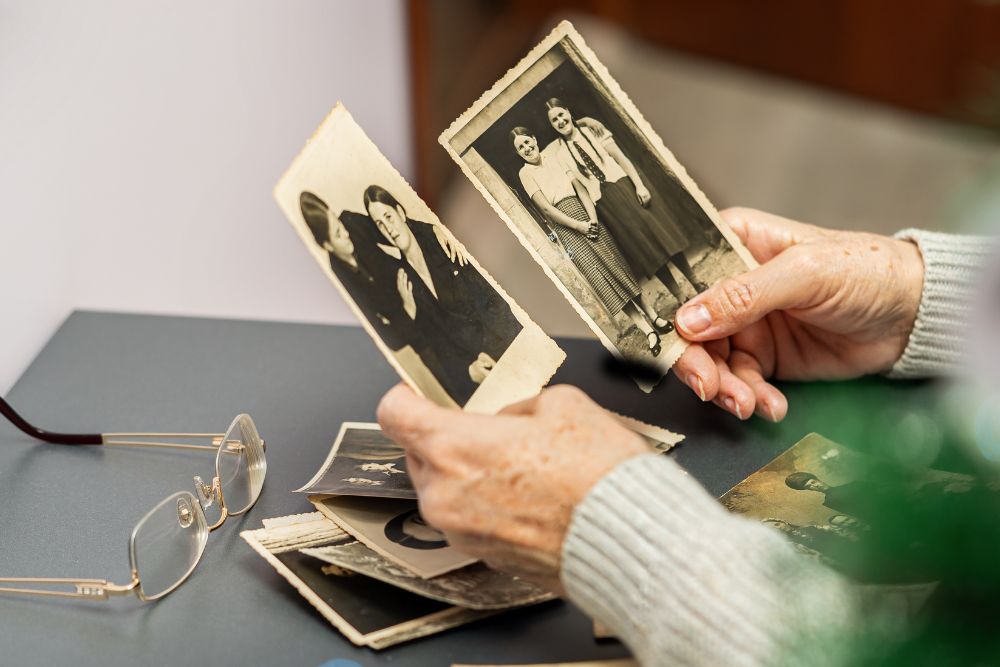
Those who left and never returned – Emigrated, disappeared, cut off from the family, removed from photos or stories.
Victims and perpetrators Especially in contexts of war, violence, injustice. The system excludes those who did harm—but also those who were harmed.
Those sacrificed for the good of the family – Older siblings who gave up their lives for the others, women who stayed in impossible relationships, men who carried burdens too heavy.
Silent exclusion – Sometimes exclusion is not dramatic. It is about someone of whom people say:
- “Doesn’t matter.”
- “Better not mention them.”
- “There’s no point in opening that subject.”
But what has no point for the mind has a point for the system. And the system always finds a way to bring back what was pushed aside.
How exclusion is transmitted across generations
When someone is excluded, another member of the family—usually a descendant—will try, without knowing, to bring them back into the heart. This is the fundamental dynamic of invisible loyalties.
“A child’s love is blind—he will do anything to belong.” — Bert Hellinger
What psychogenealogy says
In psychogenealogy, this dynamic appears in different but convergent forms.
Anne Ancelin Schützenberger speaks about invisible loyalties and about what is not said — non-dit — but is transmitted.
Ivan Boszormenyi-Nagy describes family loyalty as a deep fidelity that makes descendants carry the system’s balance forward, even at the cost of their own lives.
Alejandro Jodorowsky speaks about transgenerational mandates—invisible programs that push us to live stories that are not entirely ours.
From different perspectives, all these approaches say the same thing: what is not integrated in one generation will seek to be lived in the next.
How this transmission appears in practice
Unconscious identification
A child or grandchild may take on the destiny of the excluded one:
- their emotions
- their fears
- their choices
- even their suffering
Repetition
- Relationships that fall apart in the same way.
- Repeated financial failures.
- Illness appearing at the same age.
Symptoms without apparent cause
Anxieties, guilt, fears that do not belong to the person, but to the system.
Blockages in the flow of life
Money, love, health, success can all be affected.
Not because life punishes, but because the system seeks balance.
Concrete examples of exclusion and its effects
Relationships that don’t hold – A woman cannot maintain a relationship. In the constellation, an important former lover of her mother appears—completely excluded from the story.
Fear of success –A man avoids opportunities. In the system, a bankrupt uncle had been excluded.
Anxiety without explanation – A person lives with a deep fear of abandonment. In the system, a lost child had never been acknowledged.
How exclusion feels in the body
The body is the first to know. The body is the first to feel. The body is the first to carry.
Exclusion can appear as:
– the sensation of “I have no place”
– withdrawal
– tension in the chest or throat
– difficulty occupying space
– fear of being seen
– the feeling of “I am not enough”
The body does not just react. The body remembers.
Unspoken experiences can remain in the nervous system and be felt generations later—not as story, but as sensation.
How exclusion is worked with in family constellations
Constellations are not about fixing. Not about judging. Not about finding someone to blame. Nu sunt despre a găsi vinovați.
They are about seeing.
In the field, working with exclusion involves:
– bringing the excluded person into the space
– acknowledging their destiny
– restoring order: “You belong”
– releasing the descendant who carried the burden
When the excluded one is seen, the system breathes again. And with it, those who carried the burden also breathe.
How life changes when we include what was excluded
Inclusion is not a mental act. It is an act of the heart.
When what was excluded is brought back:
– relationships become clearer
– the body relaxes
– the flow of money regulates
– the feeling of “I am in my place” appears
– the need to save or fix others decreases
Not because “everything is solved,” but because order is restored.
“Order brings peace.” — Bert Hellinger
Bringing home what was forgotten
Every system has a memory of the heart. And what was forgotten does not want to punish. It only wants to be seen.
Perhaps this is one of the deepest truths of family constellations: no one can truly be excluded.
And healing begins the moment we stop, look, and say: “I see you. You belong.”
Because sometimes, that is all a system needs to settle.
Frequently asked questions
What does “exclusion” mean in family constellations?
Exclusion appears when a family member is forgotten, hidden, or denied. The system does not lose them—it keeps them at an invisible level.
How do I know if I carry something from an excluded member?
Through repetitive patterns, inexplicable emotions, persistent blockages, or the feeling that you are living a life that is not fully yours.
Does exclusion affect only relationships?
No. It can influence money, health, success, and the way you position yourself in life.
Can exclusion be “healed”?
It is not about erasing the past, but about integrating it. When the excluded one is seen and acknowledged, the dynamic can soften.
Some things do not settle through explanation. They settle when they are seen.
And sometimes, there comes a moment when you feel you no longer want only to understand, but to see more clearly, in depth.
If you reach that place, there are spaces where this seeing becomes possible. In your rhythm. Without hurry.
If you feel there's room for more, I invite you to discover the systemic way I work — through circles, conversations, and spaces of reflection dedicated to the inner process. Explore the approach through circles or the take a first step to see what opens up for you.
❤️ Support the article library
If this article has been meaningful to you and you’d like to support this project, you’re welcome to make a voluntary contribution.
This contribution helps me continue writing freely and developing the resource library about body, soul, rituals, emotions, and inner transformation.