Who am I, beyond my roles?
If these reflections resonated with you, you are welcome to share it further.
Who am I — or about the question you can't answer right away — and what that means
In a training, someone asked me, without warning, a simple question: "Who are you, beneath what you do?" I felt a small jolt in my chest, like reaching for a door and finding a wall instead. I opened my mouth to answer and noticed, a second too late, what I was about to say: I'm a therapist, I'm a daughter, I'm someone who holds everything together. All true. None of them, actually, an answer.
I stayed quiet longer than felt comfortable for either of us. And only then did I understand what had stopped me — not the lack of a good answer, but the absence of a place to draw one from.
We all answer a different question
Almost no one actually answers the question "who are you?" We all answer "what do you do?"
I'm a mother. I'm an accountant. I'm married. I'm introverted. I'm religious. Each of these sentences is true, and at the same time, none of them touches the question. They're roles, functions, belongings — useful labels, but external ones.
The real question comes right after, like an echo: if you took all of them away, what would be left? That's usually where the silence sets in.
Why we stop at roles
At the start, we don't even know we exist as separate people. We learn who we are from the way others look at us — you're good, you're difficult, you're responsible, you're the one who takes care of everyone. Psychologist Erik Erikson described identity not as something given, but as something built gradually, through integrating these experiences into a coherent sense of self, across an entire lifetime, not just in childhood.
For years, we confuse the descriptions we were given with identity itself. It's a natural confusion — no one ever showed us the difference. So when someone asks "who are you?", the mind answers, by reflex, with the story it learned.
Roles have another virtue too: they're stable. If I say "I'm a doctor," the world instantly knows where to place me. If I say "I'm a father," there's a clear, recognized, safe spot. A role works like a map anyone else can read without effort.
Why it hurts
As long as the role holds, the question doesn't even come up. You have a place, a function, a ready-made answer within reach.
But for almost everyone, a moment comes when the role stops — retirement, illness, a child who grows up and leaves, an unexpected layoff. And sometimes, then, a crisis appears that has nothing to do with what was actually lost, but with something quieter: the person no longer knows who they are. Not because they're missing the role. But because the role was, until then, the only place from which they gave themselves an answer.
This isn't a judgment on how we lived until then. It's just an observation: the better a role is played, the harder the emptiness feels once it ends.
What the body knows before the mind does
Often, the block in front of this question isn't mental — it's physical. A slight tightening in the chest. A pause in the breath. A moment when the tongue reaches for a word and can't find it.
The body reacts first because it senses, a few seconds before the mind does, that something is being asked of it that can't be given instantly — a presence, not a list.
A question that doesn't ask for information
I think this is the heart of the difficulty: "who am I?" isn't a question that asks for information. It's a question that asks for experience.
You can describe an ocean — its depth, its color, the sound of the waves. But the description isn't the ocean. In the same way, you can say "I'm calm," "I'm creative," "I'm loyal." All of these are observations about you. They aren't you.
The therapy model called Internal Family Systems, developed by Richard Schwartz, starts from exactly here: what we usually call "I" is often a mix of inner parts — the protector, the perfectionist, the one who rescues, the wounded child still waiting for something. Beyond them, Schwartz says, there's a Self that isn't any of these roles — described less by content and more by a quality of calm, curious presence. Maybe that's why we don't find the answer by looking harder. Maybe we only need to notice, one by one, who we aren't.
What contemplative traditions say
Here, all the great traditions seem to meet at a surprising point — and here, I admit, I feel closest to a real answer.
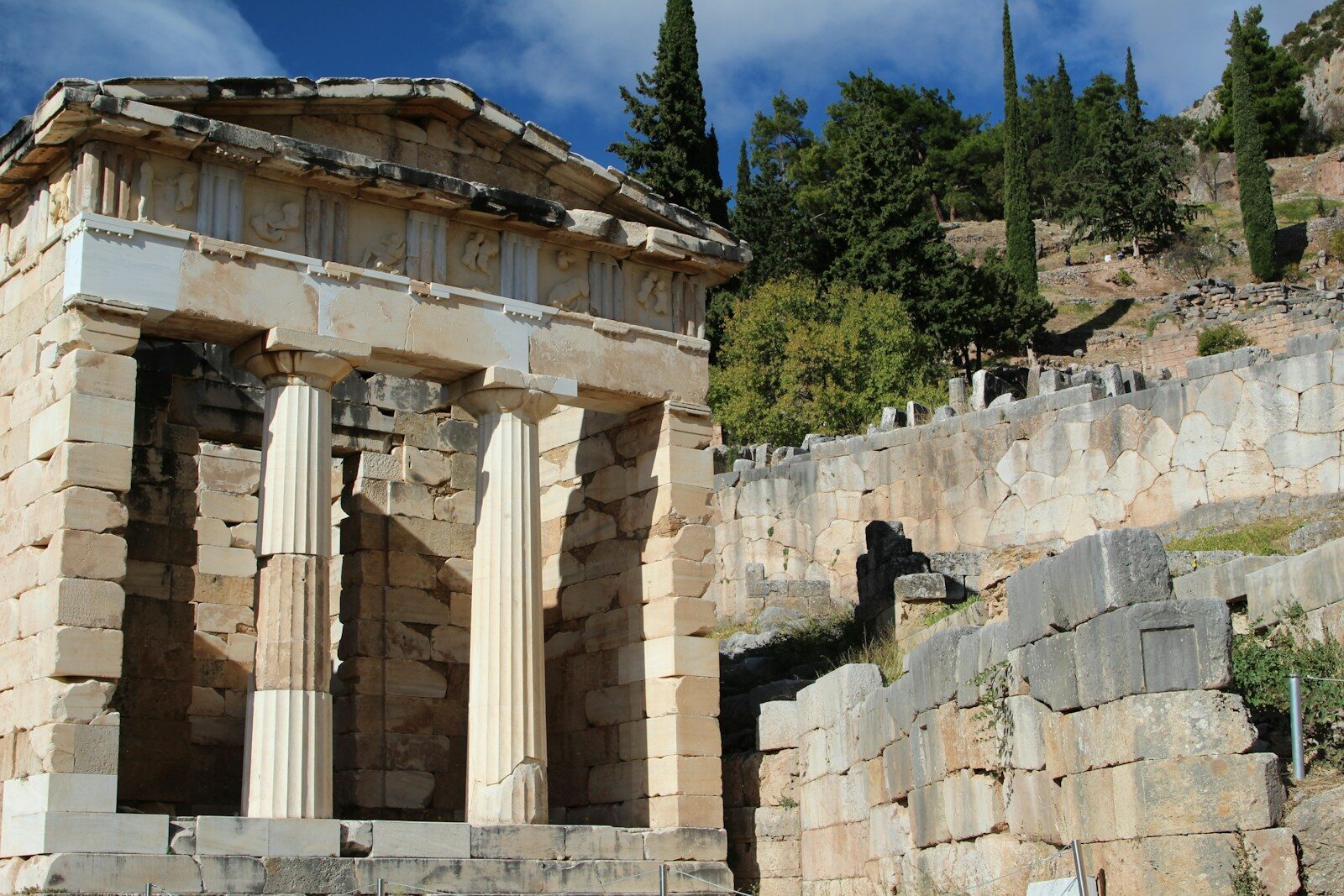
Carved into the front of the Temple of Apollo at Delphi was a single line: know thyself. Not "learn more about yourself." Know yourself — as if this kind of knowing were something other than gathering information about oneself.
Buddhism goes a step further and questions the premise itself: is there, in fact, a fixed, separate, unchanging self at all? The doctrine of anatta — not-self — doesn't deny the experience of being someone, but the idea that this experience rests on a permanent, unchanging core that stays identical over time.
In the Advaita Vedanta tradition,the sage Ramana Maharshi taught a practice called self-inquiry: you simply ask, "who am I?" — and reject, one by one, every answer that arises I am not the body. I am not the thoughts. I am not the emotions. I am not the roles. I am not the memory. The method doesn't build an answer. It subtracts one, layer by layer, until nothing is left to define — and that, the tradition says, is exactly where the actual experience begins, beyond words.
It's a strange move: the more you deny, the less you're left to say, and yet, paradoxically, the more clarity you have about what you are. Maybe that's why the people who seem to know most clearly who they are talk about it the least. You feel them. They don't define themselves for you.
Why we really can't answer this at first
Beyond psychology and the contemplative traditions, I think the deepest explanation comes from the systemic perspective — the one I look through most often, for a family's story.
In systemic work, identity doesn't first form in the individual — it forms in the family field. A child doesn't consciously ask "who am I?" They adapt, instinctively, to what the system they're part of needs — becoming "the strong one" where the parents are fragile, "the good one" where there's unspoken conflict, "the one who doesn't ask" where asking would have been too much. Not by choice. Out of loyalty — a loyalty that doesn't think, it simply happens.
Bert Hellinger, who laid the foundations of family constellations, spoke of every member of a system needing a place — and of how, when a place stays empty or unacknowledged, another family member, often a child, ends up filling it without knowing why. And psychologist Anne Ancelin Schützenberger showed how a family's silences and untold stories keep speaking, generations later, through choices and repetitions that feel personal but don't actually start with us.
That, I think, is why we can't answer the question at first: because it touches exactly the spot where our identity isn't, yet, our own. We don't know where the system ends and we begin. We don't know what's our own desire and what's old loyalty. We don't know what's our voice and what's the voice of a parent, a grandparent, a history we never chose.
Real identity, in this view, doesn't come from denying the system you come from, and it doesn't come from copying it without ever questioning it. It comes when you recognize it — and only then do you consciously choose what to keep and what not to.
What if the question is the wrong one?
Here, I think, is the strongest paradox in this whole story: the harder you try to answer "who am I?", the more you risk producing yet another definition. And every definition, however refined, becomes, in turn, a new role.
We free ourselves from the role of accountant — and become the role of "spiritual seeker." We free ourselves from the role of worried mother — and become the role of "conscious woman." Still identity. Just subtler, harder to recognize as such.
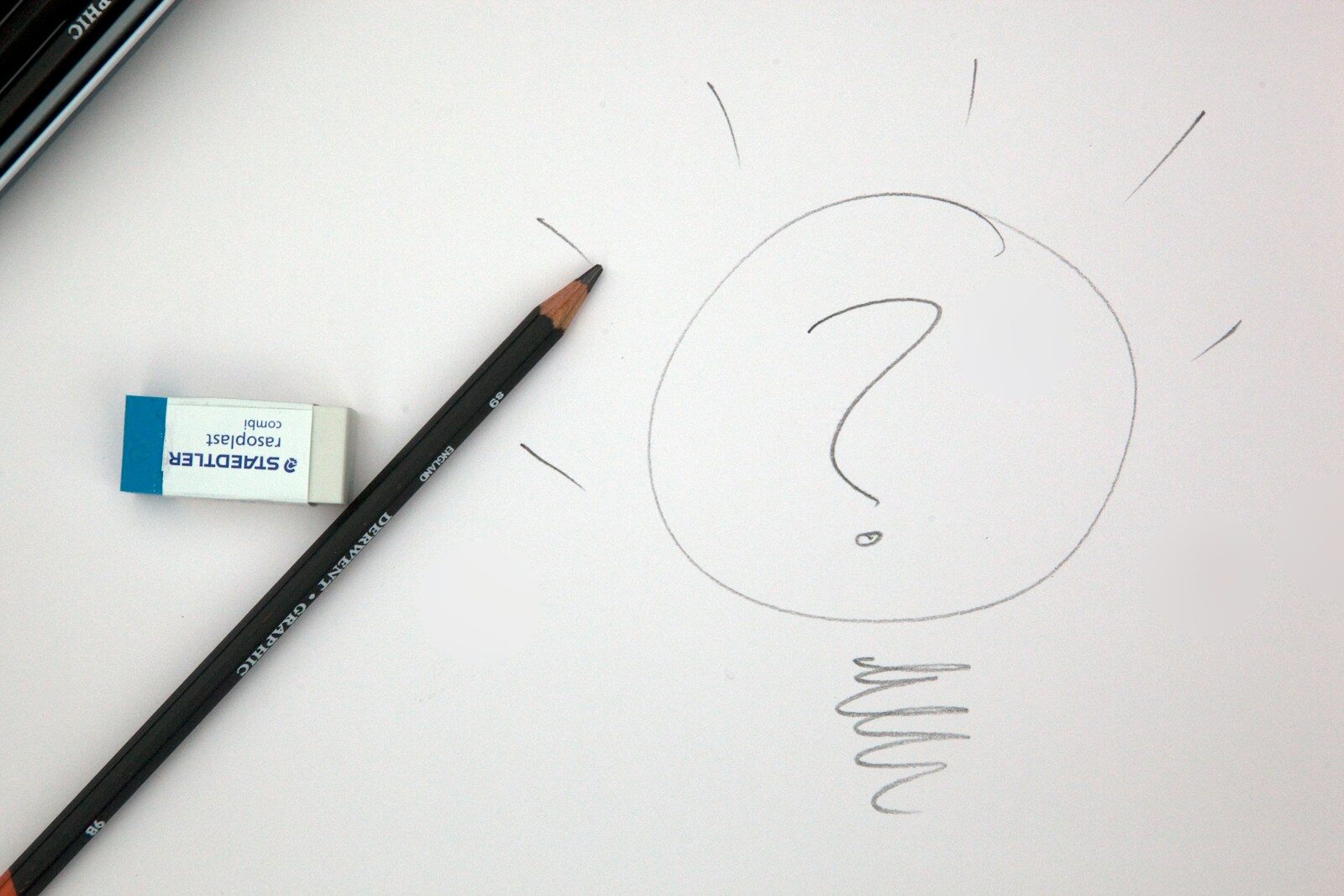
Maybe the question itself is slightly the wrong one. Not "who am I?" — that, inevitably, demands a noun, a label, however beautiful. But something closer to IFS: what part am I speaking from right now?
The difference is felt immediately. If someone asks you "who are you?", the mind searches for a fixed definition, something that stays true forever. But if you ask yourself what part of you is speaking in this moment, something else shows up — more fluid, more honest. Today the perfectionist speaks. Tomorrow, the child scared of failing. The day after, the free woman who no longer asks anyone's permission. None of them is the whole identity. They're all just expressions, waves passing through the same water.
And, maybe most importantly, there are moments when no part speaks at all. Moments when you dance and completely forget you're "someone." When you laugh until your stomach hurts and, for a few seconds, forget what you have to defend. When you look at the sea and the border between you and what you're seeing disappears. When you hold your child and stop thinking about who you are at all — you simply are. In those moments you don't tell yourself "I'm a therapist" or "I'm a daughter." You don't tell yourself anything. And maybe that's exactly where the closest experience of self lives — not as an idea, but as a state.
And what if the answer changes?
There's something else that makes me look at this whole question differently.
We assume, without realizing it, that the answer should stay the same for a whole lifetime. As if, once found, we could frame it and say: here, this is me, for good.
But I'm not the woman I was ten years ago. Not even the one from a year ago. Maybe not even the one from a month ago. A loss, a meeting, a book read at the right moment, a child, an illness, a love or a grief shifts something in how we see the world and ourselves. Sometimes the shift is so slow we only notice it looking back.
I found an old journal a while ago. I caught myself reading the thoughts of a woman I recognize and, at the same time, no longer quite know. I understand her fears. I understand her hopes. But they aren't mine anymore. If someone had asked her, back then, who she was, she would have answered differently than I would today. And that answer would have been just as honest as the one I'd give now.
Maybe identity isn't a photograph. It's closer to a river. A river has a name, and you recognize it every time you see it. But the water that makes it up is never the same water. We don't become someone else from one day to the next. But we don't stay exactly the same either.
That shifts, a little, the question we started with too. Maybe "who am I?" isn't a question you answer once, for life, with an answer that stays valid forever. It's a question life keeps answering together with you — again and again, a little differently each time.
I think this is exactly where all the threads meet, without forcing any of them: identity isn't, in fact, a noun — something you have and can fully describe. It's closer to a verb, something you do, moment by moment, through the way you're present.
We don't avoid the original question out of shallowness. We avoid it because there's no storehouse to pull it from directly. What we call real identity isn't something we find, once, for good. It's something we recover, piece by piece, from what isn't ours — and, at the same time, something that happens again, in every moment we choose which place we're speaking from.
I still think back, sometimes, to that training. To that simple question, to the silence that followed. I think that if someone asked me again, "who are you?", I'd still go quiet for a few seconds.
Only now I wouldn't read that silence as a lack. I'd read it as the place where every true answer actually begins.
Maybe the person who knows best who they are doesn't have a better answer than anyone else. They just need less to define themselves.
If you feel you want to explore more of what is happening in your emotional life, there is a space for that.
Share this article
Support the article library
If this article has been meaningful to you and you’d like to support this project, you’re welcome to make a voluntary contribution.
This contribution helps me continue writing freely and developing the resource library about body, soul, rituals, emotions, and inner transformation.