Archetypes — stories older than we are
If these reflections resonated with you, you are welcome to share it further.
From the series: Archetypes — from Jung to constellations
Archetypes — from Plato to Jung: the history, psychology, and living question of archetypes
There are stories you've never lived, but you recognize them.
The hero who leaves and returns changed. The mother who nourishes and who can devour. The old man who appears exactly when you no longer know which way to go. The trickster who breaks the rules and, without meaning to, saves the situation. We don't know who told them first — we find them, under different names and different faces, in cultures very far from one another, in Greek myths, in African stories, in the dreams of a Swiss psychiatrist's patients at the end of the nineteenth century.
Carl Jung called them archetypes. But the term wasn't his to begin with.
A word older than psychology
Archétypos points, in ancient Greek, to the idea of an original model, a primordial pattern after which other things are formed. Plato didn't use the word, but he built the idea: his Forms are eternal prototypes, of which things in the sensible world partake as imperfect copies. Philo of Alexandria, in the first century, moved them into the mind of God. Augustine carried them into Christian theology. Thomas Aquinas systematized them in scholasticism.
Beyond the enormous differences between these systems of thought, a similar intuition keeps returning: that of an original model which precedes particular forms.
The word is old. The psychological concept is modern.
Jung takes the decisive step for the psychological history of the concept: he moves the archetype from metaphysics into psychology. The original model no longer lives in the mind of God or in a realm of pure Forms — it lives in the structure of the human psyche. And not in your personal psyche, but in a deeper layer that Jung called the collective unconscious: a substrate common to all human beings, not acquired through experience and belonging to no particular culture.
An honest clarification: the collective unconscious is not an empirically demonstrated concept in the same sense that anatomy or a physiological reflex is demonstrated. Jung worked with it as a clinical hypothesis — with what has effect in people's lives, not with what can be measured in a laboratory. What we can observe is that certain narrative themes, human conflicts, and symbolic images reappear, with important variations, across very different cultures. Whether this recurrence confirms what Jung called archetypes or can be explained through other psychological and cultural mechanisms remains an open question. And it is precisely this openness that makes the concept so fertile.
What an archetype is — and what it isn't
Before anything else, an archetype is not what it has become in popular culture.
It is not a personality category. It is not a label you enter and stay inside. You are the Hero. You are the Sage. You are the Caregiver. Done, you've been classified. Jung would have raised an eyebrow.
An archetype is more precisely a pattern of organizing experience — a predisposition that activates depending on context, need, the moment in life. We can feel it as an energy, and this language is intuitive and useful, but it's more accurate to think of it as a mold that shapes experience, not a fixed character trait. The same person can draw from a Hero that carries something heavy to completion in the morning and from a Shadow that sabotages what she built by evening. Both are real. Both are hers.
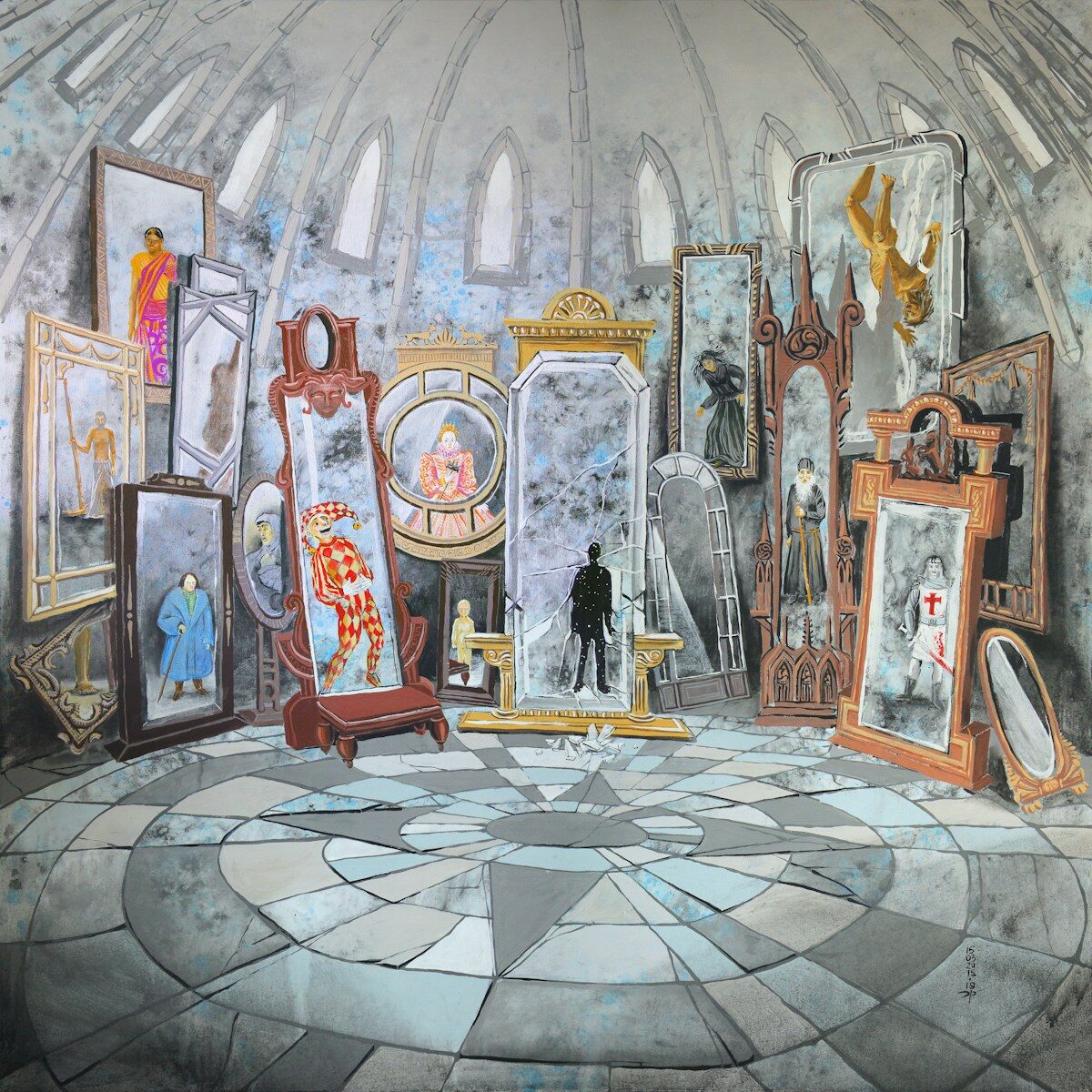
There is also a distinction Jung made explicitly: the archetype itself is unknowable directly. What we see are archetypal images — the concrete, cultural, individual forms the same force takes in dreams, myths, different lives. The Great Mother appears as Demeter or as Kali, as your own mother or as forest, as nourishment or as the suffocation you cannot escape. The same force, a different face. From there to the social role and further to the stereotype the distance is short, if you're not paying attention — the Mother archetype contains both nourishment and possessiveness and the impossibility of separation, but the stereotype usually retains only the first.
The light and shadow of the same pattern
Every archetype can appear in creative and destructive forms.
The hero who cannot stop saving has lost the freedom to be weak. The caregiver who nourishes everyone but himself confuses giving with depletion. The sage who no longer comes down from his tower has turned clarity into distance. They no longer access a pattern — they have completely identified with it. This is a form of what Jung described as psychic inflation: the ego identifies with an archetypal image and begins to behave as if it were one with it.
That is why the question is not only what archetype is active in me, but also in what form is it active — and above all: am I using it, or is it using me?
When the gods moved inward
Jean Shinoda Bolen, Jungian psychiatrist and professor at UCSF, observed that the Greek pantheon functions exactly as a map of these inner forces. Not as a prescription for how you should be, but as an opportunity for recognition. In Goddesses in Everywoman (1984) she maps seven feminine patterns: Artemis, Athena, and Hestia — goddesses defined from within, not through relationships; Hera, Demeter, and Persephone — goddesses whose lives are built and fractured through relationship; and Aphrodite, the only one who is both, the creative and erotic principle that transforms everything it touches. She applies the same approach in Gods in Everyman (1989): Zeus, Poseidon, Hades, Apollo, Hermes, Ares, Hephaestus, Dionysus — eight symbolic ways of living the masculine, none complete, none correct. Hades deserves separate mention precisely because the masculine is culturally reduced to action and visibility — Hades is about interiority, about depth, about what is neither seen nor spoken.
Clarissa Pinkola Estés goes even deeper into the instinctual layer — Women Who Run with the Wolves can be read almost as a long psychological poem, built from fairy tales and myths gathered from Latin American and European heritage. The Wild Woman is not a character — she is a force that knows when to flee, when to stay, when to sing and when to be silent. Cultural conditioning domesticates her. Inner work can create the space in which this dimension is heard again.
When we speak of feminine and masculine in an archetypal sense, one clarification matters: we are not speaking of biological properties, but of symbolic associations developed within certain traditions. A woman can have a highly developed Hero and an almost inaccessible maternal principle. A man can live largely from the energy of a Caregiver and have a fragile King. The fertile question is not what archetypes am I allowed to have,but what energies were permitted to me, which did I overdevelop and which did I learn to hide — and above all, why.
Not "what archetype am I" — but "what archetype is active now"
However we choose to explain them, these stories continue to appear. In dreams, in crises, in relationships, in the moments when something in us insists on being seen.
And perhaps the question that opens something is not what archetype am I — but: What archetype is active right now?
Which one am I living consciously? Which one have I confused with myself? And which one have I never allowed to enter?
Support the article library
If this article has been meaningful to you and you’d like to support this project, you’re welcome to make a voluntary contribution.
This contribution helps me continue writing freely and developing the resource library about body, soul, rituals, emotions, and inner transformation.