Via Transilvanica – the ritual of returning to the root
If these reflections resonated with you, you are welcome to share it further.
Via Transilvanica does not follow a single tradition. It traverses living layers of culture: Dacian, Roman, medieval, rural, and contemporary.
It is a path where the church stands beside the barn, the cemetery beside the road, the village elder beside the child.
The ritual is not imposed. It arises from encounter.
A road of remembering
The Transylvanian Trail is not about surpassing. Nor about total dissolution.
If El Camino de Santiago strips you, Kumano Kodo dissolves you, Inca Trail empties you through limit, and Via Francigena reorders you, The Transylvanian Trail reconnects you
To land. To history. To the original rhythm of life.
Through life, not outside it
This trail does not remove you from the world. It brings you deeper into it.
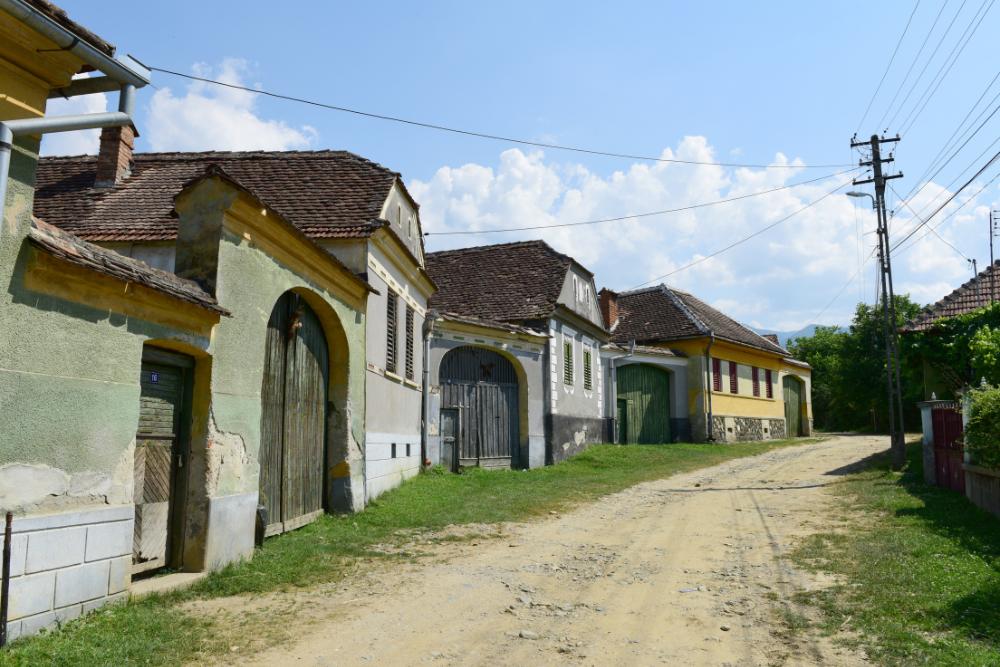
The path crosses: inhabited villages, active households, people living their ordinary lives.
This creates a rare form of initiation: learning presence in the midst of the everyday.
You don’t transform by running away from life. You transform by staying in contact with it.
Ancestral rhythm
Walking here is governed by an older tempo: early mornings, stops dictated by the sun, simple meals, deep sleep. It is a biological recalibration.
The body remembers a time before urgency. A time when the day had a clear beginning and end.
Hospitality as ritual act
A defining element of Via Transilvanica is hospitality.
Here you are not only a pilgrim. You are a guest.
A word exchanged at the gate. A meal offered without ceremony. A yard where you are allowed to rest.
This openness heals a deep fracture: the separation between “the road” and “home.”
Nature does not dominate. It supports.
Mountains, hills, forests are not hostile. They are protective.
Via Transilvanica does not challenge you to conquer. It invites you to walk together.
It is a ritual of cooperation, not confrontation.
Arrival: continuity, not conclusion
Via Transilvanica does not offer a spectacular inner climax. The transformation is discreet, yet lasting.
At the end, you do not feel that you have finished something. You feel that you have recovered something: simplicity, patience, belonging.
A ritual archetype
Defined ritually, the trail holds:
- dominant element: earth + memory
- direction: return, not transcendence
- practice: steady walking, human connection
- effect: grounding, belonging, quiet
It is a ritual of identity healing.
Echo for the Ritual of the 9
Via Transilvanica reminds us:
- the sacred can be ordinary
- the path can move through real life
- community is part of initiation
The Ritual of the 9 can embody this principle: an urban route that connects spaces, people, and inner states, without removing participants from their world, but bringing them back into it with greater presence.
Not escape. Conscious return.
Transgenerational patterns: how trauma and invisible loyalties are passed down in families
What family constellations are and how they work: a beginner’s guide
The Ritual of the 9 – a concentrated pilgrimage of consciousness
If this path stirred something in you, there might be a little more road ahead.
Nine Stops and a Journey Within is the journal of my own journey — nine thresholds, nine stops, written the way they were lived, not to impress, but to accompany. It's available as an ebook, in EPUB format, on Lulu — in both Romanian and English.
Read it in Romanian – Nouă opriri și un drum interior Read it in English: Nine Stops and a Journey Within
Share this article
❤️ Support this library
If this article has been helpful to you and you feel it deserves support, you can contribute with a symbolic donation.
It helps me continue writing freely and developing this library of resources about the body, emotions, rituals, and inner transformation.