Purification in Japanese sacred springs — the ritual through which water becomes a new beginning
If these reflections resonated with you, you are welcome to share it further.
Purification in sacred springs — when water doesn’t just wash the body, but marks a new inner state
There are moments when you feel the need to take a shower. And there are moments when you feel the need to cleanse yourself of something ordinary water cannot touch: a heavy period, a loss, a fear, the sense that you’re carrying too many things with you.
In Japan, for centuries, water has been seen not only as a source of life, but also as a symbol of purification.
And some of the oldest Japanese rituals begin exactly like this. With a person stepping into water.
In the Shinto, Japan’s native tradition, purification is called misogi. It is one of the most important rituals of this tradition and involves the symbolic washing away of impurities before encountering the sacred.
Sometimes the ritual takes place under a waterfall, other times in a river, the sea, or a spring considered sacred. The water is cold. Sometimes very cold. But the purpose is not physical endurance — it is presence.
Before entering the water, participants prepare through breath, silence, or prayer.
Then they step in slowly. Water flows over the body. And for a few moments, all that seems important is to remain there, to breathe, to be.
The origins of the ritual are very old.
Japan’s foundational texts, Kojiki and Nihon Shoki, tell that the god Izanagi, after returning from the land of the dead, purified himself by washing in a river. From this act of purification, new deities were born.
In Shinto tradition, impurity is not seen primarily as moral fault. It is more a state of imbalance, naturally accumulated through contact with suffering, illness, death, or the difficulties of life.
Water does not erase mistakes — it creates the possibility of a new beginning.
Religious historian Carmen Blacker, who studied Japanese spiritual practices for several decades, observed that purification rituals do not aim to escape the world, but to return to it in a clearer, more present state.
Anthropologist Emiko Ohnuki-Tierney notes that in Japanese culture, the idea of purity is closely tied to harmony and the restoration of balance, more than to perfection.
Perhaps this is why water appears so often in Japan’s rituals.
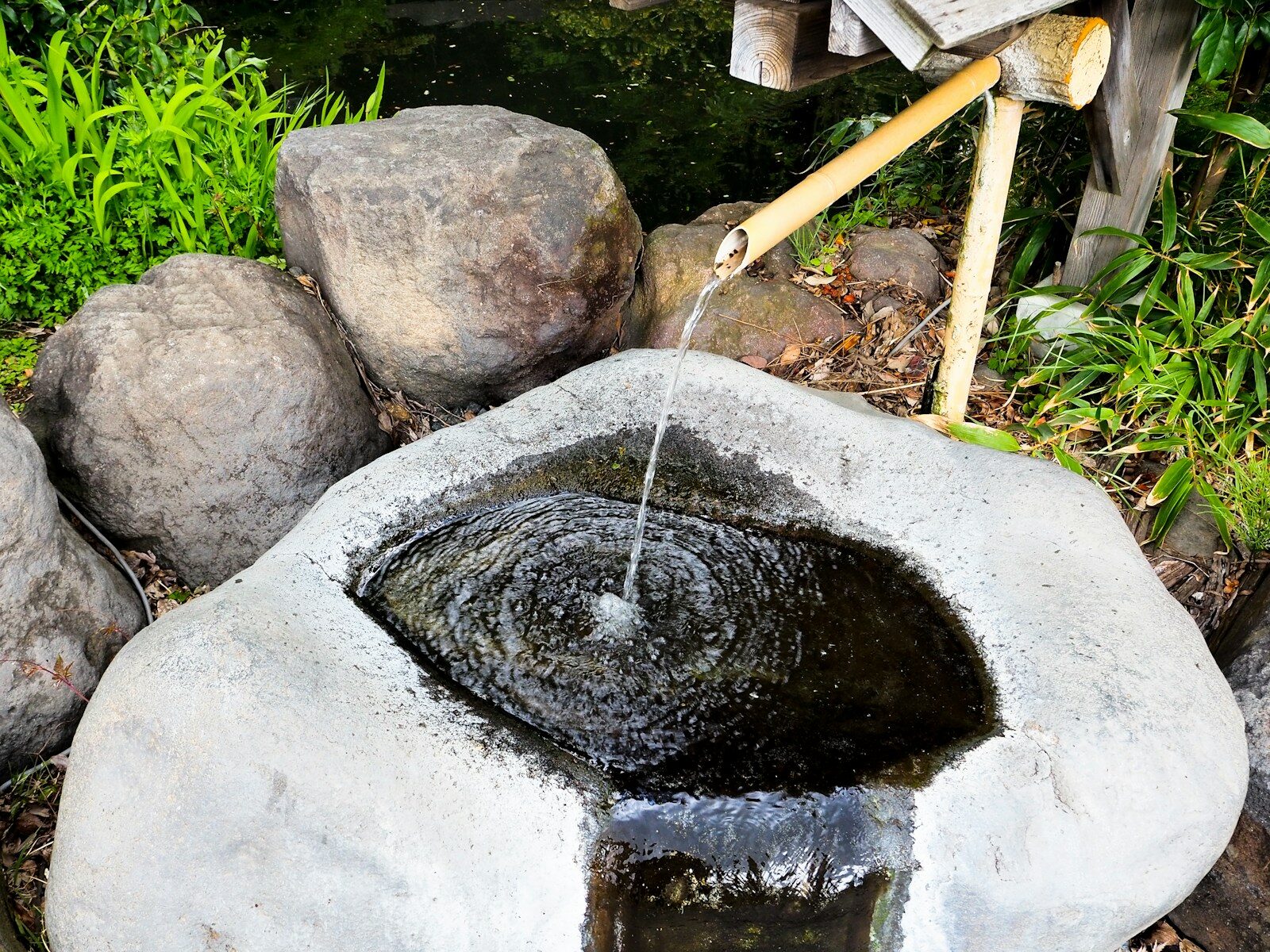
At the entrance of almost every Shinto shrine, there is a water pavilion called temizuyaVisitors wash their hands and rinse their mouths before entering. The gesture lasts less than a minute. But it carries the same message.
Leave outside what you no longer need to carry.
Today, misogi rituals continue to be practiced in Japan.
Sometimes in organized groups, other times quietly, by people who choose to begin a new year, a new chapter, or simply a morning in this way.
Seen from the outside, they may seem unusual. But if we look more closely, we discover that almost all cultures have created similar rituals.
Baptism in Christianity. Ritual immersions in Hinduism. The mikveh bath in Judaism. Ritual washings in Islam.
Water appears again and again, as if humanity had intuited the same truth. Sometimes, to begin differently, we first need to feel that we have left something behind.
Perhaps water does not change the past, does not erase memories, does not solve what we still need to solve. But it can do something just as important. It can turn an ordinary gesture into a threshold.
In the moment you enter the water, you are one person. In the moment you step out, the world is the same. And yet… perhaps you are not quite the same.
Three questions for you
Is there a moment when you felt the need for a symbolic gesture to leave behind a chapter of your life?
What does the feeling of “purification” mean to you: forgetting, forgiveness, or a new beginning?
If you were to create your own ritual with water, what would you choose to symbolically leave behind as you stepped out of it?
Morning coffee as a modern ritual
❤️ Support the article library
If this article has been meaningful to you and you’d like to support this project, you’re welcome to make a voluntary contribution.
This contribution helps me continue writing freely and developing the resource library about body, soul, rituals, emotions, and inner transformation.