If these reflections resonated with you, you are welcome to share it further.
The morning walk – when a few steps become a ritual of presence
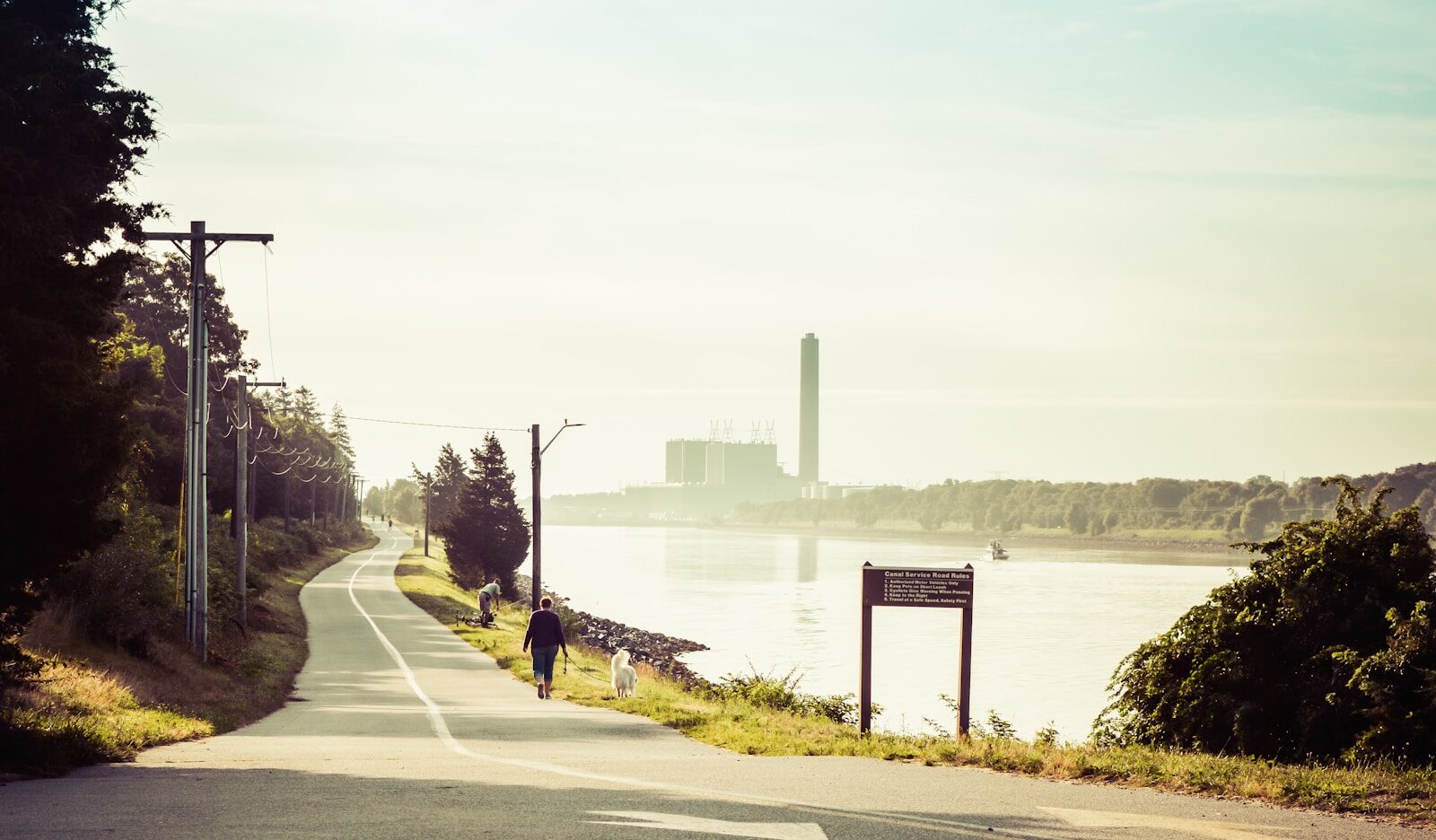
Sometimes you don’t need to get anywhere. You just need to step outside: before the street fills, before the meetings begin, before your phone tells you what matters today. Just a few minutes, a few steps, and the sense that the day starts differently.
The morning walk is one of the simplest modern rituals.
It has no rules, requires no special equipment, doesn’t need to be fast or long. It can last ten minutes or an hour. What matters is not how far you walk, but how you walk.
Walking is, perhaps, one of the oldest ritual forms of movement in human history.
Pilgrimages, religious processions, initiatory journeys, or simple contemplative strolls have accompanied people across almost all cultures.
But in the past century, as the rhythm of urban life accelerated, walking without a practical purpose became almost a luxury. Today, many of us walk only to get somewhere. Rarely just to be.
And maybe that’s why the morning walk is being rediscovered. Not as physical exercise, but as a way of entering the day consciously.
Psychologist and researcher Shane O’Mara, in his book In Praise of Walkingshows that walking is not just a means of moving from one place to another. It influences attention, creativity, memory, and the way the brain organizes thoughts. Many of our mental processes seem to work differently when the body is in motion.
Cultural historian Rebecca Solnit, in Wanderlust: A History of Walking, observes that walking has always been more than a physical activity. It has been a form of reflection, of freedom, of meeting the world. It’s no coincidence that many philosophers, writers, and scientists used to think while walking.
But perhaps the morning walk matters not only for the mind. It matters for the body as well.
The first rays of sunlight offer one of the strongest signals through which the body regulates its circadian rhythm — the internal clock that influences sleep, energy levels, and numerous hormonal processes. Research in chronobiology shows that exposure to natural light in the early part of the day helps synchronize this rhythm and can support more restful sleep the following night.
Maybe that’s why so many people describe the same sensation.
Not that the walk solves their problems. But that after a few minutes of walking, those problems no longer feel arranged in quite the same way.
Breathing slows. Your gaze lifts from the screen and begins to notice the trees, the light between buildings, the people who are also beginning their day.
The world hasn’t changed. But the way we are in it has.
Perhaps this is where a ritual begins.
Not when we do something extraordinary, but when an ordinary gesture is repeated with intention. Day after day. Step after step.
In many cities around the world, people are searching for rituals that offer a sense of stability in an increasingly fragmented life.
Some light a candle, others drink their coffee in silence, others step outside at the same hour and walk the same street without rushing.
From the outside, these gestures look small. But maybe it’s precisely these gestures that hold a day together.
Maybe the morning walk isn’t about distance. It’s about transition.
About that space between sleep and the rush of the day, between the inner world and the outer one, between who we were yesterday and the person we will be today.
And sometimes, all this passage needs is a few quiet steps.
Three questions for you
Is there a route you walk so often that it has become part of your story?
How does your state shift when you begin your morning without hurry?
If you turned the morning walk into a personal ritual, what would you choose to notice each day?
❤️ Support the article library
If this article has been meaningful to you and you’d like to support this project, you’re welcome to make a voluntary contribution.
This contribution helps me continue writing freely and developing the resource library about body, soul, rituals, emotions, and inner transformation.