
If these reflections resonated with you, you are welcome to share it further.
How different cultures and eras have understood what we feel
From the series “The Anatomy of Emotional Life”
If you had lived three hundred years ago and told someone that you “feel anxiety” or that you are “managing your emotions,” they probably wouldn’t have understood what you meant.
Not because people back then didn’t feel. But because their inner world was organized entirely differently.
Historian Thomas Dixon traced something fascinating: the word emotion — in the sense we use it today, as a category that gathers all inner states under the same roof — is less than two hundred years old. Before the 19th century, people spoke of passions, affections, sentiments, humors — each with its own roots, each with its own moral and theological geography.
It wasn’t a natural progression. It was a cultural choice. A choice that transformed how we relate to our inner life.
And if the map changed, what does that say about the territory?
This is perhaps the most disorienting thing we can discover about emotions: the emotions themselves did not change over time. The maps through which people tried to understand them changed. And this is a journey of two and a half millennia — one that eventually arrives at you.
Greece: emotions as part of who you are
Greek philosophers didn’t need the word “emotion.” They had something more precise.
Aristotle spoke of pathē — states of the soul involving pleasure or pain, arising as responses to situations in the world. Fear, anger, pity, envy, joy — these were not events that simply happened. They were expressions of character. The way you felt said something about who you were, morally.
A person of good character — eudaimon — does not suppress emotions. They have the right ones, toward the right things, at the right time, in the right amount. Just anger toward injustice is a virtue. Fear in the absence of danger — a weakness. The person who feels nothing is not wiser. They are, for Aristotle, less human.
But the Platonists saw things differently. For Plato, the soul has three parts: reason, spirit (thymos), and appetite. Emotions belong to spirit and appetite — and, if not governed by reason, bring disorder. Philosophy becomes, in this view, a practice of educating emotions.
The Stoics went further. Epictetus, Seneca, Marcus Aurelius — all argued that emotions are, at their core, judgments. Not involuntary reactions to the world, but evaluations — and therefore teachable. I fear because I judge something to be dangerous. I get angry because I judge that an injustice was done to me. If the judgment is wrong, the emotion can be corrected.
This is not detachment. The Stoics did not ask you to feel nothing — but to feel well. To have emotions that correspond to reality, not illusion.
And yet something from this thinking did not disappear with the Roman Empire. When someone tells us we are “too sensitive,” that we should “be more rational,” that emotions “get in the way” — we are reading, unknowingly, from a book written 2500 years ago. The Stoic legacy lives on, transformed, in every productivity tip urging us not to let feelings interfere with decisions.
If you read the history of ideas closely, you notice something curious. Almost every era believed it had finally understood what emotions are. And almost every era was contradicted by the next.
The middle ages: emotions under the gaze of god
Medieval people had a completely different emotional map.
Historian Barbara Rosenwein introduced the concept of emotional communities — social groups (a monastery, a royal court, a small town) with their own norms about which emotions were acceptable to feel and express. There were no “universal emotions” experienced the same everywhere. There were local emotional standards, transmitted through practices, rituals, and texts.
Fear of God — timor Dei — was not a negative emotion. It was a virtue, a sign of devotion, a path to wisdom. Shame over one’s sins was a tool of purification. Sadness could be tristitia — a dangerous spiritual lethargy, precursor to what we might call depression today — or compunctio, the blessed sorrow of recognizing one’s faults, opening the soul to grace.
The same term, the same facial expression, the same tears — and yet, depending on context and intention, a completely different emotion.
Honor played a role in this period that we can barely understand today. It wasn’t a private character trait. It was a social reality — something you either possessed or didn’t possess in the eyes of the community. Shame wasn’t an inner feeling. It was a public status. To be shamed meant to be excluded.
The body enters the scene: William James and the great dispute
Until the late 19th century, emotions were mainly the concern of philosophers and theologians.
Then, in 1884, William James shifted the conversation radically. Until then, everyone assumed a simple chain: you perceive something → you feel an emotion → the body reacts. I see a bear → I feel fear → I tremble.
James reversed the order. “We don’t tremble because we are afraid. We are afraid because we notice that we tremble.”
Emotion, in James’s view, does not precede the body’s reaction. It is the awareness of the body’s reaction. We see the bear → the body reacts → we become aware of the reaction → that awareness is fear.
The idea seemed scandalously simple. And it was immediately contested.
Walter Cannon, a physiologist at Harvard, argued in the 1920s that the James–Lange model (as it came to be known, together with Carl Lange) could not be correct. Animals whose connection between body and brain was severed continued to show emotional responses. The body could not be the source of emotion — the brain had to be.
Cannon proposed that the thalamus — a brain structure — triggers both the bodily reaction and the emotional experience simultaneously.
The James–Cannon dispute lasted decades. It opened a question that could no longer be closed: where do emotions live? In the body? In the brain? Or in the relationship between them?
The contemporary answer — articulated most clearly by Lisa Feldman Barrett — is that none of the questions were framed correctly. Emotions are not in the body or the brain in isolation. They are processes — continuously constructed from the interaction between bodily signals, the brain’s predictions, and social context.
Universal or constructed? The great debate
In the mid‑20th century, Silvan Tomkins proposed a bold hypothesis: there are innate, biological primary affects present from birth — interest, joy, surprise, fear, anger, sadness, disgust, shame. Each with its own facial expression, each with a clear motivational function. Beyond culture. Beyond era.
Building on this idea, Paul Ekman conducted in the 1960s and ’70s the research that became the most cited in emotion psychology: photographs of facial expressions shown to people from completely different cultures — including isolated tribes in Papua New Guinea — produced consistent recognition. Fear looked the same. Disgust looked the same. Joy looked the same.
Ekman’s conclusion: there are universal, biological, cross‑cultural emotions. We have a shared facial language beyond any barrier.
The conclusion generated enthusiasm. For a few years, it seemed the question had finally been answered. Emotions are universal. At least at the level of facial expression, people everywhere appear to read the same language.
Until anthropologists began looking at the same question from a completely different angle — and found something else.
Anthropologist Catherine Lutz studied the Ifaluk people of Micronesia and found an emotional map that did not overlap with the Western one. Their concept fago is neither love, nor compassion, nor sadness — it is all three at once, a single experience that European languages fragment into separate pieces. Their concept song resembles anger — but only if socially justified. Anger without justification is not song. It is something else, with a different moral status and meaning in the community.
Lutz argued that emotions are not universal biological phenomena with superficial cultural variations. They are culturally constructed — and emotional language does not describe a pre‑existing inner reality. It participates in creating it.
Michelle Rosaldo, who studied the Ilongot tribe in the Philippines, went further. Emotions, she wrote, are embodied thoughts — not separate from cognition, not located exclusively in body or mind, but a form of knowing that involves feeling, thinking, and relational context.
There is something dizzying in this debate. On one hand, Ekman showed photographs to people in Papua New Guinea and they recognized fear on an American’s face. On the other hand, Lutz showed that the same word covers completely different experiences depending on the culture. Both were right — but they were speaking, partly, about different things: one about biology, the other about meaning.
Romantic love — an emotion with a birthdate
Perhaps the best proof that emotions are culturally shaped does not come from the laboratory. It comes from how we love.
Among all emotions, none illustrates the cultural nature of our inner life better than romantic love.
Eva Illouz, Israeli sociologist, showed in Cold Intimacies and later works that romantic love — with all the characteristics we consider universal (intensity, exclusivity, the idea that there is one person meant for you) — is a modern construction, shaped by capitalism, the culture industry, and psychology.
Ancient Greeks had several terms for what we call “love”: eros (passionate desire), philia (friendship affection), storge (iubirea de familie), agape (unconditional love). Each was a distinct experience. The idea that all of these converge into a single romantic relationship — and that this relationship is the foundation of a life — is relatively recent.
Medieval courtly love — amour courtois — invented the ideal of love as distant adoration, often for someone inaccessible. 19th‑century Romanticism added passion as supreme value and authenticity. The film and media industry of the 20th century built the prototype generations have internalized as “natural.”
This does not mean love is not real. It means the form it takes, the expectations attached to it, the criteria by which we recognize it — are partly cultural inheritances, not raw biological givens.
Words without translation
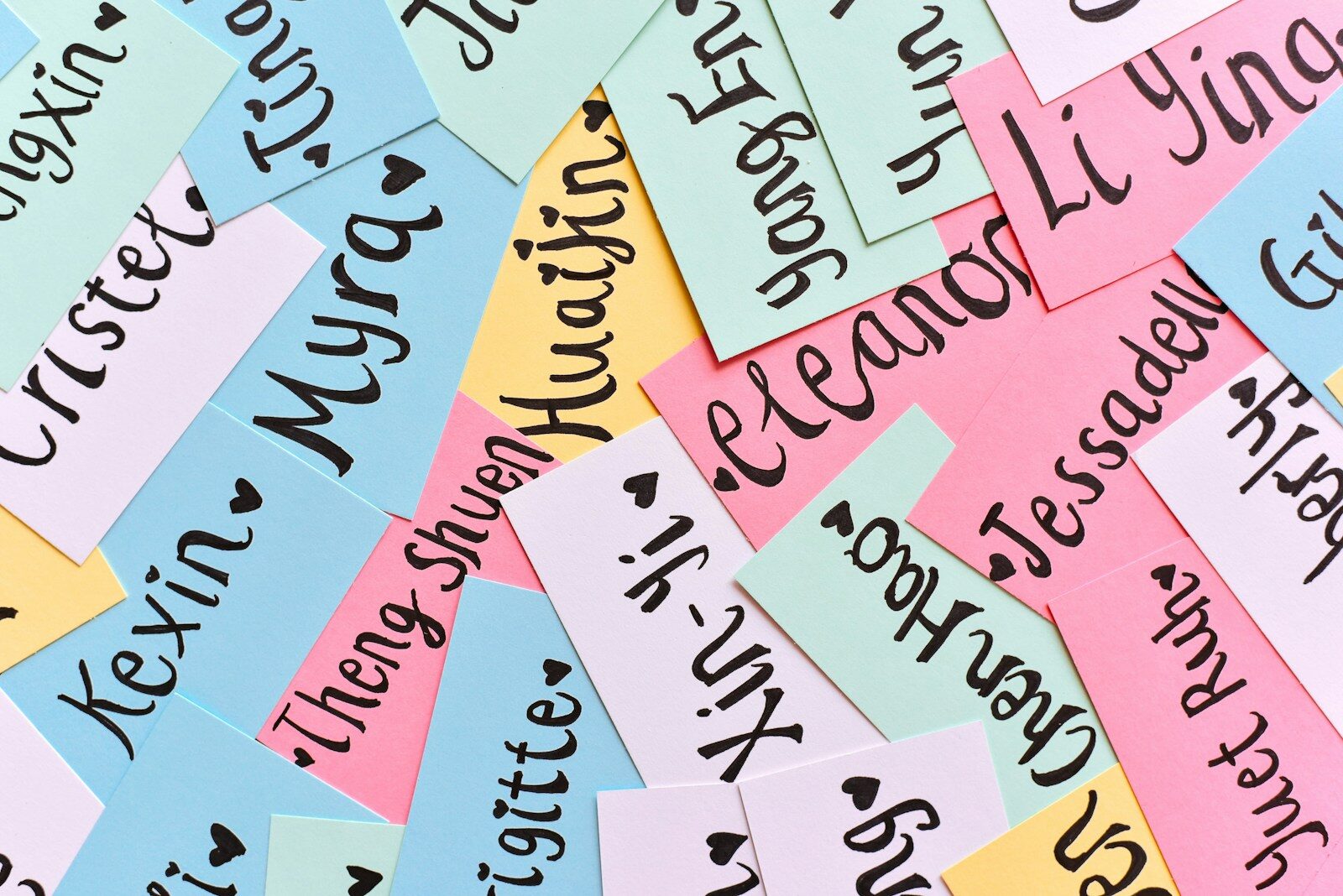
There is another window into the same truth: emotional words that do not exist in all languages.
Saudade — in Portuguese — is a deep nostalgia, sweetened by love, for something or someone absent. It is not simply sadness or longing. It has a particular quality: an absence that paradoxically brings a kind of fullness.
I first read about saudade many years ago and realized I had felt it long before. I didn’t know its name, but the state was familiar — a blend of loss and presence, a melancholy that didn’t want to pass. The existence of the word didn’t create the experience. But it made it easier to inhabit. More legitimate. More mine.
This is one of the central ideas in Lisa Feldman Barrett’s research: the more emotional vocabulary we have, the more access we have to our own experience. Not because we invent emotions — but because we can construct them with more precision.
Hygge — in Danish — is the intimate comfort of being together: an evening by candlelight, warm tea, an unhurried conversation. Not happiness. Not relaxation. A specific kind of connected well‑being.
Mono no aware — in Japanese — is the melancholy of transient beauty. The awareness that things are beautiful precisely because they pass. A tear before falling cherry blossoms.
L’esprit de l’escalier — in French — is the perfect comeback you think of only after you’ve walked down the stairs and left. The tardiness of intelligence in the face of emotion.
Each of these words names something real, something lived. But the fact that they exist in some languages and not others shows that emotional experience is not a simple biological reflex identical in every person. It is shaped by the concepts available to you. By what your culture allows you to feel. By what you name.
The body in all of this
There is a thread connecting all these eras and cultures, beyond differences: the body.
The Greeks knew emotions are felt physically — that anger warms the blood, fear cools the extremities, sadness weighs. Medieval writers described in detail the bodily locations of passions — heart, liver, spleen. James placed the body at the center of his theory. Tomkins described facial expressions. Lutz and Rosaldo showed that emotions are embodied — not separate from the body, nor located exclusively in the brain.
And Barrett, at the end of this long 2500‑year conversation, says: emotions are processes — constructed from bodily signals (interoception), from the brain’s predictions (shaped by past experience), and from the concepts we have available (shaped by culture and language). Body, brain, and culture work simultaneously.
There is no pure emotion detached from the body. No culturally neutral emotion. And no emotional experience that is not also a story about who we are and where we come from.
What remains universal
This does not mean nothing is universal.
Ekman was right that there are facial expressions recognized across cultures. Panksepp showed that there are basic emotional systems present in mammals, functioning regardless of culture. There are physiological responses that appear in all humans under certain conditions.
But the universal is not the whole story. And in daily life, what you experience is not “the biological universal” — it is the cultural, linguistic, and biographical version of that universal. Your fear is dressed in your experiences, your language, and what your culture allows you to feel about fear.
“There is no emotion that has not passed through the filter of culture.” — David Le Breton, French sociologist and anthropologist, who dedicated much of his work to the relationship between body, emotion, and cultural construction.
I have met people who had no words for what they felt. Not because they didn’t feel — but because the map they grew up with didn’t include that territory. They didn’t lack the experience. They lacked the permission to name it. One of the changes I often see is precisely this: the moment someone finds a word — or a story, or a wider context — something shifts. Not the experience itself. But the relationship with it.
A 2500‑year journey
From Aristotelian pathē to Barrett’s predictions. From medieval emotional communities to emotional granularity. From the James–Cannon dispute to contemporary neurobiological models.
Perhaps we will never know what an emotion essentially is. Each era gave an answer — and each answer revealed something about that era. About what it feared. About what it wanted to control. About what it hoped to understand.
What we know now is something else.
An emotion is not just chemistry. Not just body. Not just brain. Not just culture. It is the meeting of all these — a process constructed in every moment from bodily signals, the mind’s predictions, and the concepts culture has given you to understand what is happening inside.
And each generation rewrites the map a little. Not because emotions change. But because people understand something different from them. They live them differently. They name them differently. They allow — or do not allow — them to exist.
Perhaps knowing that saudade has a word, that mourning looks different across cultures, that what we call “romantic love” is one particular form among many — helps you live your emotional life with more freedom. You are no longer obliged to feel what “everyone feels.” You can instead search, with curiosity, for what you truly feel. Beyond the map you inherited.
In the next article in this series, we return home, to the body: how the body recognizes emotions before the mind, what the vagus nerve is, and why breath may be the most direct access to your emotional life.
If you feel you want to explore more of what is happening in your emotional life, there is a space for that.
Frequently asked questions
Is it true that before the 19th century there were no “emotions”? Existau experiențe interioare, dar nu categoria unificată „emoție”. Oamenii vorbeau despre passions, affections, sentiments, humors Inner experiences existed, but not the unified category “emotion.” People spoke of passions, affections, sentiments, humors — each with different philosophical and theological roots. The modern term was assembled gradually in the 19th century, showing that the way we understand emotions is itself a historical construction.
What are emotional communities? A concept by historian Barbara Rosenwein: social groups in any era that share norms about which emotions are appropriate to feel and express. A medieval monastery, a royal court, a contemporary family — each has its own emotional culture.
Why do some emotions have no direct translation? Lisa Feldman Barrett explains: emotions are partly constructed through the concepts available to us. A word like saudade does not invent a new emotion — but offers a precise concept around which experience can organize itself. Without the word, the experience exists, but is harder to access and inhabit.
Are Ekman’s emotions universal or not? Ekman showed that certain facial expressions are recognized across cultures. Lutz, Rosaldo, and Barrett showed that the way emotions are conceptualized, lived, and expressed varies significantly between cultures. Both observations can be true: there is a biological universal, but lived experience is always cultural.
What is mono no aware? A Japanese aesthetic concept: the melancholic awareness of the impermanence of beauty. Things are beautiful precisely because they pass. Not pure sadness, not pure joy — a state with no exact equivalent in European languages.
We feel what we think we feel?
❤️ Support the article library
If this article has been meaningful to you and you’d like to support this project, you’re welcome to make a voluntary contribution.
This contribution helps me continue writing freely and developing the resource library about body, soul, rituals, emotions, and inner transformation.