
If these reflections resonated with you, you are welcome to share it further.
How it is transmitted, how you carry it in your body, and how you release it without breaking belonging
There is a moment in every person’s life when they understand—perhaps for the first time—that they didn’t grow up only in a house, but in an emotional climate. That they didn’t inherit only traits, but also a dominant emotion, a kind of background vibration, an affective air that shaped their body, their rhythm, their way of loving, fearing, approaching, and withdrawing.
It’s not something you were told. It’s something you breathed.
And maybe only now, as an adult, you begin to sense that this emotion isn’t just “yours.” That it comes from somewhere older. That it has roots in stories you didn’t live, but carried. That it is a red thread connecting generations—sometimes without them knowing one another.
This article is about that thread.
About the core emotion of your family.
About how to recognize it, honor it, and step out of it without losing your place.
What is the core emotion in a family?
The dominant emotion: the invisible air of your family
Every family has an emotion that holds it together. An emotion that becomes norm, reflex, silent language.
It may be fear — fear of loss, of mistakes, of the world, of others.
It may be sadness — an old sadness, carried like an echo of broken lives.
It may be anger — not necessarily expressed, sometimes only held in shoulders and jaw.
It may be shame — shame of being seen, of being different, of being too much or not enough.
It may be over-responsibility, not an emotion in itself, but the way emotion was managed.
It may be enthusiasm, vitality, courage — yes, these are transmitted too.
The dominant emotion is not a flaw. It is a survival strategy of the system. A way the family tried to stay alive, dignified, safe.
How emotion is transmitted in a family
How the core emotion travels without words
Not through speeches. Not through lessons. But through rhythm.
Through the way a door closes.
Through the way an eyebrow lifts.
Through the way someone breathes in the kitchen.
Through the silence at the table.
Through the way conflicts are avoided or ignited.
Through the way celebrations happen—or don’t.
A child learns the dominant emotion before learning to speak. They feel it in the mother’s body. In the father’s gaze. In the tension or ease of the home.
And without knowing, they begin to wear it like an invisible garment.
How the emotion lives in the body
The core emotion doesn’t live only in thoughts. It lives in breath, in shoulder tension, in the jaw, in how you sit next to someone, in how you withdraw or stay.
Sometimes you don’t recognize it because it’s too familiar. But the body knows.
The child becomes the carrier of the family’s emotion
In constellations, it becomes clear: the child doesn’t take what is logical, but what is needed for the system’s balance.
If the family has a history of loss, the child may become anxious, as if their vigilance could prevent tragedy.
If the family carries shame, the child may become hyper-responsible, trying to fix what they didn’t break.
If the family has repressed anger, the child may become invisible, so as not to ignite the fire.
If the family didn’t allow sadness, the child may become too cheerful, a small sun keeping everything afloat.
Maybe you enter a relationship and, without a clear reason, feel you must protect yourself. Or maybe when things go well, a subtle unease appears. Or maybe it’s easier to care for others than to receive care.
The child doesn’t know they’re carrying something that isn’t theirs. They believe this is who they are.
The dominant emotion as transgenerational inheritance
In psychogenealogy, the dominant emotion is seen as an affective code passed through generations..
It’s not only psychological.
It’s bodily.
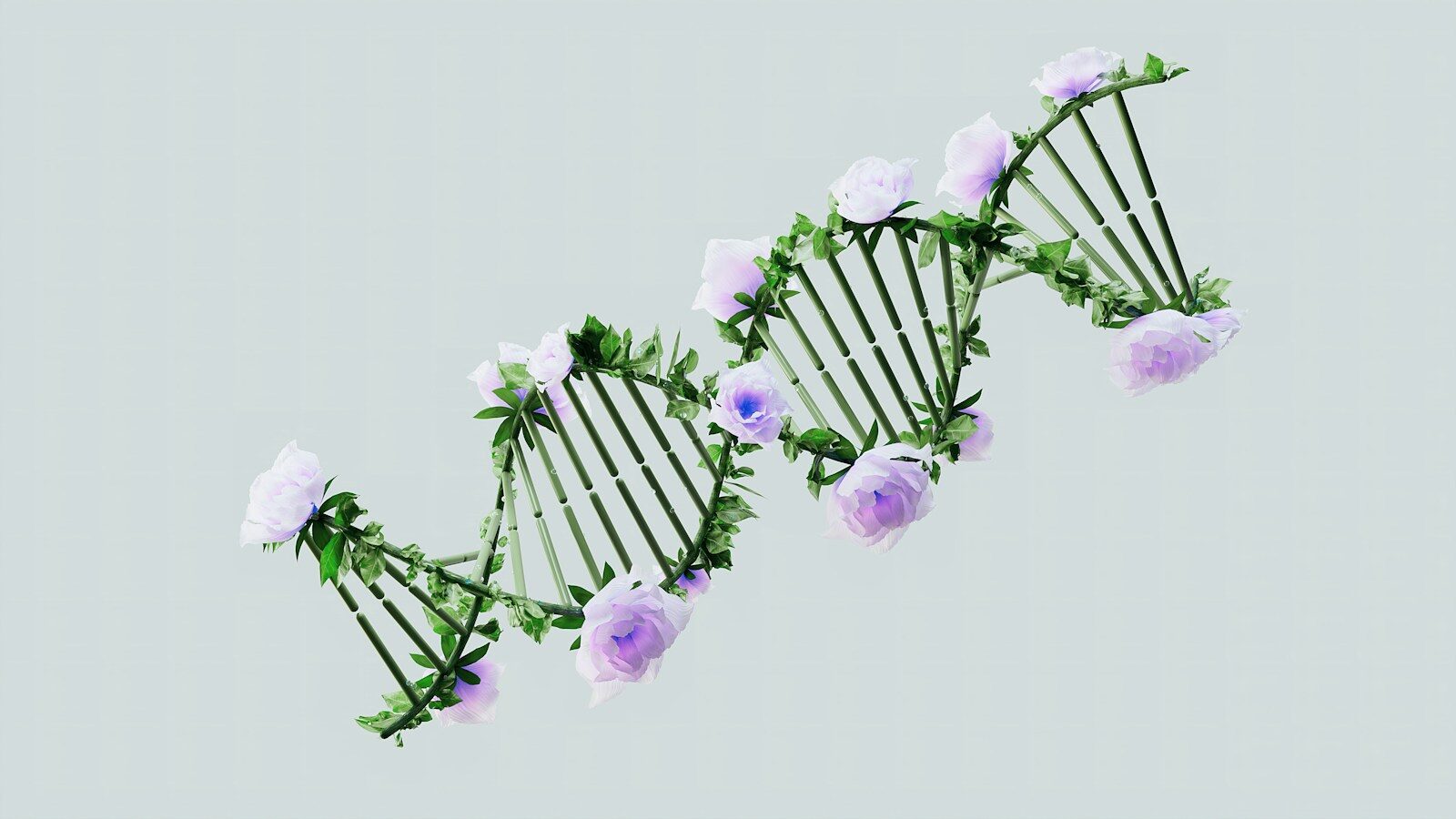
It’s epigenetic.
It’s ritualistic.
What wasn’t cried becomes tension.
What wasn’t spoken becomes fear.
What wasn’t integrated becomes blind loyalty.
Families don’t transmit only stories. They transmit the way those stories were lived.
What science says about emotions passed through families
Although subtle, almost invisible, what we live in a family has a direct counterpart in neuroscience, psychology, and epigenetics. The dominant emotion is not just a systemic metaphor—it is a phenomenon studied, measured, observed in the body, brain, and relationships.
Modern neuroscience confirms what families intuitively know: emotions are transmitted before words.
Antonio Damasio – emotion as a survival map
Damasio describes emotions as “action patterns of the body,” the organism’s first responses to the world. They imprint themselves in the nervous system before becoming conscious feelings. In families, these patterns repeat until they become reflexes passed on.
Lisa Feldman Barrett – emotions as learned predictions
Barrett shows that emotions are not raw reactions but predictions of the brain, built from early experiences. If you grew up in a family where fear was the background air, your brain will predict fear in neutral situations. If sadness was the silent language, your body will anticipate loss even in stability.
“The brain does not see the world as it is, but as it has learned it will be.” — Lisa Feldman Barrett
Bessel van der Kolk – the body keeps the memory
In The Body Keeps the Score, he shows that intense or repetitive emotional climates reorganize the nervous system. Not only trauma, but repeated emotional atmosphere leaves traces in breath, tension, and reactions to closeness or conflict.
Gabor Maté – repressed emotion as inheritance
Maté speaks about “the hidden cost of unexpressed emotions.” When a family cannot allow an emotion—anger, sadness, vulnerability—the child carries it as a duty. Not because they want to, but because the system needs someone to hold it.
Rachel Yehuda – emotional traces in genes
Her studies show that intense emotional experiences in one generation can alter gene expression in the next. We don’t inherit only stories. We inherit the body’s learned responses to the world.
Mary Ainsworth and John Bowlby – attachment as emotional transmission
A child’s attachment style reflects the parents’ emotional regulation. Not only what parents feel, but how they manage their emotions becomes the child’s internal model.
A subtle nuance
Not everything you feel comes from your family. And not every emotion has a transgenerational origin. But sometimes what feels “too much,” “too old,” or “too familiar” didn’t begin with you.
How to recognize the core emotion of your family
Not through lists. Through the body.
What do you feel when you enter your parents’ home?
What do you feel when you remember childhood?
What do you feel when you approach “home”?
What emotion appears first in vulnerability, in relationships?
Which emotion is hardest for you to express?
The dominant emotion isn’t always the strongest. It’s the most familiar. The most “normal.” The one you mistake for yourself.
What to do with the dominant emotion as an adult
You don’t deny it. You don’t throw it away. You don’t “heal” it by force.
You recognize it. You honor it. You let it return to those who carried it before you.
In constellations, sometimes it’s enough to say inwardly:
- “I see your fear. It was yours. I choose something else.”
- “I honor your sadness. I remain in my own life.”
- “Thank you for all you carried. I no longer hold this.”
It is not an act of breaking away. It is an act of maturation.
When you become the turning point of the system
Maybe you are the first person in your family who allows a different rhythm. A different breath. A different core emotion.
Maybe you are the first who allows joy without guilt. Or sadness without shame. Or anger without violence. Or vulnerability without fear.
When the dominant emotion shifts in your generation, nothing breaks. Something opens.
Your children will breathe different air. They will learn a different norm. They will carry a different story.
The core emotion as a red thread of belonging
The dominant emotion of your family is not a sentence. It is an inheritance. A story that once tried to protect someone. A way the system survived.
And maybe now, in you, that story finally finds a place to rest.
Maybe you are the one who can look at it gently. The one who can hold it without losing yourself. The one who can say:
“I belong. And still, I choose another path.”
And in that moment, something settles inside you. In the body. In the heart. In your bloodline.
Not because you broke the thread. But because you held it with respect and walked forward.
Some emotions become clear with time. Others become clearer when seen in a space where you don’t have to carry them alone.
If you feel you’ve reached that place, there are ways to explore further— în ritmul tău.
Frequently asked questions
What is the core emotion in a family?
It is the dominant emotion that repeats in the family system and becomes the affective climate in which members grow.
How do I know if I carry emotions from my family?
If you feel recurring, disproportionate, or hard-to-explain emotions, they may be linked to the family system.
Can emotions transmitted across generations be changed?
Yes. Through awareness, therapeutic processes, or family constellations, your relationship with these emotions can transform.
How do family constellations help?
They make invisible dynamics visible and create a space where emotions can be recognized, honored, and re‑aligned.
If you feel there's room for more, I invite you to discover the systemic way I work — through circles, conversations, and spaces of reflection dedicated to the inner process. Explore the approach through circles or the take a first step to see what opens up for you.
❤️ Support the article library
If this article has been meaningful to you and you’d like to support this project, you’re welcome to make a voluntary contribution.
This contribution helps me continue writing freely and developing the resource library about body, soul, rituals, emotions, and inner transformation.