El Camino de Santiago – the road that does not explain, but distills
If these reflections resonated with you, you are welcome to share it further.
El Camino de Santiago is not a route. It is a sequence of relinquishments.
You do not leave to add something. You leave to let something fall away.
The backpack feels heavy on the first day. Later, you understand that the weight is not the problem — the attachment to what you chose to carry is.
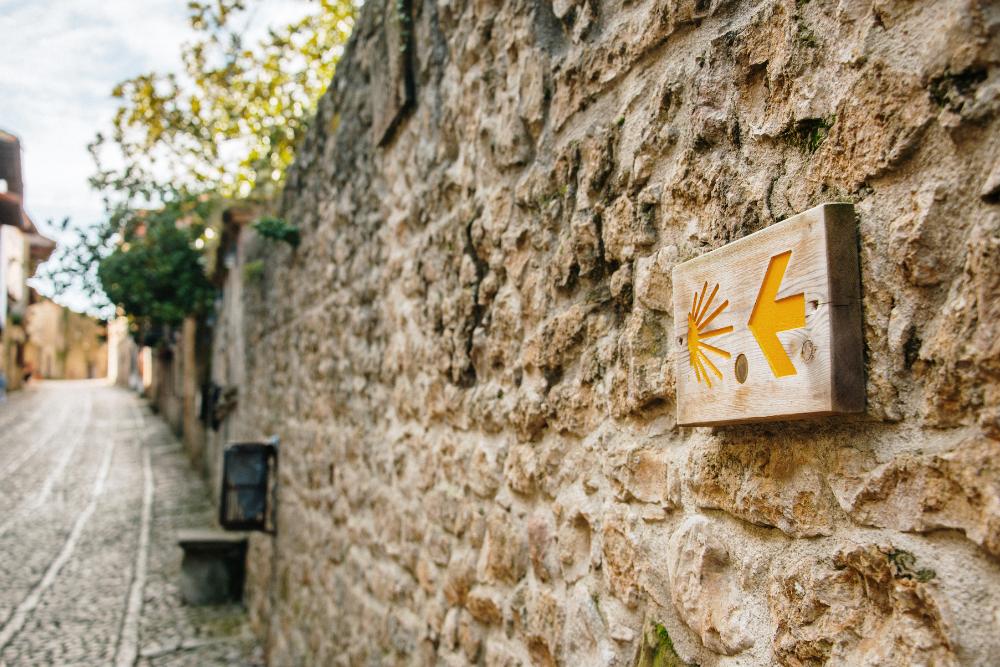
The journey begins before the first step. Before you arrive in Saint‑Jean‑Pied‑de‑Port or in Porto, before you see the first yellow arrow, the journey begins the moment you accept that something within you needs space.
It is not a rational decision. It is a quiet exhaustion with your own repetition.
Camino does not promise transformation. It promises distance. And distance reveals what was too close to see.
Repetition that erases noise
Walking. Breathing. Pause. Water. Walking again.
The same movement, until the mind runs out of dramatic narratives.
In ordinary life, identity feeds on difference: roles, conversations, emails, reactions.
On El Camino de Santiago, difference dissolves. Each day resembles the one before it. And this very sameness begins to cleanse.
No revelation arrives. Simplicity does.
The body as teacher
In the first days, the body protests. Blisters. Tight muscles. Deep sleep without elaborate dreams.
Then the rhythm settles. The body becomes a metronome.
You stop negotiating with it. You listen.
In a quiet way, Camino repairs the fracture between mind and body. It forces presence, because pain cannot be postponed.
Time, fragmented
On El Camino de Santiago there are no “long-term plans.”
There is only: until the next village, until the next shade, until the next water source
This fragmentation reduces anxiety. The future becomes short. Manageable.
And within that small, contained horizon, a form of peace appears — not born from certainty, but from acceptance.
Encounters without biography
People recognize each other without introductions. You do not ask what someone does for a living. You ask, “How many kilometers today?”
Social status becomes irrelevant when everyone shares tired feet.
Community is not constructed. It emerges from shared vulnerability.
On Camino you understand that closeness arises more easily when no one is trying to impress.
Arrival in Santiago de Compostela
When you stand before the Cathedral, you do not feel triumph. You feel stillness.
Catedrala din Santiago de Compostela is not the reward. It is the witness.
The road has already done its quiet work. You have become simpler. Slower. Less attached to explanations.
And then the only question that matters appears: How do you walk when there are no more yellow arrows?
Why El Camino de Santiago remains a contemporary ritual
Because it does not ask you to believe. It does not ask you to understand. It does not ask you to perform.
It asks only that you walk. Through repetition, through silence, through the reduction of life to essential gestures, identity begins to distill.
You do not become someone else. You become less fragmented.
Camino nu este o experiență spectaculoasă. Este o despuiere lentă.
And perhaps that is why, when the road ends, the inner walking has only just begun.
Echo for the Ritual of the 9
El Camino de Santiago shows us that a path becomes a ritual not through distance, but through intention.
Camino does not transform through spectacle, but through repetition, rhythm, and reduction to the essential.
Likewise, the Ritual of the 9 is not about checking off sacred spaces. It is about conscious crossing.
Each sanctuary can become a threshold. Each step between them — a distillation. Each pause — a breath that recalibrates.
The length of the route does not matter. The inner rhythm with which you walk it does.
Just as on Camino the cathedral is not the reward, but the witness of a transformation already underway, in the Ritual of the 9 the ending is not the goal.
The path between them is.
And the question remains the same: How do you walk after you have finished?
What family constellations are and how they work: a beginner’s guide
Transgenerational patterns: how trauma and invisible loyalties are passed down in families
Where meaning begins: discover the personal values that guide your life
If this path stirred something in you, there might be a little more road ahead.
Nine Stops and a Journey Within is the journal of my own journey — nine thresholds, nine stops, written the way they were lived, not to impress, but to accompany. It's available as an ebook, in EPUB format, on Lulu — in both Romanian and English.
Read it in Romanian – Nouă opriri și un drum interior Read it in English: Nine Stops and a Journey Within
Share this article
Support the article library
If this article has been meaningful to you and you’d like to support this project, you’re welcome to make a voluntary contribution.
This contribution helps me continue writing freely and developing the resource library about body, soul, rituals, emotions, and inner transformation.