

Ritual Tattoos – when the body becomes a witness to transformation
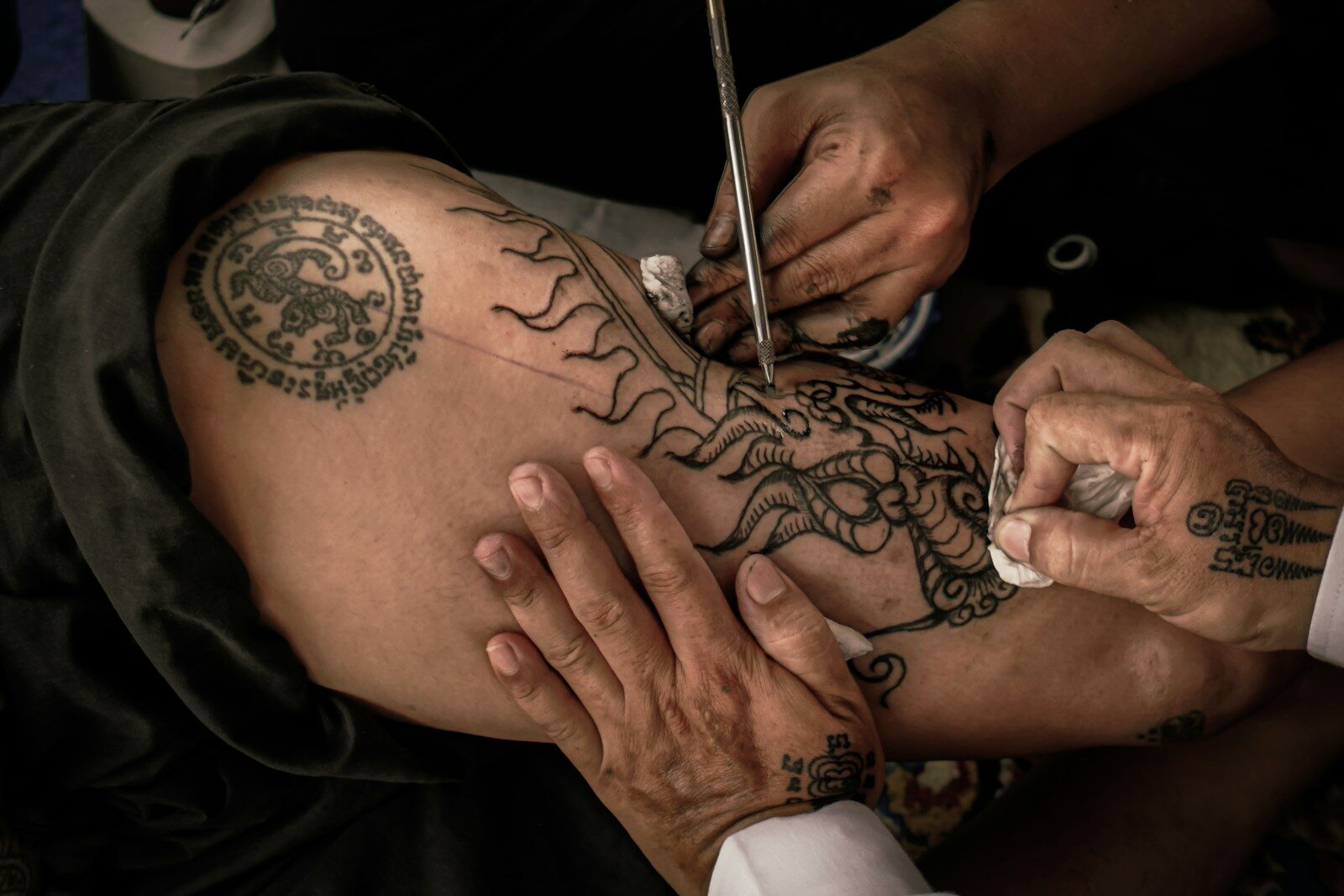
Tattoos did not begin as aesthetics. They began as ritual.
From the tā moko of the Māori culture to sak yant in Thailand, ritual tattoos have been for centuries symbols of identity, belonging, and passage through important moments of life.
In Māori culture in New Zealand, the traditional tattoo — called tā moko — was not just a drawing on the skin, but a map of identity. Every line spoke of family, rank, belonging, struggles, alliances, and a person’s place within the community. The earliest forms of tā moko were created through incision, not with modern needles. The skin was literally carved. The process was painful and ceremonial. It wasn’t done at any time, and it wasn’t for everyone.
Anthropologists have observed that in many traditional cultures, body modification served as a rite of passage:
- from child to adult,
- from the profane to the sacred,
- from “who I was” to “who I am becoming.”
The body became a witness to an inner transformation.
Archaeology and studies on Polynesian tattooing show that these practices existed long before European contact and were deeply woven into the social and spiritual structure of communities. Historian Nicholas Thomas wrote that Polynesian tattoos represented “an inscription of the relationship between person, memory, and community.” And anthropologist Alfred Gell described tattooing as “a social technology of the body.”
In many traditional societies, this “mark of passage” was not seen as an individual choice, but as a visible link between the person, the ancestors, and the community.
And perhaps we still do this today — only sometimes we no longer realize it. We get tattooed after a loss. After a love. After surviving something. After an old version of ourselves has died quietly.
Maybe some tattoos are not about image. But about saying: “Something important happened here.”
Ritual examples around the world:
– tā moko among the Māori (New Zealand)
– sak yant tattoos in Thailand, considered spiritually protective
– traditional Berber tattoos in North Africa
– Inuit tattoos historically used for rites of passage and belonging
Rituals leave marks. Sometimes in memory. Sometimes on the body.
👉 If you have a tattoo, does it mark only an aesthetic moment… or a transformation in your life?
👉 Is there a body ornament, a word, or an image you would choose to carry on your skin to represent an important stage of your life?
👉 If your body could tell a story about your path so far, what would be the first chapter it would show?
Share this article
 Support the article library
If this article has been meaningful to you and you’d like to support this project, you’re welcome to make a voluntary contribution.
This contribution helps me continue writing freely and developing the resource library about body, soul, rituals, emotions, and inner transformation.
