


Football as a modern pilgrimage: why we cross oceans for 90 minutes
If these reflections resonated with you, you are welcome to share it further.
On tribes, rituals, and the deep human need to belong — a personal reflection at the intersection of anthropology, psychology, and sport
I have never been to a stadium.
And yet, I watch football. I have favorite teams I chose without really knowing why. I feel the tension of a decisive match even through a TV screen, even when I’m alone at home. Sometimes I catch myself holding my breath, stopping my breath, celebrating or grieving for people I will never meet.
For a few days I followed the World Cup news with a kind of interest that surprised me. And I saw something I couldn’t forget: groups of supporters from different countries singing in unison on the streets of the United States, thousands of kilometers away from home, with flags, costumes, songs. They had crossed oceans for 90 minutes of football.
Or maybe not for football.
Maybe for something much rarer. For the experience of belonging.
And because I’m the kind of person who cannot stop asking why, I wanted to understand what is really happening there. Not in a sporting or statistical way — but in a human way. Psychological. Ritualistic. Bodily.
The Stadium as sanctuary: when sport becomes ritual
If you look at a football match with anthropological eyes, something shifts in what you see.
It’s no longer a game. It’s a ritual.
The Dutch thinker Johan Huizinga wrote in Homo Ludens that play is not a secondary activity of culture — play is culture. People don’t play because they have free time. They play because through play they create meaning, hierarchy, identity, community. Football, at its global scale, may be the most vivid contemporary example of this idea.
Anthropologists have long noticed that modern sport reproduces very old ritual structures. There is a pilgrimage — physical, sometimes intercontinental — toward a specific place. There are sacred colors, worn with a seriousness people rarely give to anything else. There are songs passed down from generation to generation, synchronized collective gestures, heroes and legends of the club, the remembrance of those who are gone.
The stadium is not a place where a match is played.
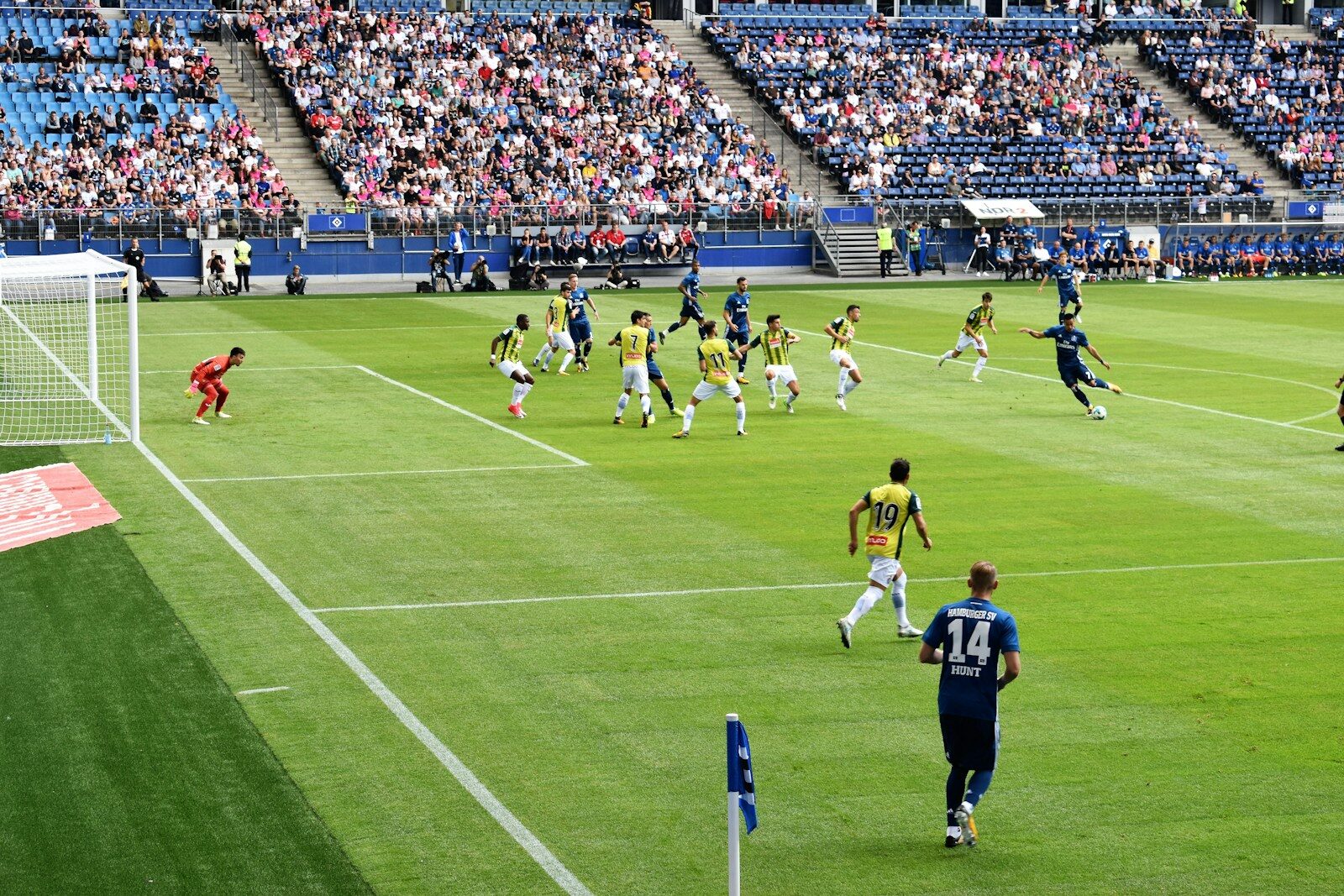
For millions of people, the stadium is a ritual space. A secular sanctuary. And the supporters who fill the stands are not an audience — they are a congregation gathering, week after week or once in a lifetime, to live a synchronized emotion together.
Sociologist Émile Durkheim called this state collective effervescence — that overwhelming feeling that you are part of something larger than yourself, that the boundaries between you and others dissolve for a moment. People once sought this in temples, cathedrals, public squares. Today, one of the few places where they still find it, at such a scale and with such regularity, is the football stadium.
And anthropologist Victor Turner would add an even more precise term: communitas — the moment when social hierarchies disappear, differences soften, and people feel they are part of the same living community. Not as a metaphor. As a direct, bodily, visceral experience.
The body in sync: the collective experience is not only in the mind
There is something football articles almost always leave out: the body.
We talk about emotion, identity, ritual — and all of these are real. But the experience of the stadium does not happen only in the mind or the heart. It happens in the body.
When tens of thousands of people sing the same song, breathe in the same rhythm, and react at the same moment to the same phase of the game, they do not synchronize only emotionally. They synchronize physically. Heart rates, muscle tension, attention and anticipation begin to align. Research shows that in large crowds, during moments of collective intensity, people’s heartbeats literally tend to converge.
Maybe part of the stadium’s power comes from this: for a few hours, the body stops living separately.
It enters a collective experience.
Philosopher Hartmut Rosa speaks about resonance — those rare moments when we feel in a living relationship with the world, with others, with ourselves. Not as spectators, but as participants who respond and are responded to. The stadium, at its highest intensity, is one of the few modern spaces where this resonance happens repeatedly, predictably, collectively. It’s no coincidence that people describe the experience as “bigger than themselves” — because it literally is. It is an experience that exceeds the boundaries of the individual body and becomes something shared.
This connects football with all the ritual practices we know — dance, song, communal prayer, pilgrimage. All use the body as a doorway into an experience that cannot be lived alone.
The longing to belong: what people seek beyond the match
There is a question I keep asking myself since I saw those supporters on the streets, in parking lots, in bars: what makes them do this? Spend considerable amounts of money, cross time zones, sleep in cheap hotels or in cars — for 90 minutes?
The simple answer is: they don’t come only for the match.
They come for us.
Humans are deeply social beings, but the modern world has built structures around us that fragment this need for community. We live in separate apartments, work in anonymous coworking spaces, communicate through screens. Authentic belonging — the kind where you feel part of a group with a shared story that gathers physically — has become a rare luxury.
Football offers something everyday life increasingly refuses: instant community.
In the stands, you don’t need to introduce yourself. You don’t need to be interesting or successful or “someone.” It’s enough to wear the same colors. Suddenly, you are part of an us that has meaning, history, a shared song.
Psychologist Carl Rogers spoke about the fundamental need for belonging — to be accepted and to feel part of something. Not as a preference, but as a basic need, as real as food or safety. Football, at its global scale and ritual intensity, satisfies this need in a way few modern structures still can.
Patriotism that unites: the mobile tribe and the imagined community
At international competitions, the phenomenon gains an extra dimension.
Something deeper than club identity is activated — collective identity. National. Cultural. Ethnic. For a few days or weeks, people become symbolic representatives of a place, a story, a “where we come from.”
Political scientist Benedict Anderson wrote that nations are imagined communities — not because they are false, but because they exist through the shared belief of millions of people who will never meet. Football makes this imagined community suddenly visible and physical. Thousands of strangers wearing the same flag, singing the same anthem, feeling the same emotion at the same moment. The abstract becomes concrete.
Supporters singing, dancing, or performing collective choreographies in the United States were not simply following a football match. They were carrying a piece of their country. A mythology. An identity they may not have the chance to express so freely in everyday life.
There is something fascinating about this form of patriotism football makes possible: at its best, it is not tense, not politicized, not exclusionary. It is a celebration, not a separation. People carry their flags with joy and humor, sing with others from different cultures, photograph each other’s traditional costumes with admiration.
It can become a patriotism that celebrates without excluding.
But history shows it is not always like this. Football has also been a space where nationalism turned into xenophobia, where rivalry fed conflict, where collective identity became organized hostility. The same force that creates dance and joy in one context has produced violence and hatred in another. The form it takes depends on the cultural container — and on what the group projects onto the other.
From a systemic perspective, international football creates a space where collective identities can coexist ritually — each group expressing its belonging without imposing it on others. Rivalry is real, but contained. Competition is symbolic, not violent. Tribes meet, measure themselves, sometimes admire each other — and leave richer.
This is also why group choreographies — spectacular tifos, synchronized marches, identical costumes — are so impressive even to people who know nothing about football. It’s not about sport. It’s about identity performed collectively, a group telling the world: this is who we are..
The space of authentic emotion: when vulnerability becomes allowed
Modern life demands a lot of self‑control.
At work you must be professional and balanced. In the family you must be present and responsible. In public you must be moderate and reasonable. Intense emotions are often uncomfortable. Inappropriate. “Immature.”
In the stadium, the rules change completely.
You can shout. You can cry. You can hug a stranger. You can express anger or joy at an intensity you would never allow yourself anywhere else. Not only is it tolerated — it is expected. It is part of the ritual.
Psychoanalysts would recognize in this a cathartic function — the release of accumulated emotions in a socially legitimized space. A goal in the 90th minute that brings tears and screams is not a disproportionate reaction. It is a release. All the tension of the week, all the emotions that had no place, pour out in that moment.
There is also a gender dimension worth noticing. For many men, football remains one of the few social spaces where emotional vulnerability is not judged — where you can cry without explaining, hug without being misunderstood, be devastated without seeming weak. Not because men don’t feel or express emotion elsewhere, but because football offers a cultural container where intense emotion is normal, even expected. A space where the body and the heart are allowed to react instinctively.
And more and more, this space is opening. Women are present in the stands and in front of screens in growing numbers — not as a statistic, but as a shift in how we all understand the need for collective ritual and authentic emotion.
And there is a third layer to this story, perhaps the most moving: the children who grow up in the stadium. Not as occasional spectators, but as initiates into a living culture. The child who comes for the first time, holding a parent’s or grandparent’s hand, is not attending a match — they are entering a rite of passage. They absorb, with every pore, not only the rules of the game, but the energy of the crowd, the songs, the gestures, the tension and collective joy. Their body records everything before their mind can name what they feel. These first experiences of collective effervescence leave deep marks — not as intellectual memories, but as somatic imprints, a kind of bodily memory of what it means to truly belong. Many adults who watch football with passion are not watching only a match. They are watching an echo of that first time they felt part of something larger than themselves.
The shadow of the tribe: when belonging becomes exclusion
Like any intense form of belonging, football has its shadow.
The same mechanism that unites some can separate them from others. Sometimes community becomes exclusion. Sometimes rivalry slips beyond the symbolic and into violence. Sometimes collective identity turns into hostility toward those perceived as different — another team, another nation, another tribe.
It is no coincidence. It is the same force, used in reverse.
What makes football so powerful — the intensity of belonging, the fusion of individual identity with group identity, the collective emotional release — can become destructive when there is no solid container. The shadow appears exactly where the light is strongest.
Perhaps this ambivalence shows how deep the force activated by football truly is. It is not a surface phenomenon. It touches something real and ancient in us — and real, ancient things always have a shadow.
A re‑enchanted world: football as mystery in a predictable age
There is a larger context in which this whole story makes sense.
Sociologist Max Weber described modernity as a process of disenchantment — Entzauberung. Traditional worlds were full of mystery, sacredness, forces beyond human control. Modernity brought rationality, efficiency, predictability. It calculated, measured, optimized. It gained a lot. But it lost something: the feeling that the world can surprise you, that you don’t know what comes next, that something exists beyond your control.
Football brings mystery back.
No one knows what will happen. Not algorithms, not statistics, not experts. A smaller team can eliminate a giant. A goal in extra time can overturn everything. For 90 minutes, the world becomes open again. Undecided. Alive.
In a civilization that has eliminated almost everything unpredictable, football is one of the last spaces where we allow ourselves not to know. And maybe that is why we love it so much — not despite the uncertainty, but because of it.
Maybe football is not just a popular sport. Maybe it is one of the last places where modernity allows itself to be vulnerable in the face of the unpredictable. A space where not everything can be optimized, controlled, or foreseen. Where preparation, talent, and money guarantee nothing. Where a person can miss a decisive penalty and a nation suffers together. Where glory and disaster are separated by a few centimeters and a few seconds.
This vulnerability in the face of the result — which we refuse in almost every other area of modern life — is, paradoxically, one of the most liberating experiences football offers. You don’t control. You can’t optimize. You can only be there and live what comes.
Story and sacrifice: why we spend money for meaning, not utility
From the outside, it seems absurd.
Thousands of euros for a plane ticket, accommodation, a match ticket — for 90 minutes that may end in defeat. An economic investment hard to justify rationally.
But people don’t spend money only for utility. They spend for meaning.
A pilgrim who walks hundreds of kilometers to a sanctuary does, structurally, the same thing. They don’t buy efficiency. They buy experience, belonging, significance. The hardship of the journey becomes part of the value of the destination — not a cost, but a rite of initiation.
The same happens with a supporter crossing a continent. At the end of the journey, they don’t have only the memory of the match. They have a story. Proof that they were part of that moment. I was there. I sang with the others. I lived this.
And this experience becomes part of their identity — perhaps one of the clearest and most vivid memories of their life.
Every club has its heroes and traitors, historic victories and traumatic defeats, legendary generations and eternal rivalries. A supporter does not simply watch a match — they inherit a story and become part of its continuation. Sometimes this inheritance comes from a father, a grandfather, the community they grew up in. Supporting a team is passed down almost like a cultural identity, with the same seriousness and the same sense of duty toward something older than you.
Why football and not something else? The universality of a simple game
Cricket has devoted supporters. Rugby, baseball, basketball — all generate strong communities and group rituals. The phenomenon is not unique to football.
But football contains it at a scale no other sport reaches. And there are structural reasons for this.
The rules are so simple that anyone, anywhere in the world, can understand them in minutes. You don’t need special equipment, complex infrastructure, or prior culture. A flat piece of ground and a ball — real or improvised — are enough. Football spread globally precisely because it required nothing.
The rhythm of a match is, paradoxically, almost psychologically cruel — 90 minutes of continuous tension with rare moments of release. A single goal can change everything. This rarity makes the goal almost sacred. It is not a point on a scoreboard. It is a rupture in time, a moment around which everything reorganizes.
And there is unpredictability — the thing that keeps the dream alive regardless of resources. In football, a small team can eliminate a giant. The history of the sport is full of such moments, and this possibility makes every match technically open. None of the other major sports combine simplicity of access with unpredictability of results at the same level.
This is why football is truly global, not just administratively. It is played and watched on all continents, in profoundly different cultures, by people with completely different realities — and yet all recognize the same ritual, the same tension, the same joy.
Football and the modern hunger for belonging
Maybe this is, in the end, the real question.
Not why people watch football. But what they seek in it — and why they no longer find it elsewhere.
In the past, there were religious holidays and seasonal rituals, pilgrimages and fairs, community dances and rites of passage. Spaces where people gathered physically, sang together, suffered and rejoiced together, felt part of something older and larger than themselves. Many of these spaces have weakened or disappeared. Modernity replaced them with efficiency, individual comfort, screens.
Football remained.
And maybe that is why it has the power it has. Not because it is an exceptional sport, but because it has become one of the last cultural containers where authentic collective experience is still possible at a large scale. A place where bodies synchronize with other bodies, where emotion does not need justification, where mystery has not yet been eliminated, where story matters more than efficiency.
Maybe people don’t cross oceans for football.
Maybe they cross oceans to remember what belonging feels like.
I have never been to a stadium. And yet, I understand now, better than before, why people do this. They are not only watching a game. They are seeking one of the few modern experiences where they can feel truly alive — together. With their bodies, with their hearts, with their tribe.
And maybe that, in itself, says more about the world we live in than about football.
If this article stirred something in you — a memory, a question, a feeling of recognition — I would love to read it in the comments. Belonging, after all, begins with a voice that says: I feel this too.




2 comments
Awesome insight
Awesome insight .
Loved the way you have expressed