

Ancient funeral rituals
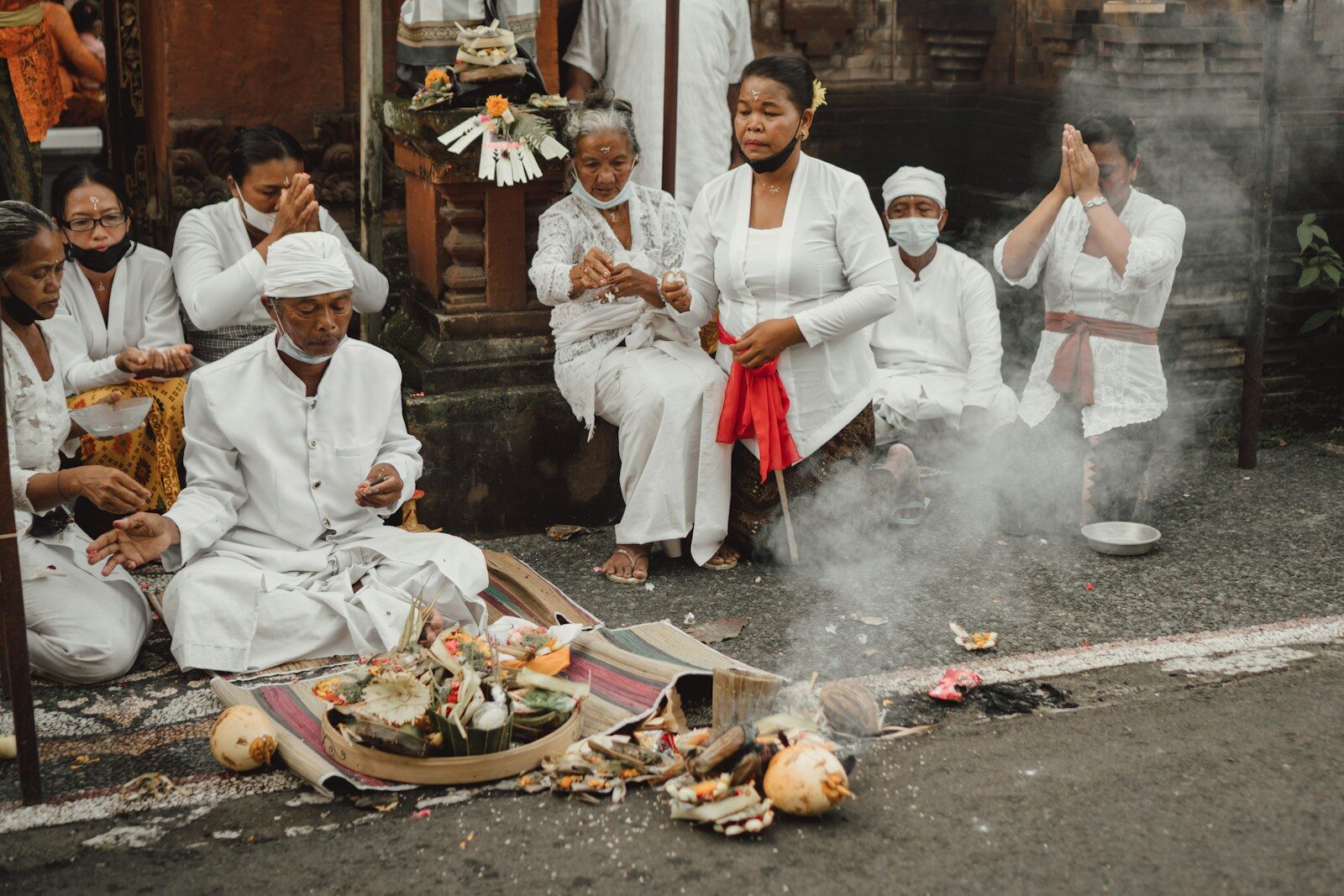
One of the oldest rituals discovered by archaeologists is connected to burial.
At sites such as Shanidar dating back more than 50,000 years, traces of pollen were found around skeletal remains. For many years, researchers interpreted this discovery as possible evidence that certain funeral rituals included the placement of flowers alongside the dead.
Other prehistoric graves, discovered across Europe and the Near East, contain objects, tools, ornaments, or red ochre placed beside the bodies. A sign that death was not seen merely as a biological end, but as a moment that needed to be marked through gestures and symbols.
We do not know exactly what those people believed. But we do know that they did not simply abandon their dead.
They carefully placed them. They accompanied them. They left beside them objects, colors, flowers, or traces of a story.
Anthropologists consider funeral rituals among the earliest pieces of evidence for symbolic human thought. They suggest that people were not concerned only with survival, but were also seeking meaning, belonging, and continuity, even in the face of death.
It was a way of marking a moment. Of honoring. Of creating meaning where there were no explanations.
That is the essence of ritual. Not its complexity. Not its form. But the repeated gesture, carried out with intention and meaning.
And perhaps, in a very simple way, when you light a candle for someone you love, bring flowers to a meaningful place, or walk quietly toward a place that matters to you, you touch the same kind of space that human beings have been creating for tens of thousands of years.
Perhaps the forms change. But the need to honor, to remember, and to give meaning to important experiences seems to have accompanied humanity since its earliest beginnings.
From the earliest forms of burial discovered by archaeologists to contemporary rituals of remembrance, people have sought to mark the passage between life and death through meaningful gestures.
👉 What small gesture in your life feels more meaningful than it may appear?
👉 Is there a place, an object, or a gesture that helps you keep the memory of someone important alive?
👉 When was the last time a simple gesture said more than words ever could?
 Susține această bibliotecă
If this article has been helpful to you and you feel it deserves support, you can contribute with a symbolic donation.
It helps me continue writing freely and developing this library of resources about the body, emotions, rituals, and inner transformation.
