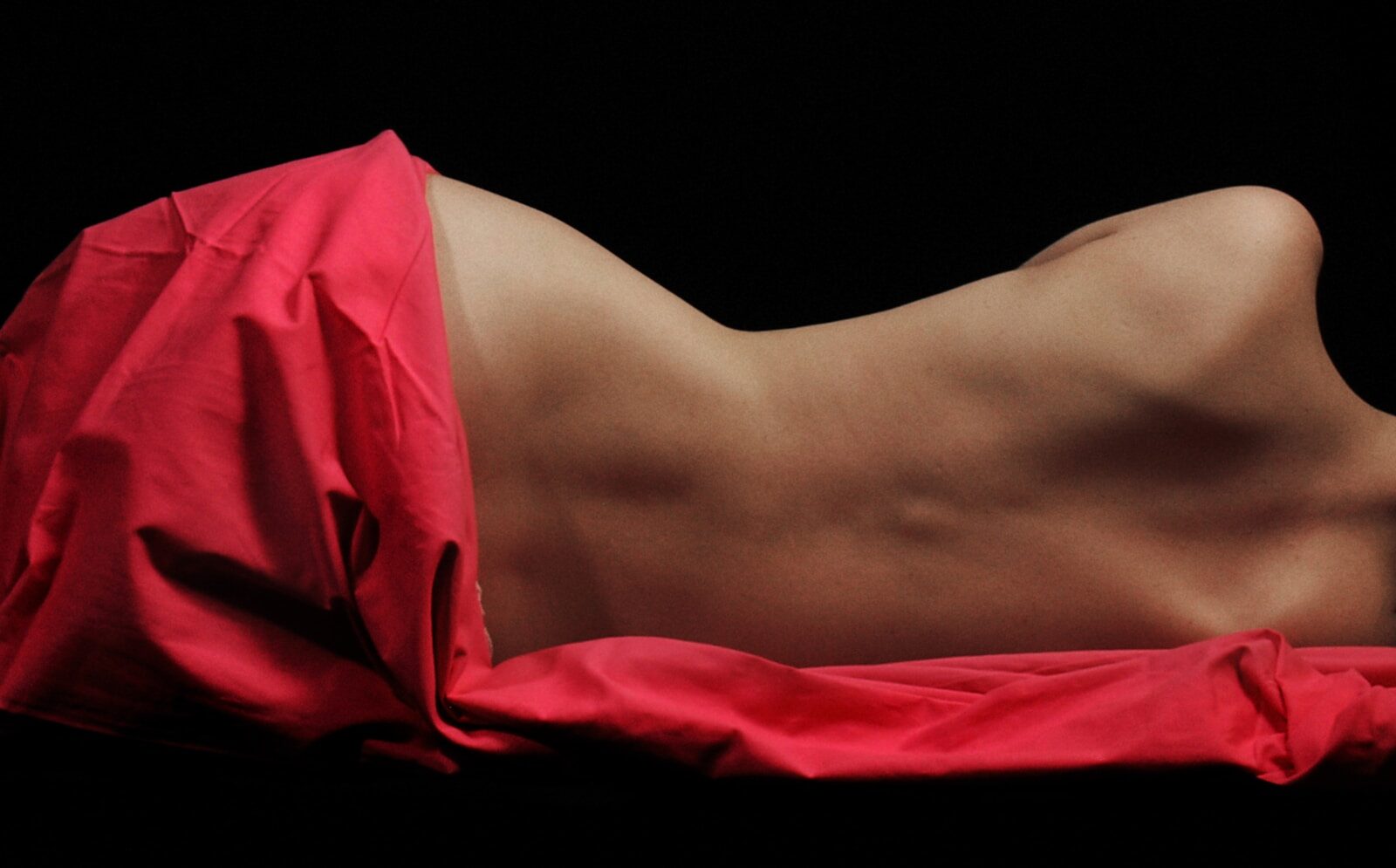
The subtle bodies of the human being and multidimensional constellations

If these reflections resonated with you, you are welcome to share it further.
A journey through the physical, emotional, mental and spiritual body in the invisible architecture of the self
There are moments when you feel you are no longer only inside your body.
When emotion rises out of you like warm vapor. When a thought lights up the space around you. When someone’s presence touches you before they come close. When a memory changes the temperature of your skin. When a revelation opens your sternum like a window.
In those moments, the physical body becomes only an edge. An edge of something much vaster, subtler, more alive.
For thousands of years, people have tried to describe this vastness. Not to trap it in concepts, but so we wouldn’t get lost in it. To have a map. To know where we are when we feel “outside ourselves,” when something in our experience feels larger than what anatomy, biology or logic can explain.
Theosophists spoke about bodies. Yogis about sheaths. Rudolf Steiner about levels of being. Barbara Brennan about energy fields. Ken Wilber about the spectrum of consciousness.
The languages differ. The maps differ.
But they all seem to point to the same fundamental intuition: the human being is more than the physical body.
We do not live in a single body. We live in an orchestra of bodies that play together.
For me, this idea didn’t remain just a theory found in books. It became alive in the field of constellations. Over time, I noticed that sometimes the issue a person brought didn’t seem to belong only to the physical body, or only to emotions, or only to mental beliefs. There seemed to be an entire inner architecture trying to reorganize itself.
That’s how the exploration of constellations with subtle bodies began.
Not as a new technique. But as a way of observing the different levels through which life expresses itself in us.
This article is an invitation into that exploration. Not as a doctrine. Not as a certainty. But as a possible map.
A map that can become surprisingly useful when we try to understand why one part of us moves forward while another remains stuck behind.
The physical body — where life becomes visible
The physical body is the first thing we believe is “us”: the skin, the bones, the heartbeat, the weight, the shape, the age. It is the part that can be seen, measured, touched.
And yet, almost everyone has had at least once the experience of feeling that what lives inside does not fully fit into what can be observed from the outside.
Annie Besant described the physical body as the outer vehicle of consciousness. Steiner saw it as the mineral layer of the being, the part that belongs to the earth and its laws.
In constellations, the physical body often appears as the last to speak and the first to pay the price. Years of unspoken tension become tight shoulders. Years of fear become short breaths. Years of effort become chronic fatigue. Years of adaptation become rigidity.
Not because every symptom has an emotional or symbolic explanation. But because the human being does not live separately on different levels.
Everything we experience leaves traces: in the muscles, in posture, in rhythm, in the way we inhabit space.
You may have noticed this in simple moments. You receive a phone call that scares you and your stomach tightens instantly. You hear good news and your body opens before your mind forms an explanation. You meet someone you love and your shoulders drop without you noticing.
The physical body is not just matter. It is the place where experience becomes visible.
Some contemporary research explores more and more the relationship between the body, the nervous system, emotions and consciousness. Studies on bioelectric fields, the electromagnetic activity of the heart, biophotons and cellular communication suggest that the human organism is far more complex than the mechanistic image inherited from past centuries.
These studies do not prove the existence of subtle bodies as described in spiritual traditions. But they invite us to see the body as a living, dynamic, deeply interconnected system.
The physical body is the doorway. But perhaps not the entire house.
The vital or etheric body — the invisible architecture of life
If you could see the etheric body as some theosophical authors described it, you would see a fine network of energy that seems to support the physical form.
Charles Leadbeater spoke of a subtle field surrounding and organizing the body. Arthur Powell described it as a matrix of vitality. In yogic tradition, something similar appears as pranamaya kosha, the sheath of vital energy.
Regardless of language, the idea is the same: there is a difference between being alive and having vitality.
The vital body seems connected to this difference: to the capacity for regeneration, to rhythm, to presence, to contact with the living world.
You may have already noticed this level without naming it. There are days when you sleep enough and still wake up without energy. And there are days when a walk in the forest, a few hours by the sea or a deep conversation with someone dear seem to give you life back. As if something had realigned.
In traditional language, one would say the organism regained its vital flow.
Some contemporary research explores phenomena such as bioelectricity, the piezoelectric properties of fascia or cellular communication through biophotons. There are also more speculative hypotheses, like Rupert Sheldrake’s morphic fields.
These fields do not prove the etheric body as described in spiritual traditions. But they open interesting questions about how life organizes and coordinates itself inside the organism.
In constellations, the vital body often appears where the person says:
- “I have no energy left.”
- “It feels like nothing flows anymore.”
- “I feel disconnected from myself.”
Sometimes the issue is not lack of will. But lack of contact with one’s own rhythm.
The vital body seems to feed on surprisingly simple things: sleep, nature, breath, movement, meaning, presence.
The emotional or astral body — where the world touches us
Of all subtle bodies, this is probably the easiest to recognize. Because we feel it every day.
It is the body of fear, love, shame, joy, longing, jealousy, hope.
Theosophy calls it the astral body. Yoga includes it in manomaya kosha. Barbara Brennan described it as a fluid field in constant motion.
Here live many of the experiences that give color to life. And many that complicate it.
You may have entered a room and felt tension immediately, even though no one said anything. You may have received a seemingly neutral message and reacted far more intensely than the situation required. You may have met someone new and felt instant closeness or distance without a logical explanation.
Sometimes we do not respond only to the present. We respond to emotional memories we carry inside.
The emotional body is full of echoes: echoes of childhood, echoes of relationships, echoes of the family system, echoes of experiences we could not fully integrate.
Lisa Feldman Barrett suggests that emotions are not simple automatic reactions, but complex processes through which the brain tries to predict and interpret the world. Symbolically, this perspective comes close to the idea that emotions are a living map of accumulated experience.
In constellations, we often see that an emotion that seems current may have much older roots. Sometimes the person reacts to the present. Other times they react to a wound that still doesn’t know it belongs to the past.
The emotional body is often the first to tell the truth. Long before the mind is ready to hear it.
The mental body — the invisible architecture of meaning
The mental body is not just thinking. It is the way experience organizes itself inside us. It is the place where reality receives form.
Here appear explanations, interpretations, beliefs, stories about who we are.
Theosophy speaks of different levels of mind: a concrete mind oriented toward logic and analysis, and a higher mind capable of symbol, intuition, deep understanding. Steiner saw in this level the beginning of the conscious awakening of the Self. Ken Wilber includes it in the development of consciousness levels.
In daily life, the mental body transforms experiences into narratives. Sometimes these narratives support us. Other times they limit us.
There are people who repeat the same sentence for years:
- “I’m not enough.”
- “I have to manage everything alone.”
- “I don’t deserve.”
- “I’m not allowed to make mistakes.”
At first they are just thoughts. Over time they become identity.
In constellations, we often observe that some of these beliefs do not belong solely to the person. They may be expressions of family loyalties, transmitted histories or conclusions taken very early in life.
The mental body builds meaning. But sometimes it confuses meaning with absolute truth. Then rigidity appears.
And when the mental body becomes too rigid, the other bodies begin to suffer. The emotional body becomes agitated. The vital body contracts. The physical body tires.
This is why many transformation processes do not begin by changing the external world. They begin by changing the story we tell about ourselves.
Subtle bodies and modern psychology
When we hear “subtle bodies,” many of us think of spiritual traditions, yoga, theosophy or esotericism.
And yet, if we look closely, psychology has reached — through its own paths — the conclusion that the human being is far more complex than it appears.
Psychology does not usually use the language of subtle bodies. But it speaks about levels of experience, inner parts, conscious and unconscious, identity and meaning, dimensions that go beyond the simple functioning of the physical body and conscious thought.
Carl Jung observed that the human being is not made only of everyday consciousness. Beyond it lies the personal unconscious and the collective unconscious, populated by symbols, images and archetypes that deeply influence how we live.
Roberto Assagioli, founder of Psychosynthesis, proposed an even broader vision. For him, the human being was not defined only by trauma and conflict, but also by a higher dimension of the self he called the Higher Self.
Stanislav Grof, one of the pioneers of transpersonal psychology, explored expanded states of consciousness in which the usual boundaries of identity seem to dissolve and human experience becomes much vaster than the personal story.
More recently, Richard Schwartz, creator of the IFS model (Internal Family Systems), describes the existence of “parts” within the same person. Some protect. Some fear. Some try to control. Others carry old wounds.
The languages differ. But they all seem to point to the same observation: the human being is not a simple, unified structure. It is an ecosystem. An inner world made of levels that communicate constantly.
From this perspective, subtle bodies can be seen not as absolute truths, but as symbolic maps through which we try to describe the complexity of human experience.
Perhaps we are not speaking about different things. Perhaps we are speaking about the same reality using different languages.
The spiritual body — where we become transparent
There are experiences that cannot be fully explained. They can be described. They can be told. But they cannot be reduced to words.
Moments when time seems to slow down. Moments when you feel you belong to the entire existence.
Moments when something larger than you seems to breathe through you. Spiritual traditions have tried to describe this level in many ways.
Theosophy calls it Buddhi. Yoga speaks of vijnanamaya kosha. Barbara Brennan associates it with the celestial body. Others describe it as the dimension where deep meaning appears.
It is the body of intuition, compassion, inspiration, moments of clarity that do not come from analysis. Almost everyone has lived such a moment at least once: looking at the sea, climbing a mountain, holding a child, listening to music that opens something inside, sitting next to someone they love. For a few seconds, the separation between “me” and the world seems to disappear.
No spiritual doctrine is needed to recognize this experience.
Neuroscience of contemplative and mystical states, explored by researchers like Andrew Newberg, suggests that such states are associated with observable changes in brain activity.
These observations do not validate the existence of a spiritual body. But they show that experiences of unity, transcendence and meaning are real human phenomena worth exploring.
In constellations, the spiritual body often appears as direction, orientation, that deep “yes” we feel even when the rest of the being is still afraid.
The causal body — where the story dissolves
If there is a level difficult to describe, this is it. Because here language becomes insufficient.
Traditions speak of Atma, the causal body, essence, pure consciousness, presence.
It is no longer about emotions, thoughts or identity.
It is the place where the experience of separation begins to dissolve. The place where there is no longer “me against the world.” Only participation.
Perhaps each of us touches this state sometimes without naming it. In rare moments of deep silence, in moments of contemplation, in encounters with beauty, in experiences that completely exceed us.
This body cannot be proven. It cannot be measured. It can only be intuited. And perhaps that is why it has remained present in almost all major spiritual traditions of the world.
How subtle bodies entered multidimensional constellations
Over time I read about these bodies as concepts. Sometimes fascinating, sometimes difficult to understand.
Then I began to observe them in practice. Not in books. But in people.
Sometimes a person’s physical body was completely exhausted, while the spiritual body continued to indicate a clear direction. Other times the mind had already understood a situation, but the emotional body remained stuck in an old pain. There were moments when the vital body seemed unable to support the change the soul was asking for. And moments when someone said: “I know what I need to do.” But their entire being remained still.
In the constellation field, these differences became visible almost immediately. Then I began to see the subtle bodies not as separate theories, but as different expressions of the same being.
I remember a constellation where a woman said she had been professionally blocked for years. Her mind had clear plans. She knew exactly what she wanted. The mental body was oriented forward. But when we represented the emotional body, it stood several meters away, looking toward the past. In the field, the pain of an old loss appeared — a grief not yet fully mourned. It wasn’t lack of strategy that held her back. But a part of her that had not finished crossing a goodbye.
Constellations with subtle bodies
In multidimensional constellations, subtle bodies are not treated as objects of study. They become presences.
Each body can be represented in the field, each with its own rhythm, its own perspective, its own need.
Sometimes the physical body shows the exhaustion the person does not allow themselves to feel. The vital body shows where life no longer circulates. The emotional body reveals the pain not yet fully felt. The mental body shows the beliefs that keep the system stuck. The spiritual body indicates the direction of growth.
In my practice, other dimensions often appear:
- the Christic body,
- karmic energy,
- divine energy,
- the soul,
- the spirit.
Not as absolute truths. But as symbolic representations that allow us to observe relationships between different levels of experience.
Sometimes we discover that a person tries to evolve spiritually, but the emotional body is still stuck in an old trauma. Other times the mental body controls so much that vitality has no space to flow. Sometimes the spiritual body already knows the direction, while the physical body still needs time to integrate it.
The constellation becomes a three-dimensional map of the being. Not to offer definitive answers. But to make visible relationships that otherwise remain hidden.
How all these bodies move together
Perhaps the biggest mistake is imagining these bodies as separate layers, like boxes stacked on top of each other.
Human experience does not work like that. The physical body influences emotions. Emotions influence thoughts. Thoughts influence vitality. Vitality influences the capacity to perceive meaning.
Everything communicates constantly.
Sometimes this becomes very visible in constellations. I have met people who said they felt deeply called toward a certain direction in life, yet their physical body tensed every time they took a step toward it. In the field, a difference of rhythm often appeared: the spiritual body was already oriented toward change, while the emotional body still needed safety. The constellation did not ask them to choose one against the other, but to build a bridge between them.
We are more like an orchestra than a mechanism. And when one instrument is completely out of tune, the entire music changes.
In constellations, the process does not aim for perfection. It does not aim to eliminate all conflicts. But to create a more conscious relationship between these levels.
Sometimes integration does not mean changing something. It means simply seeing. And allowing what is already present to find its place.
The human being as a multidimensional presence
Perhaps, in the end, subtle bodies are not about energy, not about theories, not about belief systems.
Perhaps they are about the human attempt to describe what we feel when we notice we are more than the matter we are made of. More than the emotions we experience. More than the thoughts we think. More than the roles we play.
We are body. We are emotion. We are story. We are meaning. We are memory. We are relationship.
Throughout constellations I have seen the same thing many times: people do not transform because they receive a better explanation. They transform when different parts of them begin to listen to one another. When the body can hear what the soul knows. When emotions can follow what the mind has already understood. When the rhythm of change becomes gentle enough for the entire being to support it.
And perhaps true transformation does not mean becoming someone else. Perhaps it means returning, little by little, into all our bodies. Listening to them. Recognizing them. Bringing them together.
And when they begin to align, something shifts. Not because we become perfect. But because we become more whole.
Frequently asked questions
1. What are subtle bodies?
The subtle bodies are models found in various spiritual, philosophical, and esoteric traditions that describe different levels of human experience: physical, vital, emotional, mental, and spiritual. They can be understood as symbolic maps of human existence rather than structures that are universally accepted by science.
Is there scientific evidence for the subtle bodies?
At present, there is no scientific consensus confirming the existence of subtle bodies as distinct entities. However, research into the relationship between the body, emotions, consciousness, and bioelectrical fields continues to explore the complexity of human experience and the many ways in which mind and body interact.
What is the relationship between the subtle bodies and psychology
Although psychology does not typically use the language of subtle bodies, thinkers such as Carl Jung, Roberto Assagioli, Stanislav Grof, and Richard Schwartz have described multiple layers of inner experience that extend beyond a purely physical or cognitive understanding of the human being.
How are the subtle bodies used in multidimensional constellations?
In multidimensional constellations, the subtle bodies may be represented symbolically in order to observe the relationships between different aspects of a person's experience. The goal is not to prove their existence, but to explore how they may reflect inner dynamics, challenges, resources, and pathways toward integration.
Are constellations with the subtle bodies a form of therapy?
No. Multidimensional constellations do not replace psychotherapy, medical care, or professional treatment. They provide a symbolic and phenomenological space for exploring human experience and personal meaning.
What is the difference between the emotional body and the mental body?
The emotional body is associated with feelings, emotional reactions, and emotional memory. The mental body is associated with interpretations, beliefs, meaning-making, and the stories through which we organize our experience.
Why do concepts such as the Christ body, Karmic energy, or Divine energy appear in some constellations?
These elements are used as symbolic representations within certain multidimensional approaches. They are not intended as universal truths, but as exploratory tools that may help reveal inner and relational dynamics within the constellation process.
Shop the Independent Bookstore | Lulu
Constelații multidimensionale cu corpurile ființei | Corp, emoție, suflet și conștiință
If you feel there's room for more, I invite you to discover the systemic way I work — through circles, conversations, and spaces of reflection dedicated to the inner process. Explore the approach through circles or the take a first step to see what opens up for you.
Share this article
Support the article library
If this article has been meaningful to you and you’d like to support this project, you’re welcome to make a voluntary contribution.
This contribution helps me continue writing freely and developing the resource library about body, soul, rituals, emotions, and inner transformation.