
Daily gratitude – the ritual that changes the way you see the same life
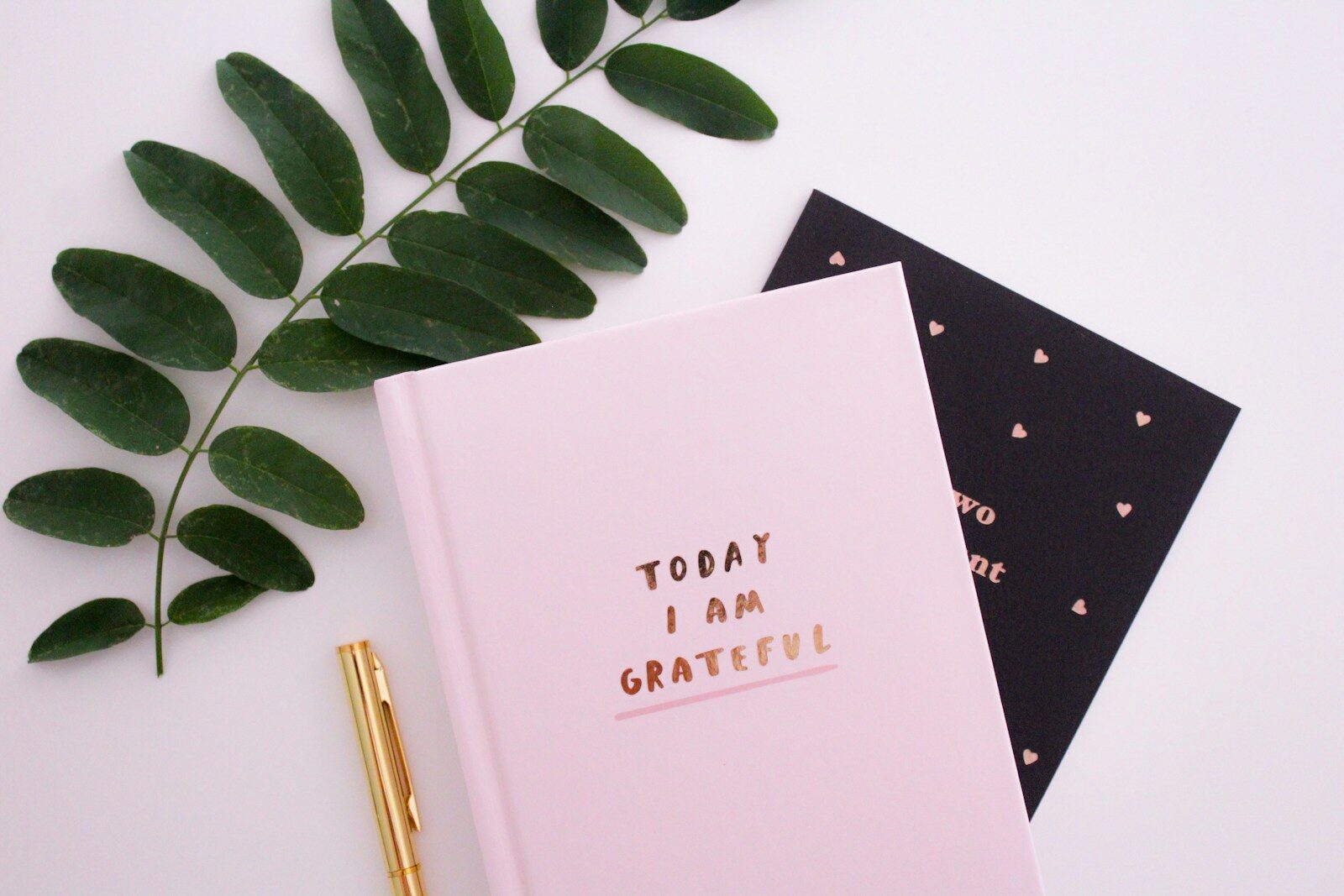
Daily gratitude – when a few lines written each evening become a different way of seeing the world
At the end of the day, almost the same thing happens every time.
The mind begins to take inventory. It remembers what you didn’t finish, the conversation that didn’t go well, the message you didn’t answer, the worry about tomorrow.
It’s an old mechanism.
Our brain has learned, over the course of evolution, to notice first whatever might become a problem.
But there is a simple gesture that shifts, at least for a few minutes, the direction of your gaze. To ask yourself: What am I grateful for today?
It can be something big, or something so small that on another day you wouldn’t have noticed it at all. A conversation. A ray of sunlight. A child laughing. The coffee you drank in silence. The fact that someone listened to you. Or simply that you made it home.
Today, millions of people keep a gratitude journal or end their day with a few quiet thoughts.
It seems like a modern habit, but the idea is much older.
In many religious and philosophical traditions, gratitude was not seen as a spontaneous emotion, but as a practice.
In Judaism, blessings are spoken throughout the day for the most ordinary gestures. In Christianity, prayers of thanks often close the evening. The Stoics reviewed their day each night, reflecting on how they lived and what they received.
In many Asian cultures, respect for food, nature, and people is expressed through repetitive gestures of appreciation. The form differs, but the idea remains the same.
Gratitude does not always appear on its own. Sometimes it needs to be practiced.
In recent decades, psychology has begun to study this.
Psychologists Robert Emmons and Michael McCullough, among the pioneers of gratitude research, observed that people who regularly write down the things they are grateful for tend to report higher levels of well‑being, optimism, and life satisfaction.
Not because their lives suddenly become easier, but because attention begins to distribute itself differently. The brain no longer searches exclusively for what is missing. It starts to notice what is already here.
Neuroscientist Rick Hanson speaks about this natural tendency of the mind to fixate mainly on negative experiences. He suggests that positive experiences sometimes need a few extra seconds of attention to be truly integrated into our memory.
Perhaps this is the role of gratitude. Not to convince us that everything is fine, and not to force positivity when life hurts.
Authentic gratitude doesn’t mean denying suffering — it means not letting it be the only thing you see.
You can be sad and still grateful for the person who stayed close to you. You can go through a difficult period and still notice that one morning you breathed in cold air and felt, for a moment, that you were alive.
Maybe that’s why gratitude becomes a ritual.
Not because it changes the world, but because it changes the way you look at it. And when your gaze shifts, your experience shifts too — slowly, quietly.
You don’t need a beautiful journal, you don’t need perfect sentences. Sometimes three lines written before sleep, or whispered in your mind as you drift off, are enough.
Three things. Three gestures. Three reasons why this day, with all its imperfections, was still worth living.
Maybe this is the purpose of gratitude. Not to make life more spectacular, but to help us not walk past its ordinary beauty without noticing.
Three questions for you
What is the first thing you could say “thank you” for today?
Is there a small thing you receive almost every day and have stopped noticing?
If you ended each evening with three lines of gratitude, what do you think would shift in the way you see your life?
Descărca gratuit în română – Jurnal de recunoștința. Download free it in English: Journal of gratitude
Share this article
 Support the article library
If this article has been meaningful to you and you’d like to support this project, you’re welcome to make a voluntary contribution.
This contribution helps me continue writing freely and developing the resource library about body, soul, rituals, emotions, and inner transformation.