
Beltane fires – when spring was welcomed through light and flame
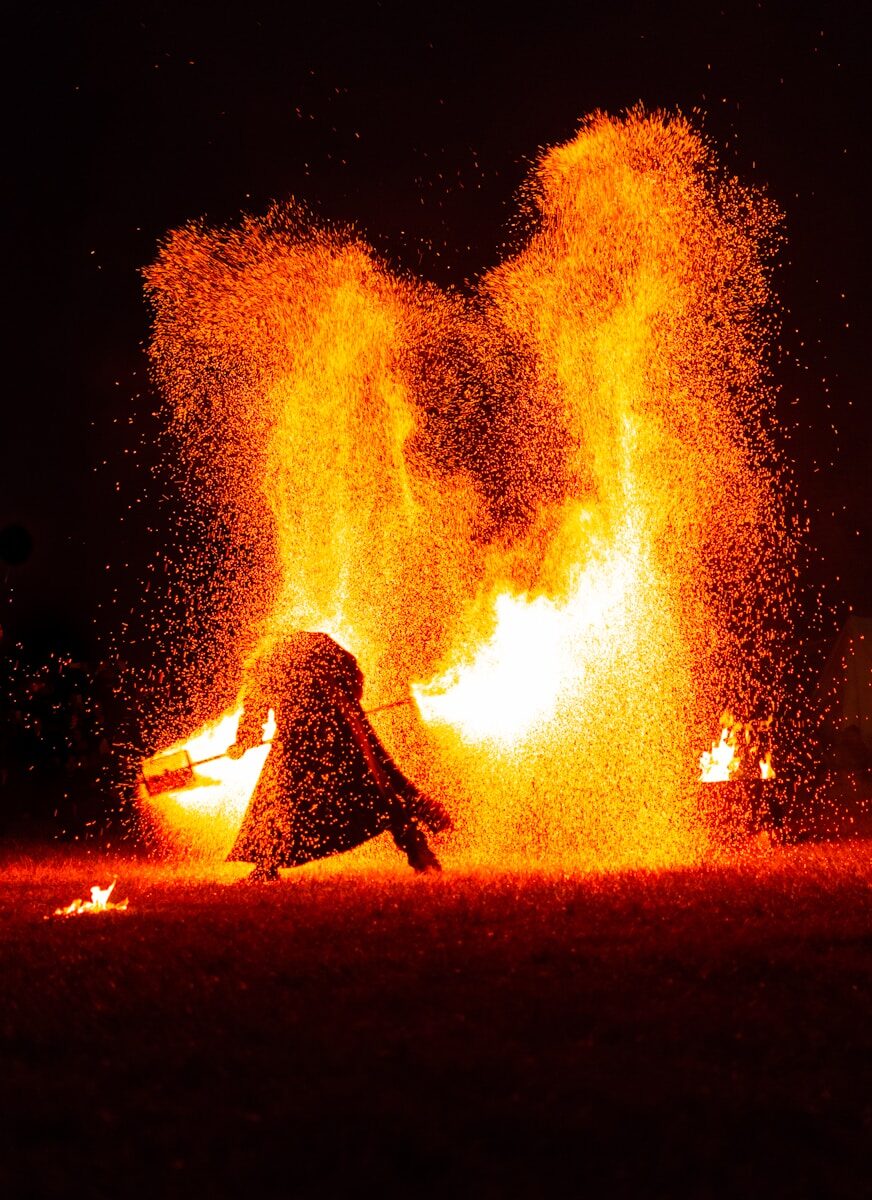
The Beltane fires – the Celtic ritual that marked the beginning of summer and the rebirth of life
There are moments in the year that seem to shift something in us before we even notice.
The air smells different. The days grow longer. The earth begins to green again. And, without realizing it, we feel that one stage is ending and another is beginning.
For the ancient Celts, this moment had a name. Beltane.
Every year, around the beginning of May, communities lit great fires on the hills to mark the passage from the cold season to the season of light, fertility, and life.
Today we sometimes call it a spring festival.
For the people of that time, it was much more than that. It was the beginning of a new world.
The earliest mentions of Beltane appear in medieval Irish literature, but researchers believe the ritual is much older, rooted in pre‑Christian Celtic traditions.
The pastoral year was divided by two important moments. Samhain opened the dark season. Beltane inaugurated the bright one.
Herds were taken out of their winter shelters and led toward the summer pastures. Life moved outdoors again.
At the center of the entire celebration stood the fire. Not an ordinary one. But two large fires, lit ceremonially.
In many regions of Ireland and Scotland, animals were guided between them or past them before being sent to the pastures. People believed this would protect them from illness, misfortune, and the dangers of the new season.
Sometimes households extinguished all their hearths before Beltane. Then each family brought home a new flame, lit from the community fire of the village. It was a simple gesture. But it symbolized the beginning of a new cycle. Not only for nature. But also for people.
Religious historian Ronald Hutton, one of the most important researchers of British traditions, shows that many Beltane rituals marked a collective passage between two seasons in a society whose life depended directly on the rhythm of nature.
It was not a celebration detached from reality. It was a way for the community to synchronize its life with the world around it.
Researcher Máire MacNeill, who studied seasonal festivals in Ireland extensively, observed that the Beltane fires did not have only a practical or religious function.
They brought people together. Entire families climbed the hills, sang, danced, and spent the night around the flames.
For a few hours, the ritual created the feeling that the whole community was beginning the same journey.
Today, Beltane is celebrated in many places in a new form. Festivals like the one in Edinburgh gather thousands of participants who symbolically recreate the fires, dances, and processions inspired by Celtic traditions.
But even where the original ritual has been lost, its idea remains familiar. Almost all cultures have felt the need to mark the beginning of a new season. Through fire. Through light. Through a gesture that says life continues.
Perhaps fire is one of the oldest symbols of transformation. It does not keep things as they are. It changes them. It turns wood into warmth. Darkness into light. Winter into spring.
And perhaps, for a few moments, it transforms those who gather around it as well.
Maybe that is why people have lit ritual fires for thousands of years. Not just to see better in the dark. But to remember that every end of a season hides the beginning of another.
Three questions for you
Is there a moment in the year when you feel that a new chapter truly begins for you?
What would you symbolically leave behind if you were to pass today through a fire of transformation?
If you were to create a ritual for the important beginnings in your life, what gesture would you choose to mark that threshold?
Share this article
 Support the article library
If this article has been meaningful to you and you’d like to support this project, you’re welcome to make a voluntary contribution.
This contribution helps me continue writing freely and developing the resource library about body, soul, rituals, emotions, and inner transformation.